Melania Trump's Documentary Trailer Presents Stark Contrast to Presidential Reality
The recently released trailer for Melania Trump's eponymous documentary presents a carefully curated image of the First Lady as a unifying peacemaker, sitting in a White House function room while her husband declares his proudest legacy will be that of peacemaker. Melania echoes this sentiment with the words "peacemaker and unifier", creating a narrative that appears increasingly disconnected from current geopolitical realities.
Contradictions Between Screen Narrative and Presidential Actions
Since the documentary trailer's December release, Donald Trump's administration has engaged in multiple military actions that starkly contradict this peacemaking image. These include bombing infrastructure across northern Venezuela, capturing Venezuelan President Nicolás Maduro and his wife Cilia Flores for transport to New York City to face narcoterrorism charges, launching aerial bombing campaigns in central Syria, targeting ISIS-affiliate positions in northern Nigeria, signalling readiness for military intervention in Iran, conducting strikes against suspected drug boats in the Caribbean, and overseeing aggressive ICE immigration operations within the United States.
These actions create what journalist Nina Burleigh, author of Golden Handcuffs: The Secret History of Trump's Women, describes as "explosive contradictions" between the documentary's narrative and presidential reality. Burleigh suggests that in the Trumpian universe where reality often becomes subordinate to production value, Melania's on-screen endorsement of a peacemaker currently waging multi-front wars highlights the central mystery of their arrangement.

The Geography of a Distant Marriage
The documentary's portrayal of partnership contrasts sharply with the apparent geography of the Trumps' lives. While the trailer suggests a couple in lockstep, their living arrangements tell a different story. Melania Trump has reportedly spent fewer than fourteen days at the White House during the first hundred-plus days of the second Trump administration, with some insiders calling this estimate "generous".
Instead, Trump Tower in New York has apparently served as her primary residence, where she remained close to their son Barron during his freshman year at New York University. This physical separation represents what historians note as the lowest-profile First Lady residency since Bess Truman nearly eighty years ago, who similarly disliked the lack of privacy and formality surrounding the presidency.
Burleigh's research indicates that Melania Trump "did not sign up to become the first lady of the United States of America" when Donald Trump decided to run for president. The journalist describes her as "a malleable goddess, gorgeous and silent, trained to be looked at, the perfect accessory" who understood the rules of their arrangement until the presidential campaign changed everything.
The $40 Million Documentary Deal and Controversial Director
Amazon's $40 million deal to produce the documentary, which focuses on just twenty days of Melania's life leading up to Donald Trump's second presidential inauguration, raises significant questions. This amount represents roughly eight times what top-tier documentaries typically cost to produce, leading to speculation about whether this constitutes legitimate media acquisition or what Burleigh describes as "a corporate protection fee" paid by Jeff Bezos to safeguard Amazon's interests during a second Trump term.
The documentary's director, Brett Ratner, adds another layer of controversy. In 2017, multiple women accused Ratner of sexual misconduct including allegations that he masturbated in front of actresses and forced one to perform oral sex. While Ratner denied these allegations and never faced criminal charges, the accusations led Warner Bros to sever business ties with him and effectively paused his Hollywood career.

Burleigh suggests Melania's choice of Ratner likely stems from "a combination of his connections to the peers around her husband and her proven record of trolling or 'owning the libs'", referencing the infamous jacket incident during a visit to a migrant child detention centre where Melania wore clothing bearing the message "I really don't care, do you?"
Psychological Perspectives on the Trump Marriage
Forensic psychiatrist Bandy X. Lee, who edited the New York Times bestseller The Dangerous Case of Donald Trump, offers psychological insights into their relationship. Based on observations from twenty-seven mental health professionals analysing the president's public behaviour, Lee notes that Donald Trump scored very high on measures of psychopathy during their evaluation.
Lee describes psychopathy as "someone who is incapable of love, incapable of compassion, and who does not have a conscience", making it one of the most dangerous personality disorders in psychiatry. She suggests that such individuals typically seek relationships with people they can exploit rather than those with similar personality traits.
This psychological perspective casts Melania's physical distance in a different light. Her New York residence may represent not merely practical accommodation for her son's education but what Lee describes as "a necessary fortress of emotional distance" from a partner incapable of genuine emotional connection.
Maintaining Boundaries and Family Connections
Throughout her time as First Lady, Melania Trump has maintained strict personal boundaries while selectively fulfilling ceremonial duties. Her social interactions appear predominantly formal rather than personal, with her closest inner circle consisting primarily of family members including her parents Viktor and Amalija Knavs, who became US citizens in 2018 through her sponsorship, and her sister Ines Knauss.
Melania's mother, who died in 2024 aged seventy-eight, represented one of the most important relationships in her life. Their son Barron reportedly spent so much time with his mother and grandparents that he developed a distinct Slovenian accent during his childhood.
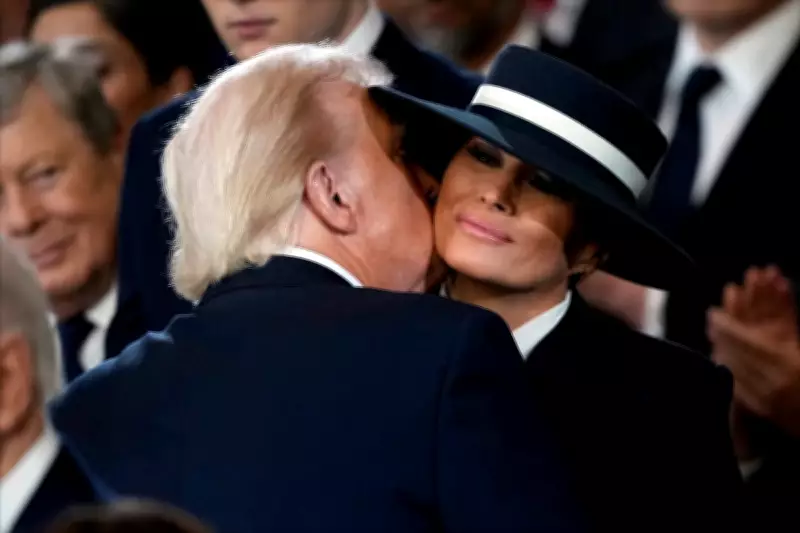
The physical distance between the Trumps became particularly visible during Donald Trump's inauguration last year when Melania wore a wide-brimmed hat that seemed designed to ensure physical separation from her husband. Biographer Michael Wolff later claimed on The Daily Beast podcast that the couple were effectively "leading separate lives", though White House communications dismissed this characterization.
What emerges from the documentary, expert analysis, and observable behaviour is a portrait of a marriage that serves specific needs rather than conventional emotional bonds. Melania Trump's golden tower in New York represents not just a residence but perhaps what Bandy X. Lee describes as necessary emotional distance from a partner whose psychological profile makes traditional marital connection impossible. Despite the documentary's attempt to present a particular narrative, the First Lady maintains what appears to be carefully managed distance from both her husband and the public she serves.