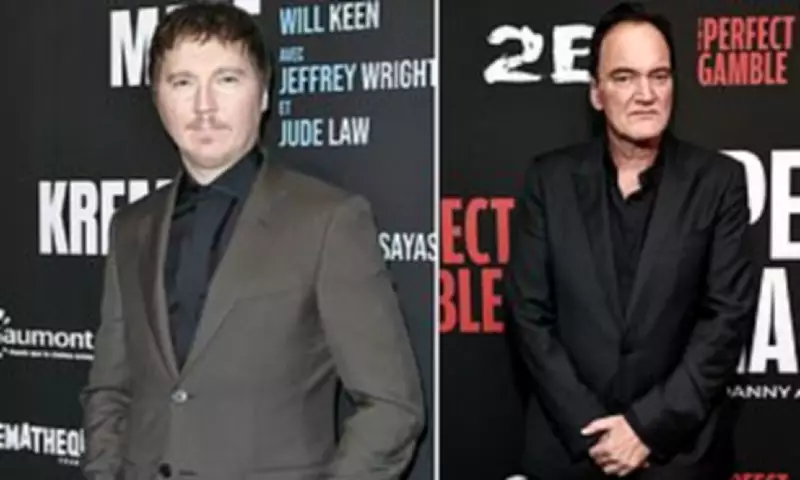
Paul Dano has broken his silence regarding the scathing criticism directed at him by acclaimed filmmaker Quentin Tarantino. The actor, known for his roles in major films, responded to the controversial comments during the Sundance Film Festival, revealing his gratitude for the widespread support he received from the entertainment industry.
The Controversial Comments
In December 2025, Quentin Tarantino, the 62-year-old director renowned for his distinctive cinematic style, made headlines during an appearance on The Bret Easton Ellis Podcast. Tarantino described Dano, now 41, as a "flaw" in the 2007 Oscar-winning masterpiece There Will Be Blood. He elaborated by calling the actor "just such a weak, weak, uninteresting guy."
When podcast host Bret Easton Ellis suggested that Daniel Day-Lewis's towering performance might have simply overshadowed Dano's work, Tarantino doubled down with even harsher language. He questioned, "So you put him with the weakest male actor in SAG? The limpest dick in the world?" These remarks sparked immediate controversy across Hollywood and among film enthusiasts.

Dano's Graceful Response
At the Sundance Film Festival on Wednesday, Paul Dano finally addressed the situation publicly. Speaking to Variety, Dano expressed profound appreciation for the overwhelming support he received from fellow actors and industry professionals. "I was incredibly grateful that the world spoke up for me so I didn't have to," he stated, demonstrating remarkable poise in the face of such personal criticism.
Hollywood Rallies Behind Dano
The entertainment community responded swiftly and decisively to Tarantino's comments. Dano's Little Miss Sunshine co-star Toni Collette stood beside him at Sundance and delivered an unfiltered reaction to the director's remarks. The 53-year-old actress declared, "F**k that guy! He must've been high. It was just confusing. Who does that?"
Dano acknowledged Collette's support with simple appreciation, saying, "That was really nice." Meanwhile, Jonathan Dayton, co-director of Little Miss Sunshine, labeled Tarantino's criticism—which also targeted actors Matthew Lillard and Owen Wilson—as an "embarrassment." Dayton speculated, "I can only think that his rawness of his performance made Tarantino uncomfortable."
Widespread Industry Support
Valerie Faris, the other co-director of Little Miss Sunshine, highlighted the immediate outpouring of support for Dano. "What was interesting was the people coming out to defend Paul," she observed. "There was immediately… he is loved by so many. He is so smart."
Even Daniel Day-Lewis, Dano's legendary co-star from There Will Be Blood, came to his defense. After a fan-run Daniel Day-Lewis Instagram account posted that "Paul Dano is one of the best and most talented actors of his generation," a representative for the retired acting icon confirmed to The Guardian that Day-Lewis "endorsed the sentiment."
A Distinguished Career
Paul Dano has established himself as one of the most respected actors of his generation through a series of critically acclaimed performances. His filmography includes notable roles in:
- The Fabelmans (Steven Spielberg's semi-autobiographical drama)
- The Batman (as the Riddler in Matt Reeves's blockbuster)
- Prisoners (the intense thriller alongside Hugh Jackman)
- Love & Mercy (portraying Brian Wilson of The Beach Boys)
His accolades speak to his talent and recognition within the industry:
- BAFTA Best Supporting Actor nomination for There Will Be Blood
- Golden Globe nomination
- Two Emmy nominations
Additional Industry Backing
Other prominent figures in filmmaking have publicly supported Dano. The Batman director Matt Reeves declared on social media platform X in December: "Paul Dano is an incredible actor, and an incredible person." Similarly, Escape at Dannemora director Ben Stiller added: "idk man i think paul dano is an incredible actor."

Tarantino's Expanded Criticism
During his controversial podcast appearance, Tarantino attempted to clarify his position while maintaining his critical stance. "I'm not saying he's giving a terrible performance," he explained. "I'm saying he's giving a non-entity [performance]. I don't care for him. I don't care for Owen Wilson, I don't care for Matthew Lillard."
This expansion of criticism to include other respected actors only intensified the debate about Tarantino's comments and their place in artistic discourse. The incident has sparked broader conversations about constructive criticism versus personal attacks in the creative industries.