Buddy Review: High-Concept Horror Misfire at Sundance
The Sundance Film Festival has long been a breeding ground for innovative horror cinema, producing modern classics like Get Out and The Babadook. This year's offering, Buddy, attempts to join that prestigious lineage with a provocative premise: what if a beloved children's television character turned murderous? Unfortunately, writer-director Casper Kelly's feature-length debut proves to be a disappointing misfire that struggles to sustain its single-joke concept across a 95-minute runtime.
A Familiar Yet Sinister Premise
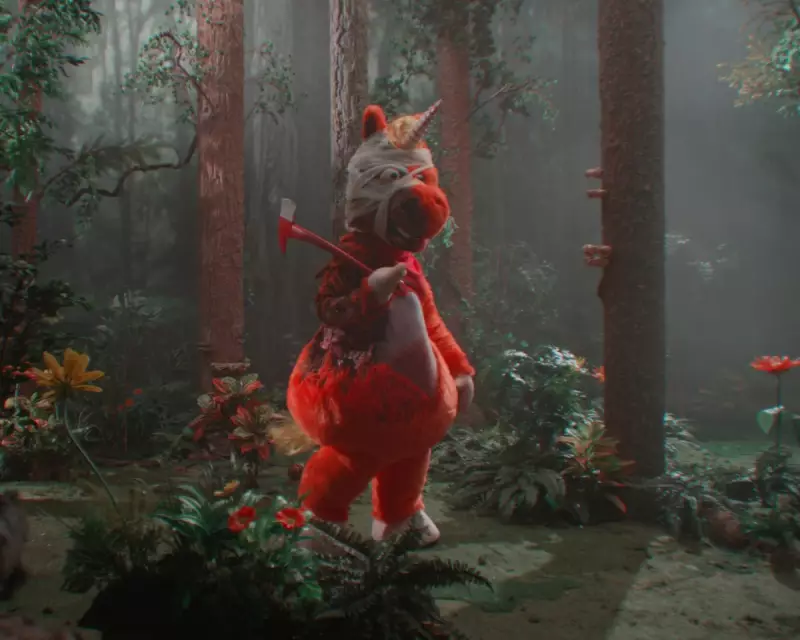
Before audiences get to experience Ayo Edebiri and Daniel Kaluuya's long-gestating A24 Barney project, Buddy arrives as something of an off-brand alternative. The film transports viewers directly into the world of a 1990s-style children's television program, complete with bright colours, exaggerated performances, and educational segments. The titular character, voiced by Keegan Michael-Key, is an orange unicorn whose initially friendly demeanour gradually reveals something far more sinister lurking beneath the surface.
The production design successfully recreates the aesthetic of vintage children's programming, drawing comparisons to 2024's superior Sundance entry I Saw the TV Glow. However, where that film explored genuine psychological horror, Buddy quickly establishes its central gimmick and then struggles to develop it meaningfully. The familiar formula of lessons, singing, and overpronounced syllables takes a dark turn as Buddy's playful suggestions escalate into something genuinely threatening.

Failed Horror Icon Ambitions
Casper Kelly, whose background includes work for Adult Swim, clearly intends to position Buddy as a new horror icon. The film creates an elaborate universe around the character's power and influence, even featuring Buddy's appearance at the midnight premiere. Yet the execution fails to justify this ambition. Despite the promising setup of a malevolent presence invading a wholesome children's television world, the film never achieves the necessary tension or terror.
The central problem lies in Buddy's characterization. Despite committing violent acts with his sunny disposition intact, the character feels strangely restrained. There's a lack of genuine menace or sadism that might have made him compellingly terrifying. While there are occasional flashes of more gonzo horror elements—including a particularly disturbing scene involving a nurse—the kills remain disappointingly tame and uninventive.
Structural and Performance Issues
Buddy employs an episodic structure, moving through the television program's segments as the young characters, led by Delaney Quinn, gradually realize their furry friend is eliminating those around them. Their attempts to survive using limited resources should create suspense, but the film's artificial setting—a nauseatingly fake studio complete with a Patton Oswalt-voiced backpack—undermines any sense of genuine stakes.
The narrative further complicates matters by introducing a real-world dimension featuring Cristin Milioti as a confused parent, reminiscent of Julianne Moore's role in The Forgotten. Milioti brings her considerable talent to the role, having navigated similar reality-bending territory in Black Mirror's standout episode USS Callister. However, the film lacks Charlie Brooker's intricate world-building and suspenseful pacing, leaving both narrative threads feeling underdeveloped.
Missed Opportunities and Target Audience Confusion
As the film progresses, fundamental questions emerge about its intended audience and purpose. The child actors maintain well-observed yet increasingly grating Nickelodeon-style performances that make it difficult to invest emotionally in their survival. When Kelly attempts to merge the television world with reality and inject emotional weight, the tonal clash proves too great for the film's inherently silly premise to support.

The finale, featuring Buddy's inevitable transformation, fails to deliver the satisfying horror payoff the premise promises. The results feel tinny and unlikely to frighten anyone over eight years old, raising further questions about who exactly this film was made for. Is it a horror film for adults that happens to be set in a children's television world, or a children's film with horror elements? Buddy never satisfactorily answers this question.
Sundance Horror Legacy and Final Verdict
Sundance has a proud history of launching groundbreaking horror films that redefine the genre. From Get Out's social commentary to Hereditary's family trauma and The Babadook's psychological depth, the festival has consistently elevated horror beyond mere scares. Buddy, unfortunately, fails to join this distinguished company.
The film's central joke—a murderous children's television character—wears thin long before the credits roll. While the premise might have worked effectively as a short film, the feature-length treatment exposes the concept's limitations. Even the inevitable comparison to the actual Barney character works against the film, with many viewers likely finding the original purple dinosaur more genuinely unsettling than Buddy's manufactured menace.
Currently screening at the Sundance Film Festival while seeking distribution, Buddy represents a missed opportunity to explore the genuine horror potential of corrupted innocence. The film demonstrates that a clever premise alone cannot sustain feature-length horror, requiring stronger execution, more inventive scares, and clearer narrative purpose to truly terrify audiences.