He-Man's Earthbound Dilemma: Can New Film Balance Fantasy with Reality?
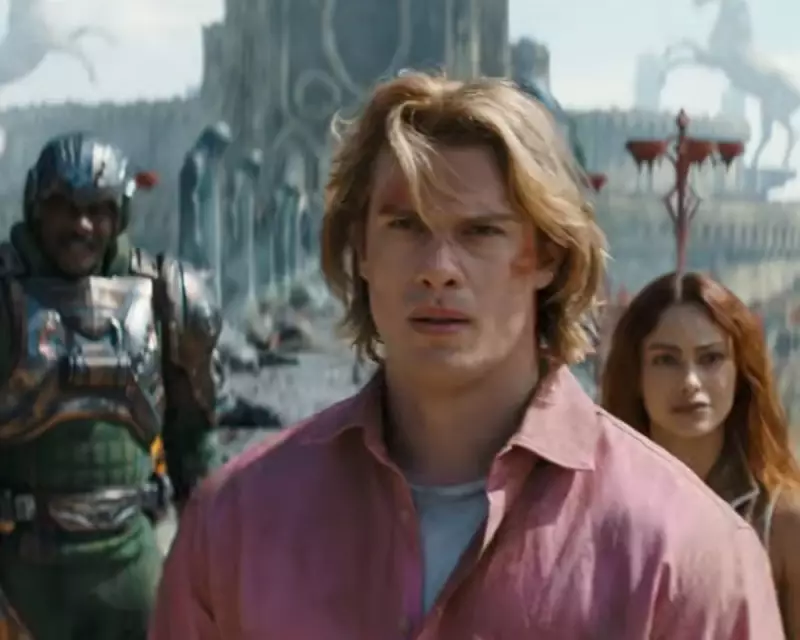
The upcoming Masters of the Universe reboot, starring Nicholas Galitzine as the iconic hero, faces a familiar challenge: how to ground a wildly psychedelic fantasy without losing its mythic essence. The first trailer reveals Prince Adam exiled to Earth, working a mundane office job while dreaming of returning to Eternia—a narrative choice that echoes the controversial 1987 film starring Dolph Lundgren.
The Peril of Planetary Proximity
There exists an unwritten rule in science fiction and fantasy: avoid setting action in our solar system. With few exceptions like Alien: Earth, which cleverly subverts expectations, such ventures often falter. Remember Galactica 1980, the short-lived Battlestar Galactica spin-off? Or later seasons of Lexx that diminished its space opera grandeur by anchoring plots closer to home?
The 1987 He-Man film made this misstep, transplanting Nordic lunk Dolph Lundgren to Los Angeles before audiences could accept him as the mythic hero. Instead of skull-faced castles and cosmic sorcery, viewers got shopping malls and car parks—a jarring contrast to the original series' hallucinatory appeal.

Eternia's Psychedelic Legacy
The early-80s He-Man and the Masters of the Universe was perhaps the most psychedelic children's programme ever broadcast without warning labels. Episodes featured surreal underworlds with floating platforms and warped gravity, or nightmare dreamworlds ruled by Skeletor as a bony, mad god. Eternia felt less like a place and more like a collective hallucination—explaining why Lundgren's Earthbound portrayal seemed like a confused intergalactic exchange student.
This abstract, loss-fuelled nostalgia appears to inspire Travis Knight's reboot. The trailer emphasizes familiar staples: Idris Elba as Man-At-Arms, Alison Brie as Evil-Lyn, Morena Baccarin as the Sorceress, and Jared Leto as Skeletor. Even Kristen Wiig voices Roboto, a deep-cut character. It's a clear effort to reassure fans after mixed responses to recent adaptations.
The Fragility of Fantasy Foundations
Kevin Smith's 2021 Masters of the Universe: Revelation faced criticism for sidelining He-Man in favour of Teela and burdening the mythology with emotional gravity. This highlighted a core issue: He-Man is a paper-thin property that collapses when asked questions it wasn't designed to answer. The original thrived on overblown theme music, clear moral lines, cackling villains, and problems solved by brute force—not introspection.
Knight, director of Kubo and the Two Strings, brings intriguing vision, but risks overcomplicating a franchise whose iconic villain is literally made of bones. Masters of the Universe has always flourished through abstraction—archetypes, silhouettes, and mythic blunt force. The more you round it out or explain its workings, the more you risk discovering there's little substance beneath the surface.
The reboot's success hinges on balancing grounded narrative with unapologetic fantasy. Can it honour He-Man's gloriously overblown origins while offering fresh depth? Or will it, like its predecessors, struggle to reconcile Earthly realism with Eternian excess? The answer lies in whether it embraces the property's inherent absurdity or apologizes for it.