Something deeply unsettling is taking root in the Australian horror film Leviticus, which has made its world premiere at the Sundance Film Festival. If you were to ask the devout residents of the remote town at the story's heart, they might whisper that it is the curse of homosexuality, a silent plague corrupting their young. Yet, if you posed the same question to the gay teenagers themselves, they would describe a terror far more visceral and personal.
A Supernatural Affliction Born from Forbidden Desire
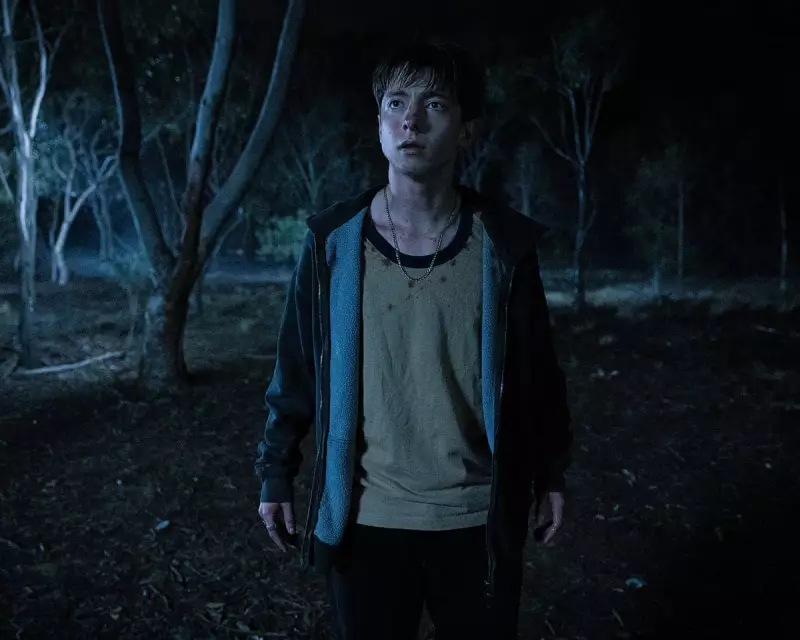
In writer-director Adrian Chiarella's remarkable and memorable debut feature, queer longing is portrayed as a dual threat. It endangers one's physical safety from the prejudiced community members you live alongside, work with, and even pray beside. More chillingly, it manifests as a genuine supernatural affliction. The narrative introduces us to teenagers Naim, portrayed by Joe Bird, and Ryan, played by Stacy Clausen, during a secretive meeting. Their interaction follows that familiar, tender progression from playful wrestling to a tentative, meaningful kiss.
For Naim, this encounter represents a thrilling new beginning, a glimmer of hope and happiness in an otherwise monotonous new town life with his affectionate yet unaware single mother, played by Mia Wasikowska. However, when Naim witnesses Ryan sharing a similar intimate moment with Hunter, the local preacher's son portrayed by Jeremy Blewitt, jealousy and heartache overwhelm his judgement. He makes a fateful decision that he will profoundly regret.

The Gory Consequences of Conversion Therapy
Once their secret is exposed, Ryan and Hunter are compelled to undergo a conversion therapy ritual orchestrated by a mysterious outsider. Initially, the boys respond with sceptical laughter and eye-rolls at what they perceive as mere superstition. Yet, something malevolent takes hold of them during the ceremony. Upon its conclusion, they come to the horrifying realisation that they have been genuinely cursed.
Within the world of Leviticus, the curse assumes the terrifying form of the person you desire most. Your ultimate crush becomes a relentless, murderous apparition intent on crushing your skull. This spectral threat remains invisible to everyone else, appearing only when you are alone, and it will pursue you relentlessly until you are dead.
A Clever and Poignant Spin on Horror Tropes
This premise offers a shrewd and inventive twist on a subgenre often mired in cliché. It poses a haunting question: what if your queer desire manifested as a demonic entity? The film taps into a profound, deep-seated fear, exploring not just the potential for self-destruction inherent in such feelings, but also the horror one might unwittingly inflict upon another. If the attraction is mutual, you become doomed to be the last face your loved one sees before death—a cruel tragedy that perverts love into lethal hatred.
Much like the influential film It Follows, to which it owes a significant debt, Leviticus can also be interpreted as an allegory for HIV/AIDS and the devastation that can stem from desire. It wrestles with a poignant dilemma: this feeling might destroy us both, but how can we possibly deny its power?
Romance Amidst the Horror
This conflict imbues the film not only with a piercing sense of sadness but also with a surge of giddy, against-all-odds romance. It asks, what if love truly does tear us apart, yet the risk remains utterly worthwhile? While it would be simple—and very timely—to wallow in the story's grim trauma, Chiarella skillfully balances the brutality. In between scenes of graphic violence, including severed ears and decapitations, he embraces the epic, star-crossed swoon at the narrative's core.

Visually, the director proves equally adept at capturing the chilly, isolating dread of horror as he is at rendering the soft-hued, intimate buzz of connection. Joe Bird and Stacy Clausen share a sweet, authentic chemistry that perfectly captures first love. Their scenes together are filled with nervous glances checking for safety, followed by the warm rush of relief when they believe, however briefly, that they might be okay. Notably, an illicit encounter on a bus is framed with as much tension and terror as any of the film's overtly violent attacks. This character work makes the audience fervently root for their survival, even as we fear the worst.
Subverting Expectations and Avoiding Stereotypes
While Chiarella establishes a familiar horror framework, he consistently works to subvert audience expectations. Yes, there is a sequence where the characters attempt to track down the conversion therapy "healer," but the outcome defies predictable genre conventions. Furthermore, the film avoids easy, Bible-thumping caricatures in its portrayal of the town's religious community.
Instead, it recognises that something is far more terrifying about vile homophobia emerging from ostensibly warmer, well-meaning individuals. Naim's loving mother, brought to life by a reliably excellent Mia Wasikowska, is a prime example. She is painted with nuance, avoiding reduction to a mere zealot in the mould of Carrie's mother. Wasikowska's performance, though somewhat underutilised, adds significant depth.
A Bold and Bittersweet Conclusion
Even at a wonderfully concise 86 minutes, the film's final act loses a slight amount of narrative momentum. The repetitive "No, it's me!" dynamic, familiar to fans of classics like The Thing, can feel a tad wearying. However, Chiarella masterfully sticks the landing with a bold and bittersweet finale. The ending is sold with powerful conviction, aided by a soaring, perfectly chosen song from Frank Ocean.
This punchy, memorable final scene is the kind that compels viewers to insist their friends catch the next screening—a notable achievement at a festival where many filmmakers struggle with how and when to conclude their stories. In increasingly crowded cinematic fields—encompassing trauma horror, curse horror, gay horror, and Sundance horror—Leviticus distinguishes itself as a standout, intelligent, and emotionally resonant debut.
Leviticus is currently screening at the Sundance Film Festival and is actively seeking distribution.