Cornish Director Mark Jenkin Brings New Film to Home Town
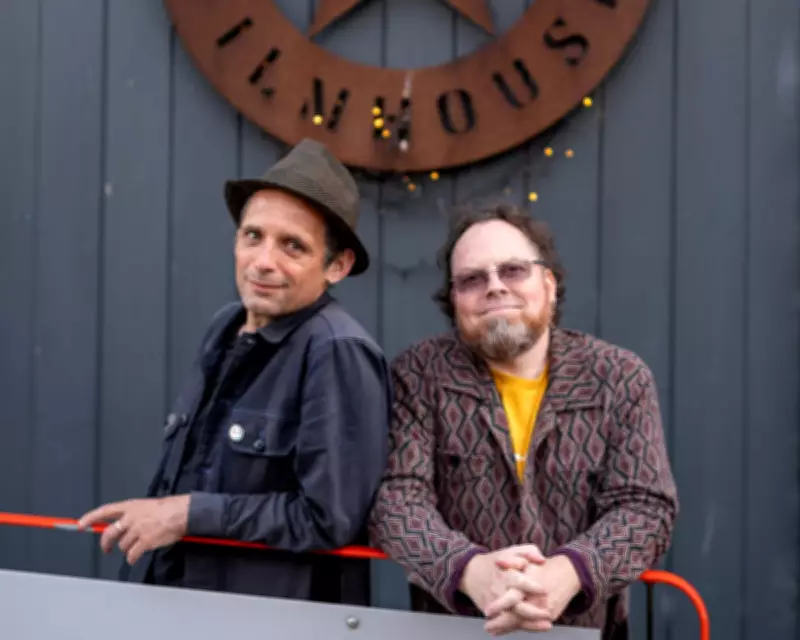
Mark Jenkin, the acclaimed Cornish film director, experienced a mix of pride and nervousness as his latest cinematic creation, Rose of Nevada, received its first UK screening in the fishing town of Newlyn, Cornwall. The exclusive preview at the Newlyn Filmhouse, housed in a historic fish cellar and smokery near the harbour, drew a supportive and attentive local audience. However, Jenkin admitted that presenting his work to a home-town crowd and participating in a Q&A session with familiar faces left him feeling somewhat uneasy.
Authenticity at the Heart of Cornish Cinema
"This is the greatest town in the world," declared Jenkin, a native of Newlyn. "I see Cornwall as being at the centre of the world. But the Cornish screenings are the ones I get most nervous about. I cannot control what people think of the film, but I do have a certain amount of control over the authenticity of my work. If a local audience tells me a film does not feel authentic, that would hurt. The Cornish audience is the most important."
Jenkin has garnered widespread recognition in recent years for his gritty, Bafta-winning film Bait, which explored tensions in a Cornish fishing village, and the eerie folk horror Enys Men, set on an island off the coast of south-west England. Rose of Nevada, a ghostly time travel tale about a Cornish fishing boat and crew, represents a significant step forward in his career. The film has earned excellent early reviews and secured Jenkin a coveted spot on the cover of the May edition of the venerable film magazine Sight and Sound.

Filming Techniques and Sustainability Efforts
"I keep reposting the picture of the cover on social media," Jenkin told the Guardian as he prepared for the preview. "Part of that is good publicity, but the more I post it, the more I believe it is real and it has actually happened." Rose of Nevada was shot entirely in Cornwall, primarily in the harbours of Hayle on the north coast and Mullion in the south. The fishing boat featured in the film is a working vessel hired for the shoot. "During filming when there was a break, the skipper would take it out and do some fishing," Jenkin explained.
Similar to his previous works, Rose of Nevada was filmed on 16mm using a clockwork Bolex camera. Jenkin's vision of his homeland is front and centre, rather than serving merely as a picturesque backdrop. The director believes that if his films are authentic, audiences worldwide will understand and appreciate them, even if they have no prior knowledge of Cornwall.
Jenkin is often hailed as a talisman for Cornish film-making, but he emphasised that when he returned to Cornwall from London at the turn of the century, he discovered a small yet passionate grassroots independent cinema scene already in place. He expressed joy at the existence of a beloved cinema in Newlyn. "I think it is a real testament to the power of cinema as an art form. We are constantly told that cinema is dead, nobody goes to the cinema. And we have got an arthouse cinema in the middle of Newlyn."
Cornwall at the Centre of the World
Jenkin argued that his perspective of Cornwall being at the centre of the world is not deluded. "It is like, this is my world here. So that is the centre of the world. It does not mean it is better than anywhere else, but it is the bit that I am engaged with." Alongside authenticity, sustainability and inclusivity are paramount for Jenkin and the film's producer, Denzil Monk. They strive to minimise their impact on the Cornish environment and community. Consequently, most props used in the film, such as nets, fish boxes, and buoys, have been returned to sea.
Monk stated, "When your work is emerging out of a place, out of a community, out of a culture, then you want every aspect of that to be respectful of that cultural context and to contribute to it. We try to step very lightly."

A Flourishing Cornish Film Scene
Laura Giles, the managing director of Screen Cornwall, described Rose of Nevada as a significant moment for Cornish film-making. "It is a local film-maker telling a story set and rooted here. Mark is a talisman and doing a fantastic job, but I think there are other people coming through as well who are really interesting." Other notable successes include the Cornish-language film Poll Pri (Clay Pit), directed by Edward Rowe, which narrates the story of a community in central Cornwall fighting for survival. Another is A Year in a Field, a slow yet compelling tale of twelve months in the life of a 4,000-year-old stone standing sentinel in the Cornish landscape.
Brett Harvey, creator of the Cornish road movie Long Way Back, remarked that Jenkin's success has shone a spotlight on Cornwall. "Cornish film has always been booming, but now the rest of the world is paying attention," he said. Dan Simpkins, the creator of the documentary The Lost Boys of Carbis Bay, which follows a group of explorers into derelict Cornish tin mines, noted a growing recognition of the importance of regional film-making. "Audiences increasingly want to see their own communities and identities reflected on screen, alongside big-budget blockbusters," Simpkins explained. "It is a genuinely exciting time to be a film-maker in Cornwall." Mark Jenkin will participate in a series of Q&A screenings before the official release of Rose of Nevada in the UK and Ireland later this month.