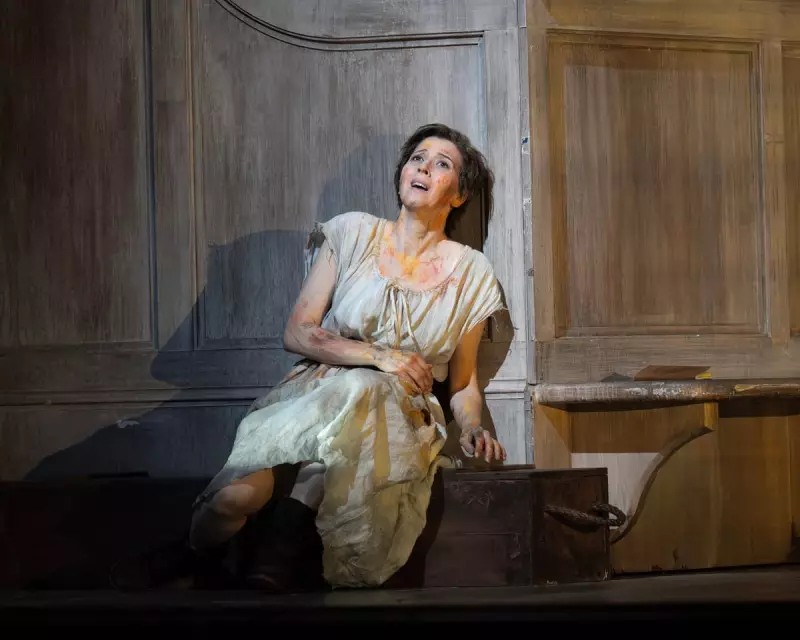
New York's prestigious Metropolitan Opera has unveiled a series of drastic cost-cutting measures, including staff layoffs, executive pay reductions, and programming cuts, as the organisation contends with persistent financial pressures.
Financial Strain and Executive Pay Reductions
The Met Opera cited lingering difficulties from the Covid-19 pandemic, which severely disrupted performing arts globally, as a key factor behind the austerity measures. According to reports, the institution is implementing salary cuts ranging from 4% to 15% for 35 executives earning over $150,000 annually.
This includes general manager Peter Gelb, whose compensation was approximately $1.4 million in 2024. Music director Yannick Nézet-Séguin, who received $2.05 million in the most recently disclosed fiscal year, is also among the senior figures affected by the reductions.

Staff Layoffs and Programming Adjustments
Beyond executive pay, the Met Opera is laying off 22 members of its 284-strong administrative staff. The organisation is also scaling back its artistic programme, with the upcoming season reduced from 18 productions to 17.
A planned staging of Mussorgsky's Khovanshchina, a 19th-century Russian opera, has been postponed indefinitely. A spokesperson confirmed these measures would reduce expenses by $15 million for the remainder of the current fiscal year and by a further $25 million in the following year.
Uncertainty Over Saudi Arabian Agreement
The announcement follows a tentative $200 million agreement struck last September between the Met Opera and Saudi Arabia. The deal would see the company perform each winter for five years at the Royal Diriyah Opera House near Riyadh in exchange for Saudi subsidies.
However, Gelb indicated that delays and uncertainty surrounding this agreement have contributed to the need for immediate cuts. "I've been assured that it's going to go forward. But we have been waiting for some time," he stated.
The Met Opera spokesperson emphasised: "The cuts are necessary while the Met awaits its pending agreement with Saudi Arabia and the implementation of other revenue-generating initiatives. The Met is committed to maintaining the highest artistic standards while ensuring its present and future financial sustainability."
Additional Revenue-Generating Proposals
Further measures under consideration include potentially selling the naming rights to the Met's theatre and exploring the sale of its two Marc Chagall murals, valued collectively at $55 million. Any sale of the artworks would require them to remain in place at the Lincoln Center venue.
Gelb also suggested the opera house might rent out its auditorium to popular music artists on nights when it is not staging its own productions, representing a significant shift in programming strategy for the historic institution.