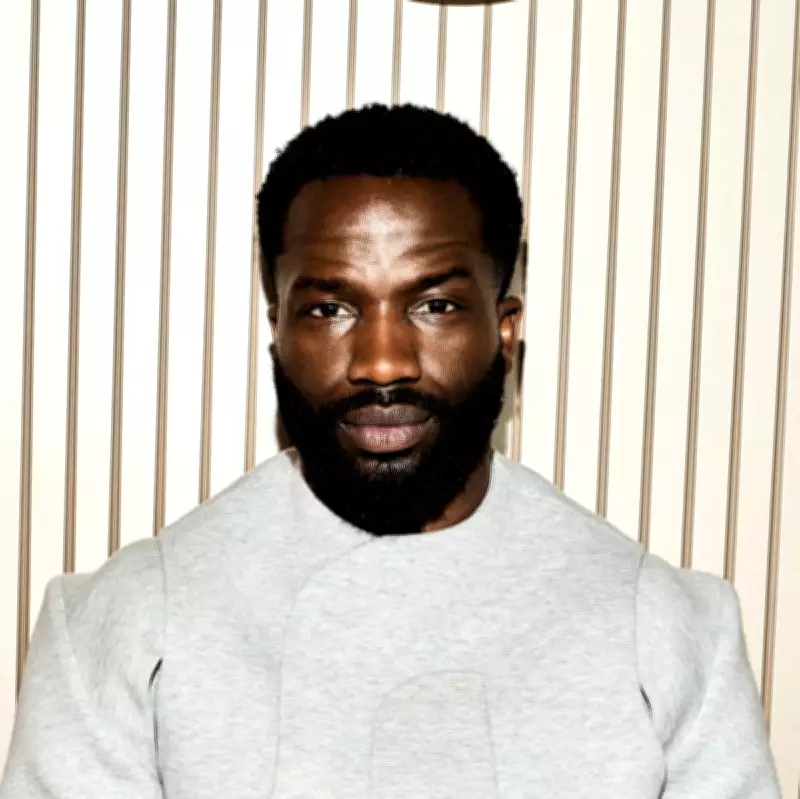
Ṣọpẹ́ Dìrísù Embraces Nigerian Roots in Cinematic Triumph
When Ṣọpẹ́ Dìrísù becomes animated during conversation, his speaking voice – ordinarily a polished inner-city London dialect – effortlessly transitions into a smooth Nigerian accent. His shoulders ease, his eyes smile, and he appears completely relaxed. This transformation reveals something profound about the actor: at his core, Dìrísù's essence is that of a Nigerian man, a truth that shines through in his latest cinematic venture.
A Personal Journey to Lagos
The opportunity to nurture his Nigerian identity proved to be a significant factor in Dìrísù's decision to take on his latest film, the Bafta-nominated My Father's Shadow. The entire project – on which he serves both as lead actor and executive producer – was shot on location in Lagos, Nigeria's former capital city, over an intensive eight-week period in early 2024.
"I would have said yes if the script was half as good," Dìrísù confesses. "When I first received it, I was excited to simply be working in Nigeria. It was crucially important for me not only to work there but also to experience the country independently as an adult. Getting to visit my grandmother more than once in a year was an added bonus. Beyond this, very few actors have the privilege to tell a story as tender, beautiful, and carefully considered as this one."

Football, Family, and Film
We meet late morning on the day after Boxing Day. Though both south Londoners, Dìrísù has made a cryptic request to meet north of the river, explaining he "needs" to be in Highbury in the early afternoon. His arrival wearing a vintage Arsenal shirt from their 1990-1992 era makes everything clear. Recently unable to use his season ticket due to temporarily relocating to the US east coast to shoot All the Sinners Bleed, a forthcoming Netflix series, he's now in London with Arsenal playing at home – exactly where he needs to be.
Exploring Fatherhood and Loss
Set during Nigeria's turbulent 1993 election crisis, My Father's Shadow draws inspiration from the relationship its creators – brothers Wale Davies and Akinola Davies Jr – shared with their late father, who died from epilepsy when they were babies. The film follows a father, Fọlárìn, and his young sons as they spend a day in Lagos while political unrest threatens their journey back home to their village.
"On the surface, the movie explores a father seizing the opportunity to reconnect with his sons," Dìrísù explains. "But it's also a fantastical, pseudo-biographical work about grief, loss, family, fatherhood, masculinity, connection, and absence."
Drawing from Personal Experience
Although the film centres on the relationship Wale and Akinola had with their father, they made clear to Dìrísù early in the process that he wasn't being asked to recreate a specific memory. Without their father as a direct reference point, he turned to his own paternal relationship for inspiration.
"It's in the way he calls my name, or how he stands, and some of his facial expressions and mannerisms," Dìrísù reveals. "There was a genuine celebration of the relationship I have with my father in ways I hadn't fully anticipated. That tenderness I learned directly from him." And the disciplinarian aspects? "Oh man, yes – I've definitely been shouted at like that before!" he laughs. "Ultimately, we are our parents' children. Much of him lives within me, so when I draw upon my own artistry and life disposition, he's there in the most positive ways. I'm simply grateful to have had him as my father."
Thematic Consistency in Career
Tenderness emerges as a recurring theme in Dìrísù's reflections. Fatherhood regularly appears across his filmography: in the 2018 Netflix horror His House, where he stars opposite Wunmi Mosaku as a refugee couple from Sudan struggling after their daughter's death; and in Gangs of London, where his character Elliot having a son becomes a significant plot point.
"As someone very ambitious to become a parent someday, questions about fatherhood are constantly present," he acknowledges, though he wouldn't describe this thematic consistency as entirely intentional.

Bridging Cultural Divides
Dìrísù experienced considerable insecurity about his performance, perhaps stemming from portraying a man so firmly rooted in Nigerian identity while being what he describes as "a Nigerian of the diaspora, not of the country." His upbringing and family home were unquestionably Nigerian, yet he has never lived there. The distance created by this circumstance is something he actively works to bridge.
A significant part of this effort involves improving his Yoruba fluency – he undertook approximately thirty hours of lessons to prepare for the role. "Place me in a Yoruba-only speaking area and I wouldn't die or starve, but I certainly wouldn't run for office," he jokes. "If there's one skill I would take from my career so far, it wouldn't be jiujitsu, kung fu, or boxing – it would be the ability to communicate with my ancestors."
Challenging Western Validation
Considerable attention has focused on the narrative that My Father's Shadow represents the first Nigerian film invited to screen at the Cannes Film Festival. While it's true it was the first selected for the festival's Official Selection – premiering in the Un Certain Regard section and winning Special Mention for the Camera D'Or prize – Dìrísù is careful to clarify that other Nigerian films have appeared at Cannes before.
"There exists this wilful amnesia regarding the quality of Nigerian film," he observes. "I don't want to diminish praise from wonderfully achieved films emerging from Nigeria that haven't received western celebration. Perhaps they weren't considered for the Grand Prix or other Cannes awards, but they were certainly present."
Redefining Success
Dìrísù maintains ambivalence about such accolades, viewing them less as legitimate reasons for celebration and more as indictments of an industry that has often been nearly impenetrable to Black talent seeking to tell stories about Black life. He's also mindful of allowing western perspectives to overly influence his understanding of success.
"This reminds me of when director Bong Joon-ho won the Best Film Oscar for Parasite and remarked: 'This is still basically just a local awards ceremony.' That was incredibly defiant – essentially stating that if the west doesn't endorse something as good, that doesn't mean it lacks quality."
Universal Storytelling
Dìrísù has cherished observing general audience responses to screenings worldwide since the Cannes premiere. "I recall a truly influential teacher at school saying that any performance should be experienceable and enjoyable by someone who's deaf, doesn't speak the language, or is blind. Storytelling quality should transcend traditional barriers to entry. This sentiment has returned with our film, which is in Yoruba, pidgin, and English with subtitles yet touches people in places like Korea. That's a genuinely wonderful experience."
Preserving Cultural Memory
Few films could be described as more of a love letter to their people and places than this one. The film presents strangers who feel warmly familiar, with honestly captured landscapes creating longing for places never visited – serving as both representation and invitation.
Director Akinola Davies Jr has frequently discussed how the Lagos of the 1980s and 1990s he grew up in is disappearing over time. Dìrísù recalls him speaking about wanting to capture and honour the mundanities of that life. "There are many moments where nothing dramatic occurs, yet they're engaging and texturally accurate to that period and place. If we don't focus attention on these elements, we fail to cherish them. They risk being erased or forgotten. Akinola aimed to crystallise the Nigeria of his childhood through this film. I believe he has truly succeeded."
My Father's Shadow arrives in UK cinemas from 6 February, distributed by MUBI.