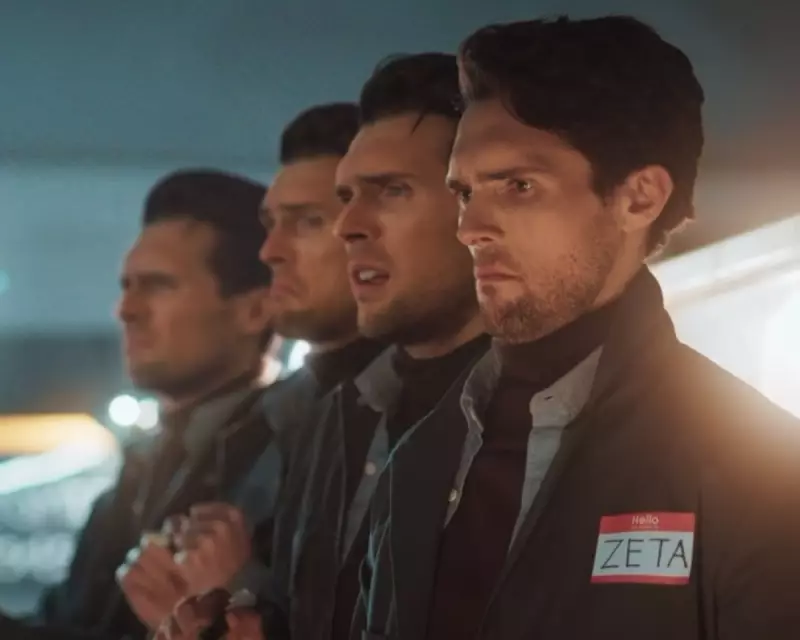
An independent sci-fi comedy wrestling with one of the genre's oldest conundrums has landed, offering a barrage of chatter and a perplexing premise. Tim Travers and the Time Traveler's Paradox, directed by Stimson Snead, is a low-budget, high-concept film that ultimately proves as tiring as it is ambitious.
A Paradoxical Plot That Tests Patience
The film centres on the titular Tim Travers, played by Samuel Dunning sporting a goatee. Travers is a scientist who has purloined nuclear materials from a terrorist cell to power his homemade time machine. His inaugural experiment is a stark one: he sends himself back one minute, armed with a gun, to murder his younger self. The goal? To physically test the classic time traveller's paradox – if he kills his past self, can he continue to exist in the future to have initiated the event?
The film posits an answer, leading Travers to repeatedly leap backwards. This results in a multiplying number of identical selves, all portrayed by Dunning, who eventually engage in a strange, off-screen orgy. Meanwhile, a hitman employed by the furious terrorists must hunt down and eliminate this ever-growing crowd of temporal clones.

Cameos Provide Much-Needed Relief
Where the film's own logic and relentless dialogue threaten to wear the viewer down, it finds salvation in two veteran Hollywood faces. Danny Trejo makes a welcome, if brief, appearance that punctuates the narrative. The true highlight, however, arrives late in the film with Keith David as a character known as the Simulator, effectively playing God.
David's scene injects wit into the proceedings, as his deity figure explains that creation is a act of free will, akin to being a self-published novelist. He grows visibly annoyed when the mortal characters seem to dismiss self-publishing as inferior, retorting with the film's best line: "It's not my fault if you don't understand the industry!"
An Exhausting Exercise in Ambition
The overall effect of Tim Travers and the Time Traveler's Paradox is one of exhaustion. It shares some conceptual DNA with Shane Carruth's cult classic Primer, albeit aiming for a slightly broader comedic tone. Critics may note that the film's incessant talk ultimately has the unintended consequence of making viewers appreciate the lighter, more elegant touch of Douglas Adams' The Hitchhiker's Guide to the Galaxy, which explored similar cosmic ideas with far greater finesse.
While the film earns points for its sheer commitment to its own gibbering, jabbering nonsense and the novelty of its premise, it remains a challenging watch. It is a movie that, much like its protagonist, often seems to be working against itself.
Tim Travers and the Time Traveler's Paradox will be available on digital platforms from 26 January.