Film Fans Draw Startling Comparisons Between Fictional Colonel and Real Border Commander
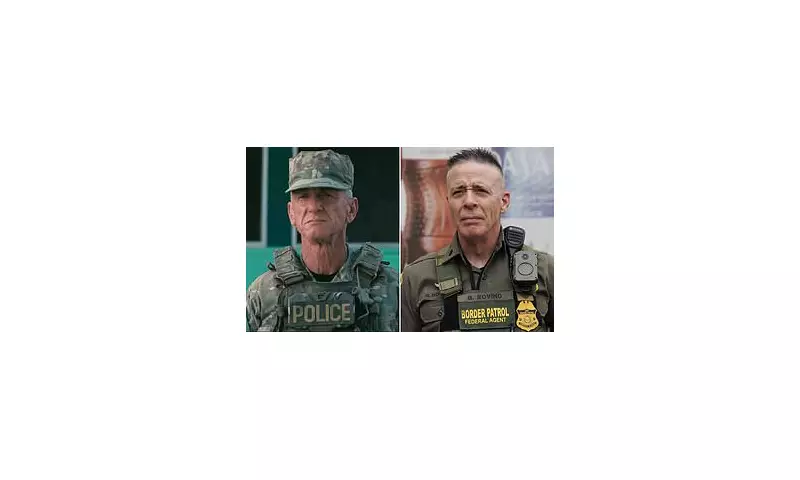
Viewers of the critically acclaimed black comedy One Battle After Another have begun watching the film through a different lens after identifying remarkable parallels between Sean Penn's fictional character and real-life Border Patrol Commander Greg Bovino. The film, which has garnered universal five-star reviews and been hailed as 'the defining film of a generation', is now at the centre of speculation regarding its potential real-world inspirations.
Uncanny Character Parallels Emerge
In Paul Thomas Anderson's cinematic masterpiece, Sean Penn delivers a powerful performance as Colonel Steven J. Lockjaw, a corrupt military officer whose authority faces serious challenges when an immigration detention centre under his supervision becomes the target of left-wing revolutionaries portrayed by Leonardo DiCaprio and Teyana Taylor. The character's narrative arc sees him promoted following a successful operation against the fictional terrorist group French 75, receiving The Bedford Forrest Medal of Honor – a decoration named after a slave trader who became a Confederate general and later served as the first grand wizard of the Ku Klux Klan.
Audiences have noted that Commander Greg Bovino's career trajectory bears striking resemblance to this fictional portrayal. Bovino, a border patrol officer with three decades of service who previously worked in the relatively obscure sector of El Centro, California, experienced a sudden rise to public prominence when he assumed the role of tactical commander for a major raid in Los Angeles last June. He subsequently became the controversial face of former President Donald Trump's immigration enforcement operations in Chicago and Minneapolis, with his methods drawing significant scrutiny and criticism.

Disturbing Similarities Extend Beyond Career Paths
The parallels between fiction and reality extend beyond mere career progression. According to reports from The American Prospect, Bovino has allegedly been compared to a Confederate general in an email from a colleague – a comparison he reportedly failed to reprimand at the time, later dismissing the correspondence as 'bogus and worthless' when questioned about it. This echoes the controversial honours bestowed upon Colonel Lockjaw in Anderson's film.
Further intriguing connections have emerged through fan observations. The film features a running gag where Leonardo DiCaprio's character consistently forgets the secret passwords required to communicate with his terrorist cell members. Remarkably, Bovino's own email passwords recently appeared on the dark web following a data leak, becoming accessible through multiple data breach scrapers – creating an unexpected real-world counterpart to the film's comedic device.
Social Media Buzz and Official Responses
The speculation has generated substantial discussion across social media platforms, with viewers actively comparing the two figures. Numerous posts on X (formerly Twitter) have highlighted the perceived similarities, with some users humorously congratulating Sean Penn on his Oscar nomination for 'playing the role of Greg Bovino', while others have directly questioned whether Bovino served as inspiration for Penn's character.
Despite director Paul Thomas Anderson previously stating that One Battle After Another is based on the 1990 postmodern novel Vineland, these real-world parallels have fuelled persistent speculation about additional sources of inspiration. The Daily Mail has contacted both the U.S. Customs and Border Protection and Anderson's representatives for comment regarding these comparisons.
Recent Developments in the Bovino Saga
The timing of these comparisons coincides with significant developments in Commander Bovino's career. This week, reports emerged indicating that Bovino has been reassigned and locked out of his government social media accounts. According to The Atlantic, citing a Homeland Security official and two individuals with knowledge of the situation, Bovino will return to his former position in El Centro, California, where he is expected to retire shortly.

Homeland Security sources have confirmed to the Daily Mail that Border Patrol Commissioner Rodney Scott ordered the revocation of Bovino's government social media accounts. These developments follow a controversial weekend during which Bovino vigorously defended the fatal shooting of 37-year-old ICU nurse Alex Pretti on a Minneapolis street, engaging in numerous social media exchanges about the incident.
Bovino's online activity included multiple tweets stating 'don't assault federal officers' in response to users sharing positive biographical information about Pretti. He engaged in disputes with various figures, including Republican Congressman Thomas Massie, Louisiana Senator Bill Cassidy, Texas Democrat Senate candidate James Talarico, and even author Stephen King – all of whom had called for independent investigations into the shooting.
Public Reaction and Official Statements
The controversy has sparked public demonstrations, with protesters gathering for a 'goodbye Gregory Bovino' noise demonstration outside the hotel where the Border Control commander is reportedly staying. The protest involved drumming and clattering pieces of wood, leading to clashes with agents in gas masks who fired irritants toward the crowd.
Following over forty responses to various reactions concerning the Pretti shooting across Saturday and Sunday, Bovino's X account suddenly fell silent. Despite these developments, Tricia McLaughlin, assistant press secretary for the Department of Homeland Security, has stated that Bovino has not been fired and remains a 'key part of the president's team.'
As One Battle After Another continues its awards season success – having earned fourteen BAFTA nominations for 2026 – the discussions surrounding its potential connections to contemporary political figures add an additional layer of relevance to this already significant cinematic work. The film's exploration of authority, immigration, and institutional corruption appears to resonate with current events in ways that neither its creators nor its audience could have fully anticipated.