The Enduring Magic of Time-Loop Cinema
From weary commuters reliving disasters to teenagers trapped in perpetual déjà vu, the time-loop movie has established itself as one of cinema's most oddly resilient subgenres. These films transform the mundane horror of endless repetition into profound revelations about human nature, morality, and existence itself. We explore the very best examples of this fascinating cinematic format that continues to captivate audiences worldwide.
Groundhog Day: The Unbeatable Classic
Harold Ramis and Danny Rubin's 1993 masterpiece Groundhog Day remains the undisputed champion of time-loop cinema. Bill Murray delivers a career-defining performance as misanthropic weatherman Phil Connors, trapped in an endless cycle of February 2nd in folksy Punxsutawney, Pennsylvania. The film's genius lies in its refusal to explain the phenomenon - no spurned lover's curse, no black hole, just existential repetition. Rubin estimated Phil's ordeal lasted "a hundred years ... a lifetime," yet the script's radical absence of explanation has inspired countless imitations while remaining unequalled.
Sci-Fi Variations on the Theme
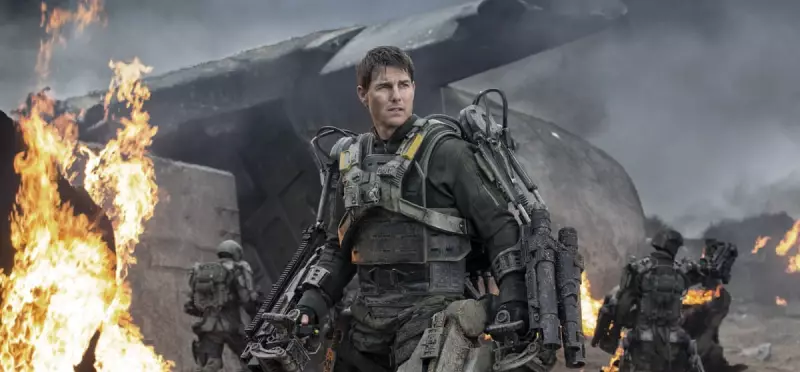
The time-loop concept has proven remarkably adaptable to science fiction. Edge of Tomorrow (2014) transforms the premise into battlefield spectacle, with Tom Cruise's desk jockey repeatedly dying in combat against alien invaders, each loop providing slightly more tactical knowledge. Similarly, Source Code (2011) places Jake Gyllenhaal inside the mind of a bombing victim, forcing him to relive eight-minute segments to prevent catastrophe. These films demonstrate how the format can sustain tension even when audiences know the world will reboot endlessly.

International Interpretations
Global filmmakers have put distinctive spins on the time-loop concept. Spain's The Incredible Shrinking Wknd (2019) introduces a terrifying twist: each repeated day loses an hour, creating mounting urgency. Italy's Stork Day (2004) offers a cynical nature presenter doomed to repeat 24 hours while reporting on Canary Islands storks. Japan contributes both the workplace comedy Mondays: See You 'This' Week! (2022), where Tokyo office workers must convince their boss they're trapped, and the anime marvel Urusei Yatsura 2: Beautiful Dreamer (1984), which escalates from school-day repetition to discovering their city rests on a colossal turtle's shell.
Horror and Thriller Adaptations
The format proves particularly effective for horror, with Happy Death Day (2017) following a college student repeatedly murdered on her birthday until she identifies her killer. Christopher Smith's Triangle (2009) creates maritime horror as a yachting trip becomes trapped in an endless pattern aboard a mysterious cruise liner. Even The Terminator (1984) incorporates time-loop elements in its circular narrative about preventing a dystopian future.
Artistic and Experimental Approaches
Some filmmakers use the format for more philosophical exploration. Chris Marker's La Jetée (1962), told almost entirely through still photographs, follows a post-apocalyptic time traveler haunted by witnessing his own death. Alain Resnais's Je T'Aime, Je T'Aime (1968) presents a more accessible, tender examination of memory and lost love through temporal dislocation. Christian Marclay's video installation The Clock (2010) creates a literal 24-hour loop synchronized to real time, weaving together thousands of film clips into a hypnotic meditation on cinema's relationship with time.
Social Commentary Through Repetition
The format has also served powerful social critique. Cynthia Kao's short film Groundhog Day for a Black Man (2016) delivers four minutes of grim commentary as its protagonist, despite daily attempts at placation, inevitably ends shot by police. Similarly, Before I Fall (2017) uses high-school repetition to explore bullying and redemption, while Palm Springs (2020) finds dark comedy in eternal wedding-guest purgatory, its release during COVID lockdowns making its themes particularly resonant.

The Format's Continuing Evolution
Recent additions like The Map of Tiny Perfect Things (2021) inject YA romance into the formula, while 12:01PM (1990) embraces bleak futility in its portrayal of endless lunch breaks. Jacques Rivette's Céline and Julie Go Boating (1974) offers freewheeling Parisian fantasy, proving the format's versatility across genres and decades. What unites these diverse films is their ability to find meaning in repetition, turning what could be narrative limitation into creative liberation.
The time-loop movie continues to evolve, inspiring television series like Russian Doll and proving that this subgenre, much like its protagonists, keeps finding new ways to repeat itself while revealing fresh insights about the human condition with each revolution.