American actor Zoey Deutch is poised for stratospheric recognition following her captivating performance in Richard Linklater's latest cinematic offering, Nouvelle Vague. The film serves as a joyous celebration of Jean-Luc Godard's groundbreaking 1959 masterpiece Breathless (À Bout de Souffle), reimagining the chaotic innovation of early French New Wave cinema in post-war Paris.
A Duet Impeccably Recreated
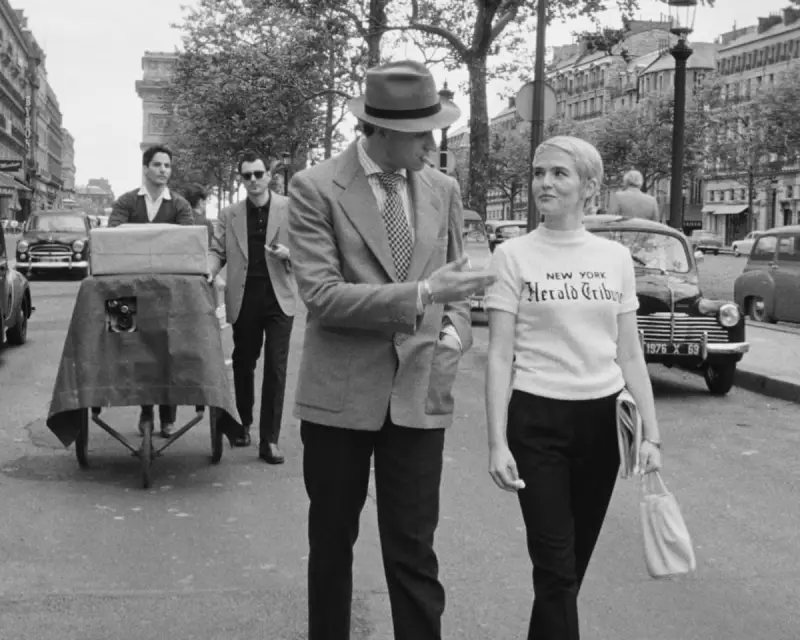
Deutch portrays Hollywood star Jean Seberg, who was cast by Godard as expatriate student and newspaper vendor Patricia. One of French cinema's most legendary duets features Seberg's iconic stroll with Jean-Paul Belmondo along the Champs-Élysées, clad in a simple T-shirt, slacks, and ballet flats. Deutch captures Seberg's essence with remarkable precision, from her awkward American-accented French to her balletic bounce and exuberant shout of "New York Herald Tribune!"
From Novice to Nouvelle Vague
When Linklater first suggested the role during the filming of his college baseball comedy Everybody Wants Some!! in 2014, Deutch admits she knew nothing about Seberg or Breathless. "I was 19," Deutch recalls during a Zoom call from Los Angeles, her once Seberg-inspired blonde gamine cut now replaced by symmetrical black bangs. "I know there are plenty of 19-year-olds who are cinephiles, but I didn't understand this world at all."

To prepare for the entirely French-language production, Deutch dedicated two years to learning the language and perfecting Seberg's distinct transatlantic delivery. Her initial viewing of Breathless left her mystified about its revolutionary status, as Godard's innovations—improvisatory openness and staccato rhythms—have since become embedded in mainstream cinema's vocabulary. "I didn't understand how punk rock it was at the time," she reflects.
Seberg at a Turning Point
Nouvelle Vague captures Seberg at a pivotal moment: living in Paris, sceptical about Godard's directorial potential, yet eager for new artistic possibilities. Deutch's portrayal shows Seberg both mystified and infuriated by Godard's unpredictability and gnomic pontifications, yet she matches him with mischievous deflation that often delights the director.
"She acknowledged his genius," Deutch explains, "and was grateful for this life-changing opportunity. But she later said he viewed her more as an idea than a person—'He wasn't interested in who I was, just in what I could represent.' That's very deep, and certainly the experience of many young women in this industry."
Beyond the Icon
Linklater insisted his cast remember they were depicting young, ambitious artists rather than established icons. "You're not an icon yet," he told Guillaume Marbeck, who plays Godard. "These people are just kooky artists doing their thing." Deutch studied Seberg's complex later life—including her harassment by the FBI for supporting the Black Panther Party and her tragic death at 40—though this context doesn't directly feature in Nouvelle Vague.
Hollywood Heritage and Professional Evolution
Deutch comes from Hollywood royalty: her father Howard Deutch directed Pretty in Pink, while her mother Lea Thompson starred in the Back to the Future trilogy. She remembers being protective of her mother from intrusive fans as a child. "As a kid, you can't separate lovely fans from those with no boundaries," she says.
Now 31, Deutch has built a substantial career since her Disney debut at 15, transitioning from romcom stalwart to more challenging roles in films like The Outfit with Mark Rylance and Clint Eastwood's Juror No 2. Her Broadway debut in Thornton Wilder's Our Town earned praise for her "apple-cheeked and wild-souled" Emily.
The Power of "Yes"
Deutch's acting journey began at five with improv classes suggested by her mother. "I learned that saying 'No' to adults made them explain things," she recalls. "My mother said, 'What's the opposite of no? Yes—yes and!' So she put me in improv, and it changed my life." This philosophy became so integral that Deutch has "Yes" tattooed on her foot. "I look down and say 'Yes' to the world." She even demonstrated the tattoo during our Zoom call.

With Nouvelle Vague likely to propel her further into the limelight, perhaps it's time for a complementary "Oui!" on the other foot. The film represents not just a celebration of cinematic history, but a testament to Deutch's own artistic evolution and commitment to saying yes to transformative challenges.