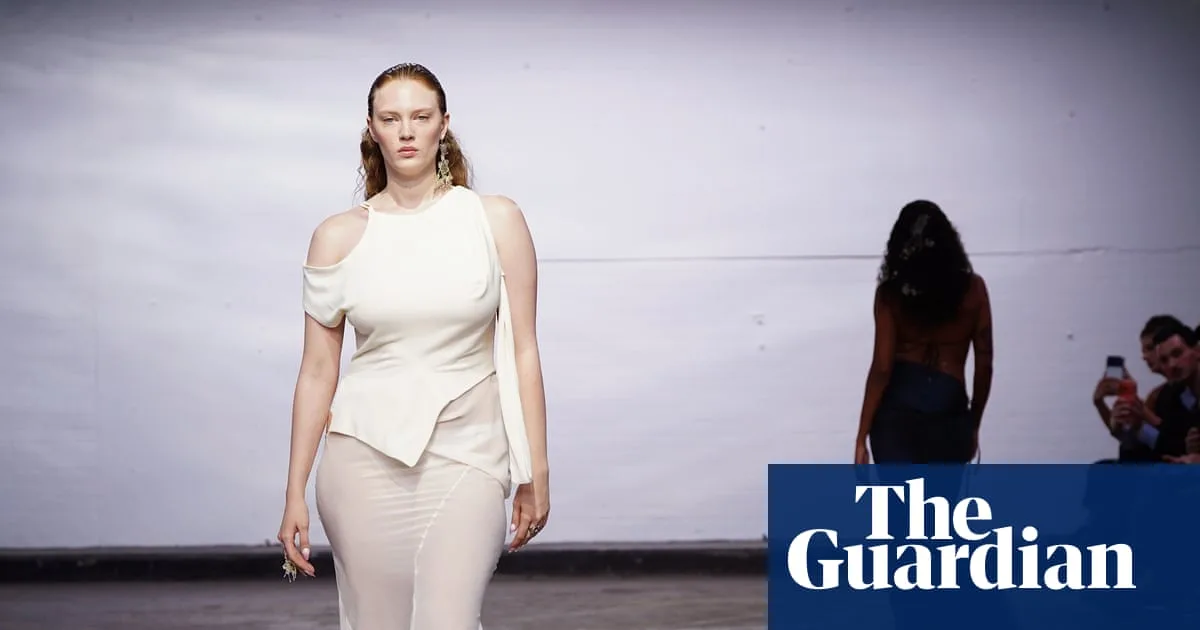
Body diversity has made a comeback at London Fashion Week, with emerging designers such as Karoline Vitto, Phoebe English and Sinead Gorey featuring a wide range of body shapes on their catwalks. Sizes ranged from UK 10-16 (mid-size) to UK 18 and above (plus-size), in contrast to the industry's sample size of UK 4-8.
Karoline Vitto, a Brazilian designer based in London, staged her first catwalk show in two years on Saturday. She said she wanted to push back against the discourse that “screams thin is back”. Her size-inclusive brand, founded in 2020, runs from UK 8 to UK 22, and she chose models to “reflect our sizing so that the viewer could understand how the pieces would look on them”.
Vitto's show featured 23 size-diverse models, some of whom covered their own travel costs from Brazil and the US to support her. High-profile faces included Jocelyn Corona, who has fronted campaigns for Fenty, and Nyakier Buong, who has shot for Vogue and walked for Maison Margiela. Vitto noted that models had different body proportions, such as bust projection, hip width and shoulder width, which “doesn’t normally happen on the catwalk”.

Other designers also embraced body diversity. Phoebe English cast her mother and writer Aja Barber among her 12 looks. Yaku Stapleton cast gymnasts, krumpers and contemporary dancers. Sinead Gorey celebrated curves with corsetry and high hemlines. Emma Matell, a casting director, said that while emerging designers championed inclusivity, change needed to come from luxury fashion houses, which have not been making efforts and set the example for younger brands.
The decline in plus-size model use reflects a wider normalisation of thinness in Hollywood and mainstream culture, partly due to drugs like Ozempic. Matell noted that even straight-size models have become smaller. Despite this, Vitto remains optimistic: “Inclusivity is not a trend.” She pointed to other female-led size-inclusive brands such as Sinéad O’Dwyer and Ester Manas as pioneering change.