The Scarf-Not-Tie Trend: Fashion Revolution or Style Catastrophe?
In the ever-evolving landscape of men's fashion, where trainers have replaced formal shoes and quarter-zip sweaters have supplanted blazers, a new sartorial controversy has emerged that's dividing style experts and the public alike. The latest battleground? The substitution of the traditional necktie with a casual scarf, particularly when worn without an accompanying coat or jacket.
Political Figures and Hollywood Stars Embrace Controversial Look
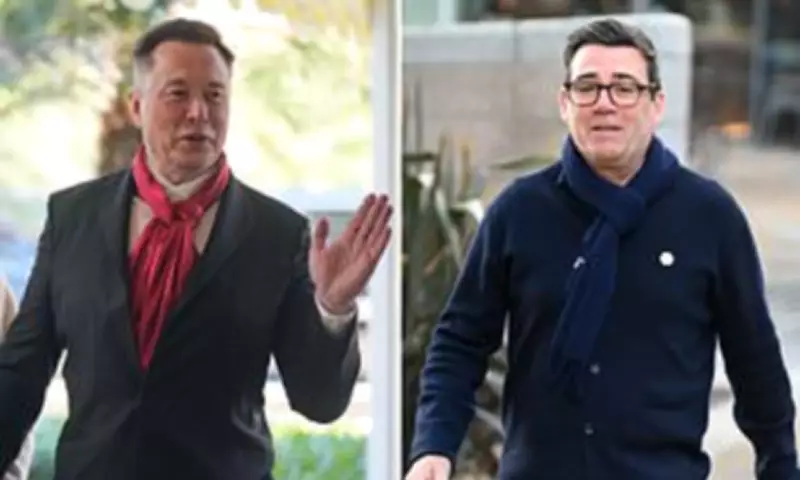
One prominent advocate of this contentious style is Greater Manchester mayor Andy Burnham, whose recent unsuccessful campaign to return to Parliament was accompanied by fashion choices that have sparked as much discussion as his political ambitions. While Burnham has cultivated a legion of admirers for various qualities, his decision to step out in a navy cardigan paired with a matching woollen scarf - sans coat - has drawn sharp criticism from fashion authorities who deem the combination particularly problematic.
The trend extends far beyond British politics, reaching Hollywood's elite circles where stars including Brad Pitt and Timothée Chalamet have been spotted embracing the scarf-as-tie aesthetic. Even Tesla founder Elon Musk recently swapped his conventional neckwear for a silk scarf during a visit to Donald Trump's Mar-a-Lago Club in Florida, demonstrating how this fashion statement has crossed both professional and geographical boundaries.

Style Experts Deliver Unanimous Verdict
Professional stylist Lisa Talbot has been particularly vocal in her criticism of the trend, describing it as a "style crime" when executed without proper layering. "Replacing a tie with a scarf, particularly when there's no coat involved, rarely looks intentional," Talbot told the Daily Mail. "More often than not, it comes across as unfinished, even slightly slovenly."
Talbot elaborated on the technical shortcomings of the look, explaining: "The issue is proportion and context. A scarf worn without a coat draws attention to the neckline, often creating bulk or drape where clean lines are needed, particularly with knitwear or casual jackets. Rather than looking modern or relaxed, the overall effect can feel scruffy, as though the wearer is halfway between being dressed and undressed."
Her concerns are echoed by fellow stylist Oriona Robb, who has experience dressing both British and Hollywood royalty. Robb observed that "when worn indoors or without a coat, it can look unfinished, as though the wearer forgot the final element of the outfit rather than made a considered choice."
Public Opinion Mirrors Professional Criticism
The fashion industry's scepticism finds strong resonance in public forums, where style-conscious individuals have been debating the merits of the scarf-not-tie combination. On Reddit, one user tentatively questioned whether wearing a scarf with a sweater but no coat was "acceptable," while another queried the appropriateness of pairing scarves with rolled-up sleeves or without jackets.
The responses were overwhelmingly negative, with one commenter stating bluntly: "You'll look really odd walking around in the cold or whatever without a coat but still wearing a scarf. People will think you're a weirdo who enjoys having a warm neck and cold arms." Another offered the practical advice: "If it's cold enough for a scarf, it's cold enough for a jacket," while a third concluded simply: "No, it will probably look stupid."
The Design Perspective: Why Ties Serve Specific Functions
Michael Beckford, creative director of men's fashion brand Michael Whisky, provided technical insight into why the scarf fails as an adequate tie replacement from a design standpoint. "The tie has always served a very specific purpose: it anchors the shirt, defines the vertical line of the body, and signals intent," Beckford explained. "When you replace it with a scarf, the result can feel vague, almost careless, especially when paired with classic tailoring that relies on clarity and proportion."

Beckford acknowledged that there might be "rare" and "highly controlled" occasions where a scarf could successfully replace a tie, particularly when paired with textured knits or in deliberately subversive eveningwear styling for events like award shows. However, he emphasised that "even then, it usually works best with outer layers involved. Without a coat or jacket designed to support it, the scarf can look more like an afterthought than a statement, which is where the slovenly perception comes in."
The Final Verdict: Polish Versus Perceived Sloppiness
The consensus among fashion professionals appears clear: while fashion evolution should be celebrated, certain sartorial substitutions undermine the very polish they attempt to achieve. As Lisa Talbot concluded: "In short, scarves aren't a substitute for ties, and when worn without a coat, they risk undoing the very polish most men are trying to achieve."
This debate highlights the ongoing tension in men's fashion between comfort and formality, between breaking conventions and maintaining sartorial standards. As the boundaries of professional and casual wear continue to blur, the scarf-not-tie controversy serves as a reminder that not all fashion innovations receive universal acclaim, and that some style shortcuts may ultimately shortchange the wearer's intended impression.