Bad Bunny Makes Grammy History with Spanish-Language Album Victory
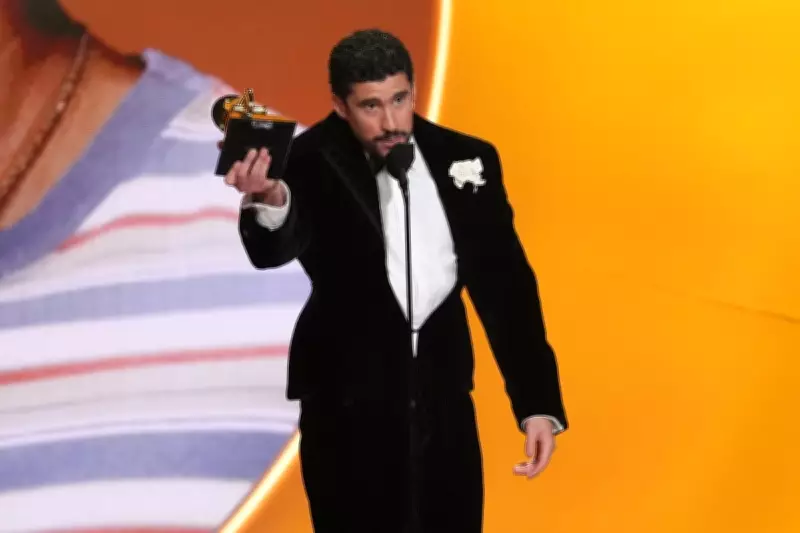
In a landmark moment for Latin music, global superstar Bad Bunny has secured the prestigious Album of the Year award at the 2026 Grammy Awards for his critically acclaimed work "Debí Tirar Más Fotos." This historic win represents the first time an entirely Spanish-language album has claimed the Recording Academy's top honour, delivering a significant cultural milestone during a period of heightened political tension for Latino communities across the United States.
A Watershed Moment for Diversity and Representation
The Recording Academy's selection of Bad Bunny's album marks a notable shift for an institution historically criticised for overlooking artists of colour, women, and musicians from genres like rap, R&B, and Latin music. This transformation follows concerted efforts to diversify the voting membership, with 3,800 new members added in 2025 alone. Remarkably, half of these new voters are under 40 years old, 58% identify as people of colour, and 35% are women.
This evolving demographic appears to be reshaping Grammy outcomes, continuing a trend that saw Beyoncé and Kendrick Lamar claim major categories in 2025. Bad Bunny now joins an exclusive group of Latino Album of the Year winners that includes Santana for "Supernatural" in 2000 and the collaborative work "Getz/Gilberto" by Stan Getz and João Gilberto back in 1965.

The Artistic and Commercial Power of "Debí Tirar Más Fotos"
Bad Bunny's winning album represents both commercial dominance and artistic innovation. As 2025's most-streamed release globally, "Debí Tirar Más Fotos" serves as a profound love letter to Puerto Rico, masterfully blending traditional Borinquen genres like bomba, plena, salsa, and música jíbara with contemporary reggaeton, trap, and electronic pop influences.
"There's so much amazing Latin music that has been overlooked, and that's part of what is so beautiful about this moment," observes Vanessa Díaz, co-author of "P FKN R: How Bad Bunny Became the Global Voice of Puerto Rican Resistance." "That's why it feels like a win."
Beyond its musical achievements, the album carries significant political weight. Yale associate professor Albert Laguna notes that while rooted in Puerto Rican identity, the album's themes resonate with global struggles for cultural autonomy, particularly evident in tracks like "Lo que le pasó a Hawaii" which addresses neocolonialism.
Political Statements Dominate the Grammy Stage
The 2026 ceremony became a platform for vocal opposition to U.S. immigration policies, with nearly half of acceptance speeches during the televised broadcast addressing immigration issues. Multiple artists used their moment in the spotlight to express solidarity with immigrant communities and condemn Immigration and Customs Enforcement (ICE) operations.
Billie Eilish declared "No one is illegal on stolen land" before adding an expletive directed at ICE, while first-time winner Olivia Dean acknowledged her immigrant heritage, stating "I am a product of bravery, and I think that those people deserve to be celebrated." Similar sentiments emerged during the pre-televised Premiere Ceremony, where artists including Shaboozey and Kehlani expressed support for immigrant communities.
Bad Bunny's Poignant Political Commentary
Bad Bunny's own statements carried particular resonance given his Puerto Rican heritage and previous criticisms of U.S. policies. After joking with host Trevor Noah about Puerto Rico's complicated relationship with the United States, the artist dedicated his música urbana album award speech to the current political climate.
"Before I say thanks to God, I'm going to say ICE out," Bad Bunny announced. "We're not savage, we're not animals, we're not aliens. We are humans and we are Americans."
His deliberate use of terms like "savage," "animals," and "aliens" directly counters language previously employed by former President Donald Trump to describe migrants. This linguistic choice carries historical weight, recalling political cartoons from the Spanish-American War era that depicted Puerto Ricans as racially inferior.

A Cultural Beacon During Challenging Times
Bad Bunny's triumph arrives during a period when many Latino communities report anxiety about speaking Spanish in public spaces amid growing anti-immigrant sentiment and increased enforcement actions. The artist himself cited concerns about mass deportations as influencing his decision not to tour in the continental United States.
Professor Laguna reflects on the album's significance: "A lot of people feel like this is a tense moment, it's a difficult moment. And here's someone giving us a sonic language in which to narrate this complex present. There's pleasure, in political critique, that the music makes possible in a beautiful way."
As Bad Bunny prepares for another landmark performance at the Super Bowl halftime show, his Grammy victory represents more than musical recognition. Vanessa Díaz captures the broader significance: "Our communities are being targeted. These winds right now that feel celebratory of the Spanish language, which is being literally criminalized — it is a little bit of light. It is a little of faith that we can still carve out our place here."
This historic Grammy moment thus serves as both artistic validation and cultural resistance, celebrating Spanish-language excellence while providing a platform for urgent political discourse during a divisive period in American society.