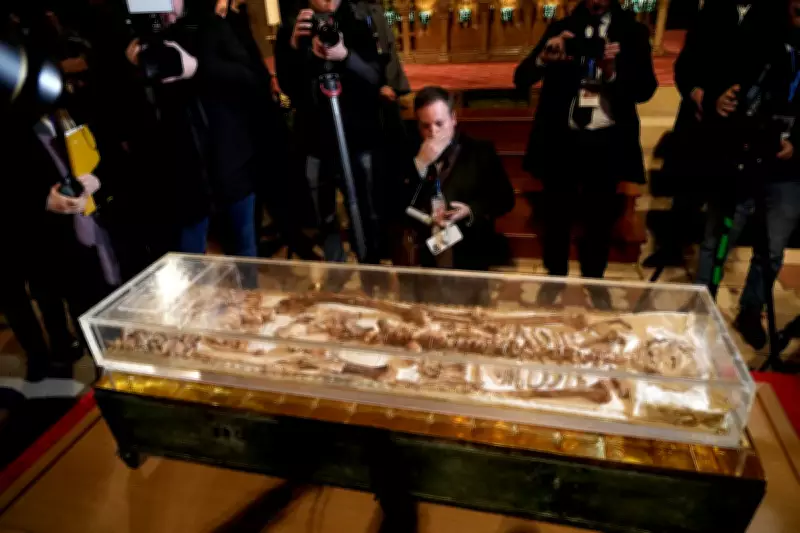
The skeletal remains of St Francis of Assisi, the beloved medieval friar who died eight centuries ago, are being exhibited to the public for the very first time. This unprecedented month-long display, organised by Franciscan friars to commemorate the 800th anniversary of the saint's passing, has already attracted nearly 400,000 registered visitors, with local officials anticipating the total could reach half a million before the relics return to their tomb on 22 March.
Historic Exhibition Presents Logistical Challenges
Assisi's Mayor Valter Stoppini has described the exhibition as a "mixed blessing" for the historic Umbrian town. While residents are accustomed to periodic pilgrim surges, these typically last only a few days, making this extended month-long event a significant test of local infrastructure and endurance. The city's narrow, cobblestone streets, lined with souvenir shops and limited services, face immense strain from the unprecedented influx of visitors.
"We're used to this kind of event, but that lasts for one, two or three days," Mayor Stoppini explained. "This is something prolonged, for a month, so I'm a bit worried, but calm." The mayor noted that a monthlong exhibition was the maximum he could ask of Assisi's residents, particularly following the massive influx of pilgrims the town experienced in 2025.

Coordinated Response to Pilgrim Influx
A dedicated force of 400 volunteers has been mobilised to guide visitors through the medieval city to the Lower Basilica of St Francis, where the relics are housed in a specially designed bulletproof glass enclosure. To manage the crowds, city hall has created new parking lots outside the city center and implemented a shuttle service to transport people into town.
Assisi resident Riccardo Bacconi, who works at a local bank branch, expressed hope that these new parking facilities would become a lasting legacy of the exposition, continuing to benefit locals long after the exhibition concludes. "I don't judge it negatively, economically it's important," Bacconi remarked after his morning run. "There are more advantages than disadvantages."
Spiritual Significance of the Display
St Francis, born into wealth in 1182 before renouncing his fortune to live as a mendicant friar, is best known for his message of peace, love of creation, and attention to the poor. These teachings strongly inspired Pope Francis, who became the first pontiff to name himself after the medieval saint. While the remains have been periodically inspected by Franciscan friars over the years for conservation purposes, this marks their first public exhibition.
Officials stated that removing the relics from their crypt and welcoming pilgrims for a month serves to keep St Francis's message alive and provide Christians with a unique opportunity to pray before them. The decision reflects the enduring spiritual significance of the saint whose tomb and spectacular basilica, decorated with Giotto's famous frescoes, already draw millions of pilgrims to Assisi annually.
Economic Impact on Local Businesses
For Assisi's souvenir merchants, who depend on religious tourism, the extended exhibition represents a welcome economic opportunity. Shopkeeper Arianna Catarinelli, who works in a souvenir shop on the main thoroughfare leading to the basilica, observed: "Other people will see what we see every day," referring to the spiritual atmosphere that permeates the town. Her shop features Assisi-emblazoned sweatshirts, pens with Carlo Acutis's photo, St Francis-themed coffee mugs, and neon rosaries.
"For residents, finding parking isn't easy," Catarinelli acknowledged. "But for businesses, I think it's positive that there are so many people."
New Generation of Pilgrims
While Assisi has long been famous for St Francis, a new saint is attracting a younger generation of pilgrims. Carlo Acutis, canonised in 2025 by Pope Leo XIV as the Catholic Church's first millennial saint, has developed a passionate following, particularly among young Latin Americans. Acutis, who died of leukaemia at age 15, is buried in a different Assisi basilica, but his popularity has transformed the town into a new religious destination for Catholic youth groups visiting Italy.

Brother Marco Moroni, custodian of the convent of St Francis, noted the growing phenomenon: "When we go out onto the piazza, we find many people who ask us 'Where's Carlo? Where's Carlo?'" He added, "The beautiful thing is that saints don't go to war against one another, thanks be to God. Many who come to the basilica go to see Carlo, and many who go to Carlo Acutis come to the basilica, creating an osmosis and a growing movement."
This dual attraction contributed to a 30 percent increase in pilgrim numbers last year, likely due to both Acutis's canonisation and the Holy Year, which brought approximately 33 million pilgrims to Rome, many of whom continued on to Assisi. The combined draw of these two saints creates what Brother Moroni described as "a growing movement that does though create some problems for the city" in terms of managing visitor numbers and infrastructure.