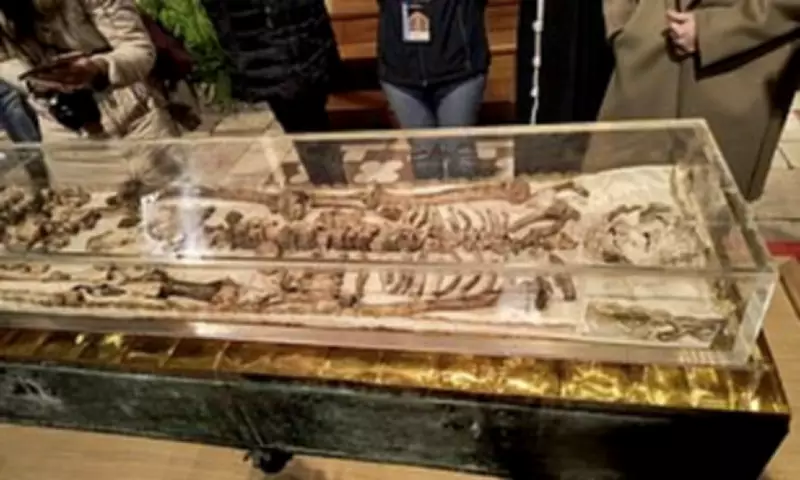
Historic Display of St Francis of Assisi's Bones Concludes 800-Year Saga
In an unprecedented move, the bones of St Francis of Assisi have been placed on public display for the very first time, bringing to a close an extraordinary 800-year narrative concerning his bodily remains. The Franciscan Church has organised this special exhibition to commemorate the 800th anniversary of the saint's death in 1226, with the remains housed in a slender, bulletproof Plexiglass case within the lower Basilica of St Francis in Assisi, Italy.
Overwhelming Public Interest and Pilgrimage Numbers
Public interest has been immense, with more than 400,000 individuals already registered to spend a few minutes viewing the sacred relics. Local authorities in Assisi are preparing for up to half a million visitors before the bones are returned to their permanent tomb on March 22. This exposition is particularly significant given the complex and often concealed history of St Francis's body, which was lost for centuries due to fears of theft and fragmentation.
The Life and Legacy of St Francis
Born in 1182 as the son of a wealthy merchant, St Francis famously renounced all material possessions to live as a mendicant friar. His profound sanctity led to widespread belief that he developed stigmata—wounds mirroring those of Christ on the cross—toward the end of his life. His dedication to charity and humility continues to inspire, notably influencing the current Pope Francis. Following his death on October 3, 1226, he was initially buried in the San Giorgio church in Assisi. Pope Gregory IX canonised him within two years and initiated construction of a basilica to serve as his final resting place.

Medieval Relic Culture and Secret Burial
During the Middle Ages, the remains of saints were highly coveted, believed to possess miraculous powers to heal illnesses, avert disasters, and bring prosperity. This created a lucrative trade in relics, leading to rampant theft, forgery, and fragmentation of holy remains. Even during his lifetime, followers reportedly tore pieces from St Francis's tunic, convinced of their spiritual potency. To protect his body from such fate, his trusted aide, Brother Elias, secretly buried it within the basilica on the eve of its planned transfer. The remains remained hidden and unmarked in a column until their rediscovery in 1818, later authenticated by Pope Pius VII.
Contemporary Pilgrimage and Economic Impact
The current exhibition underscores that fascination with religious relics persists strongly into modern times. As the display opened, 400 volunteers assisted in managing thousands of pilgrims through Assisi's historic streets. Visitors like Silvanella Tamos from Pordenone described the experience as profound, stating, "It's a body that's alive. It's not a dead body. He still has a lot to tell us today." Similarly, devoted local Fiorella Farina expressed emotional reverence, noting, "Just talking about it gives me goosebumps. It's an event I couldn't miss."
New Saints and Pilgrimage Trends
While St Francis remains central to Assisi's identity, the recent canonisation of Carlo Acutis—the Catholic Church's first millennial saint—has attracted a new generation of pilgrims. Acutis, who died at age 15 from leukaemia, is buried in a separate Assisi basilica and has garnered significant popularity, especially among young Latin Americans. This has transformed Assisi into a key destination for Catholic youth groups, with pilgrim numbers rising by 30% last year, partly due to Acutis's canonisation and the Holy Year.
Local Concerns and Logistical Challenges
The surge in visitors presents both economic opportunities and logistical challenges for Assisi. Local businesses, including souvenir vendors, restaurants, hotels, and tour operators, benefit greatly from the influx. However, the narrow, cobbled streets and limited infrastructure face considerable strain from the prolonged exhibition. Assisi Mayor Valter Stoppini acknowledged these concerns, remarking, "We're used to this kind of event, but that lasts for one, two or three days. This is something prolonged, for a month, so I'm a bit worried, but calm." Residents, though accustomed to periodic pilgrimages, may find the extended duration testing their patience.

This historic display not only honours St Francis's legacy but also highlights the enduring power of religious devotion and the complex interplay between spirituality, history, and community dynamics in contemporary society.