Bill Bailey's Vietnam Travelogue Explores Culture Amid Awkward Silences
The beloved comedian, musician, and Strictly Come Dancing winner Bill Bailey embarks on a six-part travel series through Vietnam, offering viewers a unique perspective that blends stunning landscapes with cultural insights, though his reluctance to engage in deep conversation sometimes creates awkward pauses.
A New Breed of Celebrity Travel Presenter
Gone are the days when Michael Palin dominated the celebrity travelogue genre. Today's viewers can choose presenters to match their mood: Sandi Toksvig for cheerful enthusiasm, Richard Ayoade for dry sarcasm, and now Bill Bailey for the smart introvert who'd sometimes rather just sit down. This approach doesn't work everywhere, but in Vietnam, where residents exhibit infectious warmth and little patience for complaining, Bailey finds his niche.
Journey Through a Nation in Transition
Cycling past lush rice fields in the opening scenes, Bailey sets out to explore a country that, just over fifty years after the Vietnam War, is "surging ahead to meet the demands of a globalized world while still dealing with the legacy of its turbulent past." His itinerary includes bustling Hanoi and Ho Chi Minh City (formerly Saigon), rural Dalat and Sapa, and the breathtaking Ha Long Bay.

The series begins in Hội An, where lantern-lit streets in the historic old town attract crowds of selfie-takers. Local tradespeople, many practicing crafts that made this city a significant 16th-century trading port, demonstrate how entrepreneurship is boosting Vietnam's economy. This setting perfectly embodies the show's theme of old traditions meeting new realities, though this framing is sometimes overemphasized.
Cultural Encounters and Insightful Reflections
Following travelogue tradition, Bailey meets local residents to uncover Hội An's history and culture. During a bespoke suit fitting, viewers learn about the city's globally renowned tailors. At Man Thai beach, Bailey tries his hand at navigating a traditional basket boat—essentially a floating bowl—believed to have been invented by fishers to avoid French colonial boat taxes.
In Thanh Ha Pottery Village, potters' wheels are kept spinning by constant foot pushes from helpers, resembling clay-covered scooters. After meeting 88-year-old Nguyễn Ngữ, who has been potting for seventy years with no plans to stop, Bailey observes that here, "age isn't a barrier to feeling useful." Another poignant moment comes when he watches Buddhist monks buy live fish from beach sellers only to release them back into the wild. "Two sides of life here and both make perfect sense," Bailey muses. "It's the kind of balance that's oddly comforting."
Awkward Silences and Tourist Trap Realities
Where Bailey seems less comfortable is during conversations themselves. He is friendly but lacks the instant rapport-building skills of someone like Alison Hammond, leaving some stories hanging in awkward silences. He also occasionally struggles with more strenuous activities, such as when he gets soaked in the basket boat and chunters with exasperation, much to the amusement of nearby fishers.
His honest reactions can be refreshing, though. Hội An's lantern ritual, where people hire boats to release lanterns on the Thu Bồn river, looks visually stunning but also like a crowded tourist trap. "This is quite stressful," Bailey admits while battling for a boat, eventually giving up and noting that the ritual's magic has been somewhat diminished.
Tranquil Temples and Wildlife Encounters
Thankfully, the series also visits serene temple complexes. The 4th-century Mỹ Sơn Sanctuary, nestled in mountains as the former religious and political capital of the Hindu-Buddhist Champa Kingdom, and the Buddhist Linh Ung Pagoda complex overlooking the sparkling South China Sea provide beautiful backdrops. Bailey excels here, thoughtfully explaining Vietnam's shifting dynasties and religions while showcasing his wildlife knowledge.
He is particularly witty and charmed by a troupe of bold macaque monkeys—dubbed the "monkey mafia"—who have taken over Linh Ung Pagoda and enjoy eating ice lollies shaped like watermelon slices. This fun segment contrasts with less engaging moments, such as watching Bailey photograph and sketch a butterfly.

The Episode's Undisputed Star
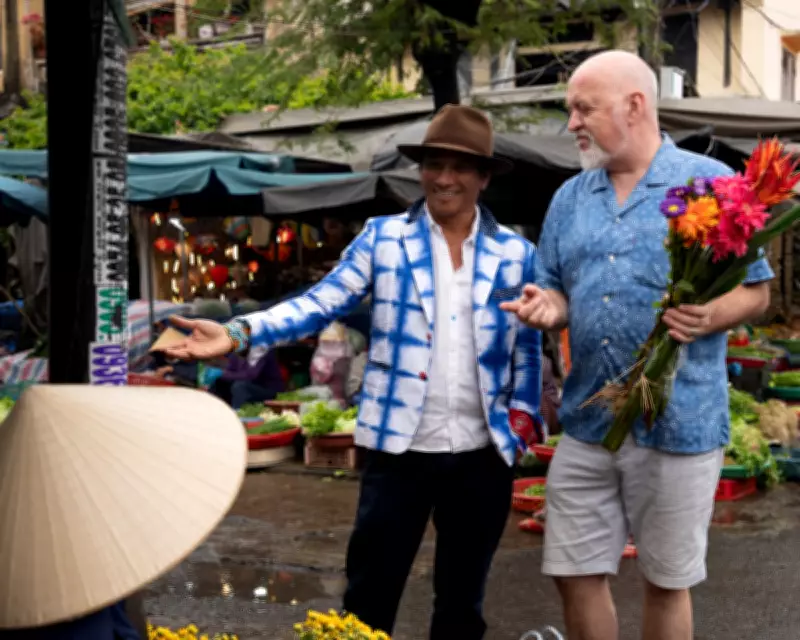
The real highlight of the episode is undoubtedly Chef Trần Thanh Đức. Charismatic in his tie-dyed blazer and fedora, he shows Bailey around the centuries-old Man Thai food market, winking at market sellers he's known for twenty-one years—though apparently not by name. "I know all these women," he chirps. "I know coconut lady, I know the flowers one, I know the spices one." Their beaming responses suggest they don't mind the nicknames.
Later, while preparing ceviche, Chef Đức shares his inspiring story: at sixteen during the war, his parents put him on a refugee boat to the US, and he now owns three restaurants in Hội An. "He's come through turmoil and emerged with something great," Bailey reflects. "He's like an embodiment of Vietnam." This incisive thought hints that the series' success may ultimately lie in its people rather than its presenter.
Bill Bailey's Vietnam is currently airing on Channel 4, offering viewers a blend of cultural exploration, beautiful scenery, and the occasional awkward silence that makes this travelogue uniquely Bailey.