Melania Documentary's Grand US Premiere Contrasts With UK's Empty Seats
The world premiere of Melania, Brett Ratner's $40 million documentary about the former first lady, unfolded with opulence in Washington DC on Thursday night. Held at the recently renamed Donald J Trump and John F Kennedy Center for the Performing Arts, the event featured a black carpet—a nod to Melania Trump's preferred colour—and attendees such as House Speaker Mike Johnson and Health Secretary Robert F Kennedy. However, press access was restricted once the film began, which profiles Melania over the 20 days leading up to her husband's January 2025 inauguration.
UK Screenings Draw Minimal Audience in Sittingbourne and Beyond
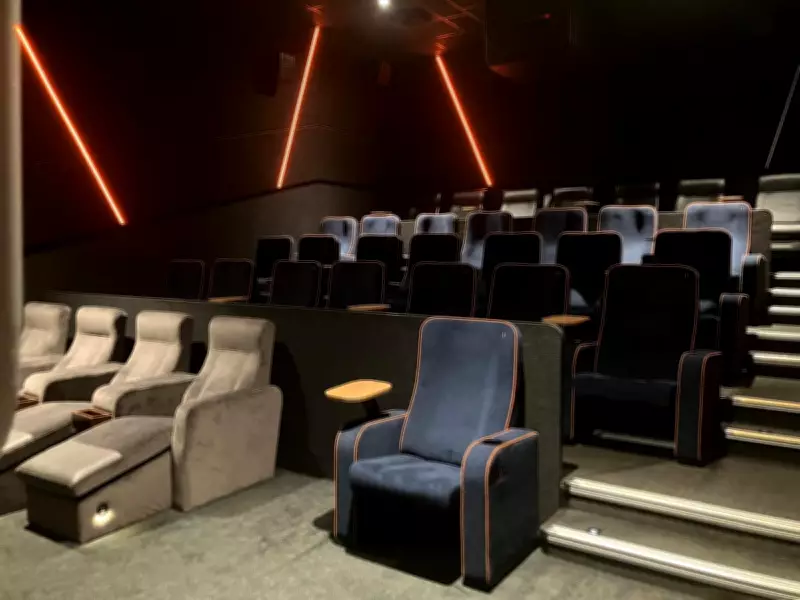
In stark contrast, the UK's first screening on Friday morning at the Light cinema in Sittingbourne was met with apathy. For the 9:40am showing in the 34-seater screen three, only one adult ticket was sold, leaving all other seats vacant. An usher noted that early screenings are unusual, typically reserved for children's films. Over the film's week-long run in the UK, with 12 showings scheduled, only six seats have been sold so far. This pales in comparison to other films, such as Wuthering Heights, which has already sold 59 seats for its first-day screenings in a fortnight.
This pattern is mirrored across approximately 100 cinemas in the UK, 1,500 in the US, and 3,000 globally, where Melania is being released. Ticket sales outside the US are notably soft, with the exception of Slovenia, Melania's native country, where Friday evening screenings in Ljubljana are nearly sold out.

Amazon's Theatrical Rollout and Industry Speculation
Melania Trump stated that Amazon's commitment to a wide theatrical release convinced her to choose them over competitors like Disney and Paramount. Brett Ratner, who has not directed a film since 2014's Hercules following allegations of sexual misconduct—which he denies and has not been charged for—praised Amazon's dedication to cinemas. He remarked, "To me, it's already a success... just the fact that Amazon has agreed to distribute this theatrically."
However, the film's extensive rollout and odd screening times have sparked industry suspicions. Some experts suggest Amazon may be employing a four-walling strategy, where the distributor rents cinema screens for a flat fee, keeping all box office revenue while cinemas profit from concessions. This tactic is rare and typically used for niche content like conspiracy films or pornography. If true, Amazon would be paying around £4,080 for a week in Sittingbourne, recouping only over £100 from ticket sales.
Financial Challenges and Critical Reception
Melania is projected to earn between $3-5 million in the US over its opening weekend, but it needs to gross $100 million globally to break even, given its $40 million production budget. For context, recent hits like Marty Supreme have achieved this, while others like Hamnet and 28 Years Later: Bone Temple are around $42 million. Steven Gaydos, a veteran entertainment journalist, commented, "Everything about the numbers reported for Melania is surreal... Its cost is so out of proportion to the audience for this project."
In the US, where $35 million was spent on promotion, posters have been defaced, and Ratner's social media posts have drawn negative comparisons. Additionally, reports indicate that some crew members requested their names be removed from the credits, with anonymous sources criticising Ratner's on-set behaviour.
Global Reactions and Future Projects
The film's release in South Africa was abruptly cancelled, with a distributor citing "recent developments" and "the current climate," likely referencing Donald Trump's controversial comments. Meanwhile, Ratner is already working on a spin-off mini-series about Melania Trump and has plans to revive the Rush Hour franchise, greenlit by Paramount last year.
Despite low box office predictions, Melania Trump expressed optimism about the film's appeal, stating it can inspire teenagers and young women. Yet, with empty theatres and mounting criticism, Melania faces an uphill battle to recoup its monumental costs and capture public interest beyond its premiere fanfare.