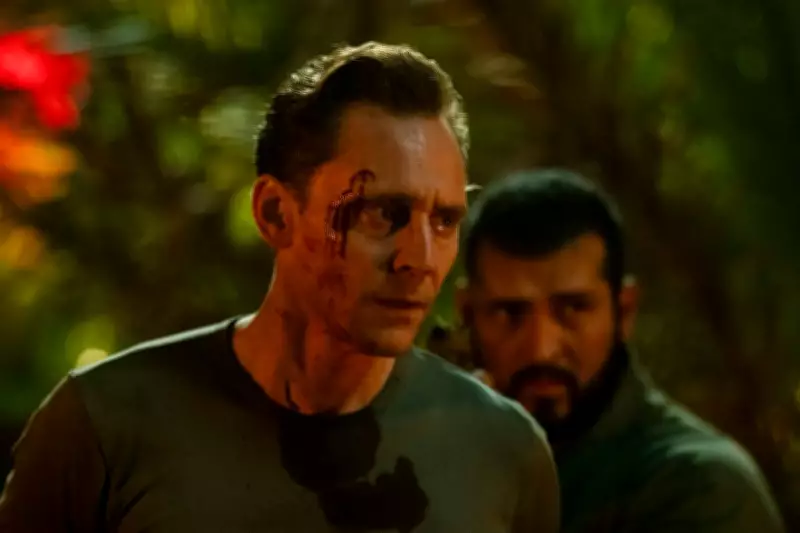
The Night Manager's Devastating Finale: A Bold Departure from Convention
Has television witnessed a more brutal and uncompromising conclusion in recent memory? The second season of The Night Manager built steadily towards a climax of Shakespearean proportions, saving its most savage narrative blows for the final moments. In a devastating six-minute sequence, the BBC drama eliminated multiple central characters with ruthless efficiency, leaving audiences stunned and questioning the very nature of storytelling conventions.
A Finale That Defied Expectations
The concluding episode delivered tragedy upon tragedy. Angela Burr, portrayed with characteristic brilliance by Olivia Colman, met her end in a French home invasion, her young daughter terrifyingly close by. Teddy Dos Santos, the illegitimate son played with heartbreaking vulnerability by Diego Calva, faced execution at the hands of his own father. Meanwhile, Jonathan Pine, Tom Hiddleston's tormented operative, lay bleeding in the dirt as adversaries closed in. Remarkably, Richard Roper, the series' embodiment of evil, emerged with his freedom intact. The villain prevailed in a conclusion that felt both bleak and audaciously unconventional.
This was appointment television that steadfastly refused to offer comforting resolutions. There were no last-minute reversals, no heroic resurrections, no restoration of moral order. David Farr, the series' screenwriter, reveals that these monumental decisions were made early in the creative process. "Those big decisions come quite early," Farr explains, essentially admitting that he constructed the narrative from the ending backwards. "And in a weird way, you hook everything off that. I've got to earn that." The execution certainly justified the ambition, with the six episodes moving beyond John le Carré's original source material to create something both daring and emotionally resonant.

Looking Towards Series Three
The positive development for devoted viewers is that Farr is already developing a third series, promising it will arrive "somewhat quicker" than the nine-year gap between the first and second seasons. "There's an exciting urgency behind what we're doing now," he elaborates, while cautiously noting that quality will not be sacrificed for speed. Farr describes the process as a delicate "balancing act" between maintaining creative momentum and upholding the production's exacting standards.
This announcement inevitably raises the most pressing question: is Jonathan Pine actually dead? The finale certainly presented a grim prognosis for the character. "I think we can say it's ambiguous," Farr responds with laughter. Director Georgi Banks-Davies adds her perspective: "You can never trust The Night Manager," she remarks with a knowing smile. In an entertainment landscape increasingly dominated by franchise preservation, the notion that the series would permanently eliminate its carefully cultivated Bond-like protagonist seems improbable, unless Hiddleston himself sought dramatic departure.
Character Departures and Emotional Resonance
While Pine's fate remains uncertain, there is no ambiguity surrounding Angela Burr's demise. The indefatigable thorn in Roper's side met a shocking end that reverberated through the narrative. Banks-Davies reflects on Colman's contribution: "Olivia will always take the most creative, radical, bold choice as an actor. She'll always back that choice. But of course, it's bittersweet, because she's such a fundamental character in the show." The director describes the cast as a genuine family—"incredible people who've stuck together to tell this story"—making Colman's absence particularly poignant.
Banks-Davies suggests Burr's journey towards redemption defined her final episodes, even as it cost her everything. She characterises it as a hero's ending: "She faces the bull. She's the bullfighter who will never run away, even when suddenly the bull's holding an Uzi. She'll be like, 'Come on then. I know I can't win this fight, but I'm still going to look you in the eye.'"

The Enduring Menace of Richard Roper
Hugh Laurie's portrayal of Richard Roper continues to be a masterclass in sophisticated villainy. His performance balances drawling charm with underlying rot, delivering threats about dismemberment with the same casual elegance he might employ when discussing fine wine. Banks-Davies observes Roper's gradual descent into madness through isolation: "He's been through a really traumatic, horrendous experience. He's lost the things that gave him comfort and gave him status." She describes him as a showman without an audience, taking increasingly desperate measures to regain control.
Farr marvels at Laurie's ability to maintain deceptive surface composure: "He still manages, in a very English way, to skate on the surface and yet you know what's going on. Even in all the things Georgi said—in another performance you'd see all that churning away—but somehow he does this thing which is just so economic and elegant." This restraint makes Roper's terrible acts all the more shocking, Farr notes, because "the person who's singing Gilbert and Sullivan or sipping a cocktail should not be able to do these things."
The Poignant Tragedy of Teddy Dos Santos
Perhaps the season's most emotionally charged narrative thread belonged to Teddy Dos Santos, whose doomed relationship with Pine provided the series' emotional foundation. Farr explains that from the beginning, this season was about "the other son"—not Danny from the first series, but the illegitimate child Roper fathered during his time in Colombia. "This boy has been brought up with these extraordinary fantasies of a strange English father and a possibility... and then he has lived this terrible life of terrible things he's done," Farr elaborates. "And I just knew that this was going to end in a tragedy."
Diego Calva's performance earned particular praise, with Banks-Davies recalling her immediate reaction to his audition: "I literally just sort of stood up and pushed my chair back and was applauding. It was electric, even on Zoom." Farr adds: "Diego got it so much, didn't he? Every line, he just knew what was behind it. He just understood everything, where he came from." Banks-Davies notes the remarkable achievement of making audiences root for a character whose crimes are established early: "The cleverness of the performances and the writing is that you almost forget that by the end, because you're in love with the boy."
This relationship, Banks-Davies suggests, reveals the series' deeper exploration of human connection. "Pine and Teddy in another story, in another lifetime, can be together. They are the same. They've been through the same traumas. They've lost the same parents. It's this idea that we're forced apart, and what's pushing us apart when we should recognise our shared humanity." She concludes with the series' underlying message: "I feel like it's not about what makes us different. It's about what brings us together."