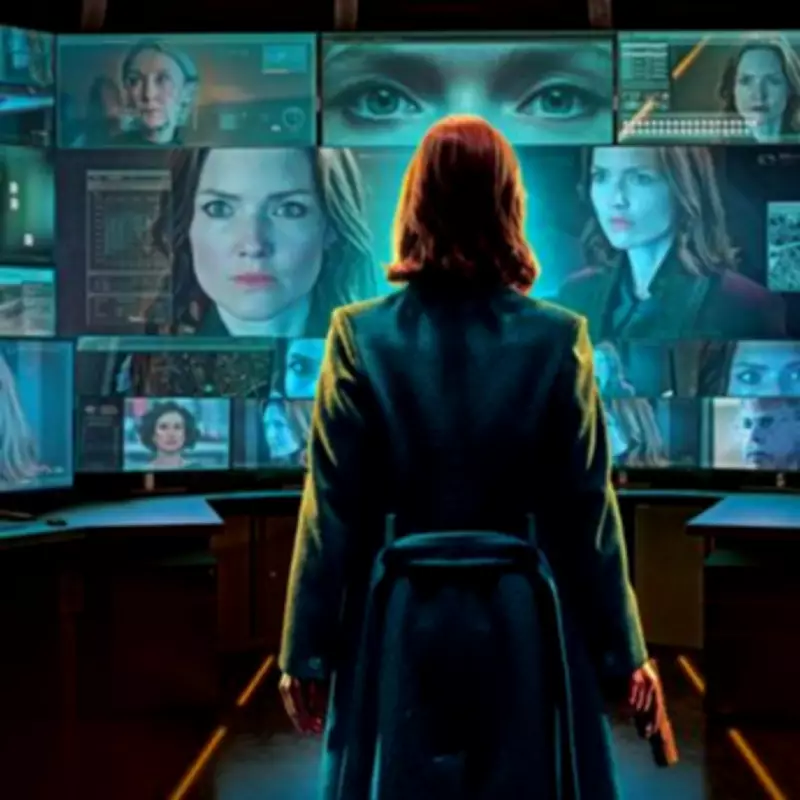
The Capture Returns: Season 3 Explores Deepfake Conspiracy After Four-Year Hiatus
After an almost four-year absence from screens, the BBC's critically acclaimed thriller The Capture makes its highly anticipated return with a third series. The show, which first captivated audiences in 2019, continues to explore the disturbing implications of deepfake technology and government surveillance in contemporary society.
Recapping the Journey: From Season 1 to Season 3
The first season of The Capture introduced viewers to the unsettling world of manipulated evidence, questioning the reliability of CCTV footage in criminal investigations. Season two escalated the stakes dramatically, featuring tampered live streams of BBC broadcasts and Metropolitan Police communications systems.
In the second series, DCI Rachel Carey, portrayed by Holliday Grainger, fought to expose the clandestine video manipulation program known as Correction. The plot centered around a scandal involving faked footage of politician Isaac Turner, played by Paapa Essiedu, and several murders that shocked viewers, including the mid-series death of popular character Patrick Flynn.
Season 2's Complex Web of Deception
The narrative of season two revolved around Truro Analytics, a nefarious data analytics company led by Gregory Knox. This organization offered Isaac Turner an opportunity to revive his political career through algorithmic manipulation aimed at securing his future as Prime Minister.
The conspiracy deepened with the revelation that CIA operator Frank Napier, portrayed by Ron Perlman, was complicit in covering up Knox's plot. Napier hoped the CIA could eventually utilize Truro's advanced technology for their own purposes.
In a dramatic turn of events, Rachel Carey was kidnapped by Truro Analytics associates and subjected to intense interrogation by both Frank Napier and her own superior, Gemma Garland. Both officials sought to keep Correction secret, though for different institutional reasons.
After appearing to accept a position within the Correction program, Rachel secretly continued collaborating with BBC journalist Khadija Khan to expose the operation. The season culminated in a daring live broadcast where a deepfake version of Isaac Turner publicly revealed Correction's existence, while the real politician traveled to Piccadilly Circus as part of Rachel's elaborate proof-of-concept demonstration.
Season 3: New Challenges and Moral Fractures
The third series picks up twelve months after Rachel Carey's dramatic exposure of the Correction program. Now serving as Acting Commander of Counter Terrorism Command, Carey is determined to rebuild public trust in surveillance technology through the new Operation Veritas camera system.
Writer and director Ben Chanan explains the thematic evolution: "Series one asked 'Can you trust CCTV?', series two asked 'Can you trust the news?', and series three asks 'Can you trust your own eyes?'"
The new season begins amidst an official inquiry into Correction's unlawful use, but quickly escalates when a brutal, well-coordinated terrorist attack targets the British establishment. With only one witness to the event, Carey finds herself drawn into an unfolding geopolitical crisis that infects political institutions, security services, and media organizations.
Holliday Grainger reflects on her character's journey: "Across series one and two, she fights to expose Correction, and by series three she's risen rapidly through the ranks. She believes her integrity is intact but series three explores what happens when those morals begin to fracture."
Broadcast Details and Continuing Relevance
Episode one of The Capture series three launched on BBC iPlayer at 6am on Sunday, March 8, with a BBC One broadcast at 9pm that evening. New episodes continue to be released weekly on both platforms each Sunday.
The series returns at a time when concerns about deepfake technology, artificial intelligence, and digital manipulation have only intensified since the show's initial debut. With its compelling narrative and timely themes, The Capture continues to offer a gripping exploration of truth, perception, and power in the digital age.