Across the United States, a powerful network of solidarity is emerging as cities share strategies and resources to protect immigrant communities from federal Immigration and Customs Enforcement (ICE) raids. This grassroots movement, connecting organisers from Los Angeles to Chicago and New Orleans, is proving that collective action can provide a crucial defence.
From Whistles to Watch Patrols: Evolving Community Defence
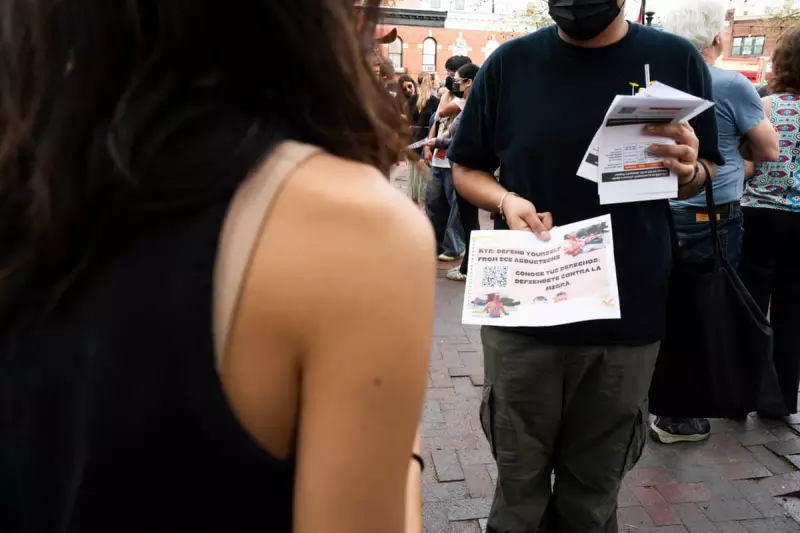
When ICE agents began targeting Chicago in September, the city's residents mobilised rapidly. They organised "know your rights" training sessions, taught people how to safely document ICE activity, and distributed whistles en masse. The piercing sound of a whistle became a community-wide alarm, alerting neighbourhoods to the presence of federal officers.
This tactic, now spreading nationwide, was partly learned from organisers in Los Angeles. Rain Skau, a co-coordinator with the Democratic Socialists of America (DSA) in LA, explained that Angelenos began using whistles in June when raids first intensified. Despite federal claims of targeting criminals, Skau described early raids at Home Depot locations as often snatching women selling food in car parks.

In response, LA groups established citizen patrols at sites where day labourers and vendors gathered. Volunteers distributed legal information and used a citywide hotline to dispatch teams when ICE was sighted, aiming to document raids, collect belongings, and contact families of detainees.
Cross-City Solidarity in Action
This spirit of mutual aid is now linking cities hundreds of miles apart. In a striking example, Beth Davis of Indivisible NOLA received an unsolicited Instagram message in November from a stranger in Indivisible Chicago, warning of potential raids and offering support.
"For an individual chapter that is eight states away to reach out is very unusual," Davis noted. "There just really hasn't ever been a need before now." The connection led to Chicago mailing whistle kits to New Orleans and helping to lead a remote "know your rights" training via Zoom, which attracted around 800 people.
Established organisations like the American Civil Liberties Union (ACLU) are also facilitating this exchange. Sarah Whittington, advocacy director for ACLU Louisiana, described a "chain reaction" where lessons learned in Chicago were passed to North Carolina and then Louisiana. "We're building depth and expertise," she said, ready to advise the next city facing raids.
Overcoming Surveillance and Adapting to Threats
Maintaining these direct lines of communication is vital, as public discussion of tactics can be risky. Phoebe Unterman of the Los Angeles Tenants Union pointed out that while initial raids received media coverage, ongoing operations often go unreported, making it hard to track ICE's movements.
Organisers rely on decentralised networks of neighbourhood volunteers who can respond within minutes to tip-offs, as ICE operations are often swift. "The thing in all cities that seems to actually interrupt raids the most is when a neighbourhood kind of spontaneously erupts," said Unterman. "That has really scared ICE."
While these community responses cannot completely halt ICE operations, and federal tactics continue to evolve, the collaborative network is growing stronger. From street vendor projects in New York distributing whistle kits based on Chicago's advice, to tenant unions sharing intelligence, cities are no longer facing the threat alone.
"There is something going on here, with all of these cities coming together and protecting our democracy," reflected Beth Davis. "These occupations will go on to other cities, but we are learning more with each city, and cities are becoming more united every step of the way."