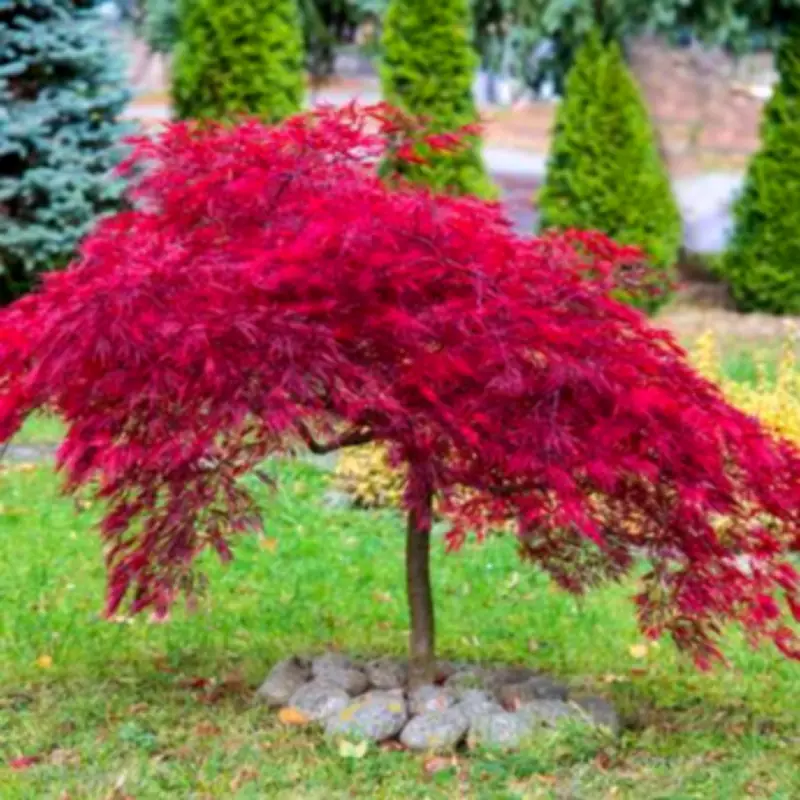
Japanese maples are among the finest trees to grow in gardens. Not only are they beautiful and easy to grow, but they can transform any garden into something truly magical. Coming in a wide variety of forms, each Japanese maple has a character and charm that is all its own.
Spring Blooming Season
With spring in full force, now is when Japanese maples start their blooming period. Their tube-shaped flowers appear in shades of red, purple, yellow, or pink. The blossoms are lovely, but while they are low-maintenance, they can struggle without proper care.
The Essential Spring Task: Mulching
Gardening experts have noted that one task needs to be completed in spring, and that is to apply mulch to the base of the trees. The pros at West Coast Gardens said: "Whether you are planting a new Japanese maple, or caring for an established tree, you'll want to add a layer of composted mulch or another organic material around the base of your tree in the spring. Not only does this look great, but it prevents weeds, gives them essential nutrients, and insulates the roots."

The gardening gurus at Gardening Know How noted that if you are after a "spectacular" Japanese maple, mulching is an "essential" task. They explained that it "offers so many benefits for the tree," helping to hold the moisture in the soil, protecting the soil from heat and cold, and keeping down weeds looking to share the nutrients in the maple's soil. The pros added: "It's an easy gesture and goes a long way toward a good year for your tree."
Important Tips for Mulching
The experts pointed out that the important thing to remember when adding mulch around the base of your Japanese maple is to look out for the "graft site." The top tree part is called a scion, and it is attached to a root. Your mulch should never reach the grafting site on your Japanese maple tree trunk; otherwise, your scion might start growing roots of its own, which would halt the benefits of the original graft.
After mulching, deep watering will go a long way to ensuring success. Use a hose on a slow setting for larger trees or a full watering can or two for pot-grown maples.