Scientists have proposed a radical plan to prevent the collapse of a vital ocean current by constructing a dam across the Bering Strait, though this could disrupt a key international shipping route. The Atlantic Meridional Overturning Circulation (AMOC), a vast network of ocean currents that drives warm water northwards through the Gulf Stream, is at risk of weakening or shutting down due to global warming. Some studies warn of an imminent collapse this century, which could cause UK temperatures to plummet, with winters becoming up to 7°C colder on average.
Proposed Solution: Closing the Bering Strait
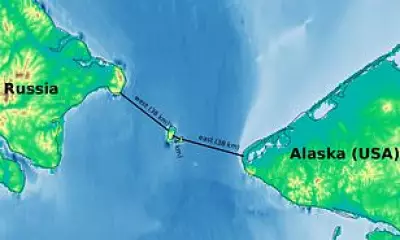
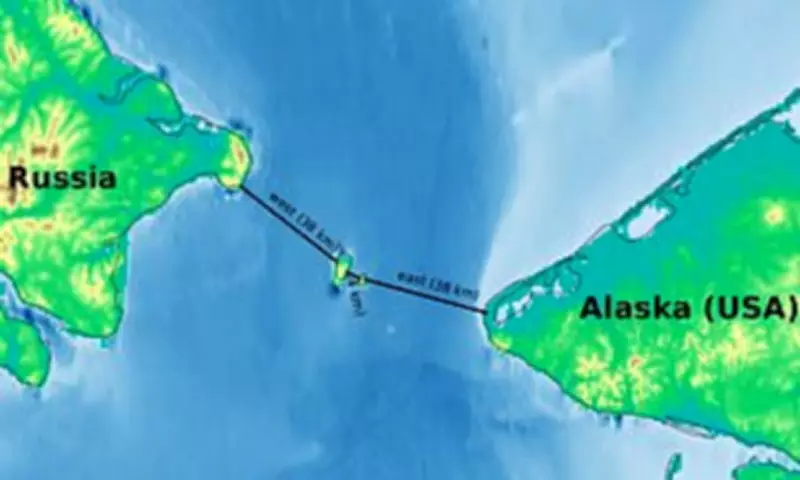
Experts from Utrecht University in the Netherlands suggest that constructing a closure across the 53-mile (82 km) wide Bering Strait, which separates Russia and Alaska, could stabilise the AMOC by altering the freshwater balance. 'A possible collapse would have a major impact on the global climate, particularly Europe's, and could be practically irreversible,' the researchers wrote in the journal Science Advances. 'Constructing this closure could be a feasible climate intervention strategy to prevent an AMOC collapse.' The proposed structure consists of three separate dams connecting mainland Russia to Alaska via the Diomedes Islands, similar to the 20-mile (33 km) long Saemangeum Seawall in South Korea.
How It Would Work
The AMOC is highly sensitive to freshwater levels. It depends on dense, cold, and salty water sinking in the North Atlantic. Currently, the open Bering Strait allows fresh Pacific water to flow northwards, diluting salinity and weakening the current. Closing the strait would result in a saltier North Atlantic, keeping the AMOC active. The mega-dam would be 50 miles (80 km) long, with a raised barrier above sea level around 330 feet (100 m) wide at the top. The authors argue it is technically feasible given the strait's shallow and narrow nature, comparable to existing land reclamation projects.

Disruption to Shipping and Ecosystems
However, the Bering Strait is a critical shipping route connecting Asia and Europe, providing a shortcut for cargo, energy resources, and research vessels. The closure would have a 'large impact' on local ecosystems. The researchers stress that 'carbon dioxide mitigation efforts are the preferable option to prevent an AMOC collapse.' But if not realised, this intervention could prevent collapse under certain climate scenarios.
Consequences of AMOC Collapse
If the AMOC collapses, the Gulf Stream would suffer catastrophic effects, leading to less warm water reaching Europe and extensive cooling. Winters in the UK could become up to 7°C colder, agriculture may become unsustainable in parts of Northern Europe, and ice sheets could encroach from the Arctic, potentially covering parts of Scotland. Meanwhile, the Southern Hemisphere would experience temperature rises, violent storms, and droughts over Africa, with Antarctic ice sheets melting and causing sea level rise.
Earlier this month, scientists from the University of Bordeaux warned the AMOC is on track to weaken by 50 per cent by the end of this century, more than previously thought. This could trigger 'significant modifications' to the global climate, including extensive drying in Africa's Sahel region. The proposed dam would only be effective if implemented before the AMOC becomes too weakened.