Bolivia's Cacao Farmers Triumph Over Gold Mining Through Local Bans
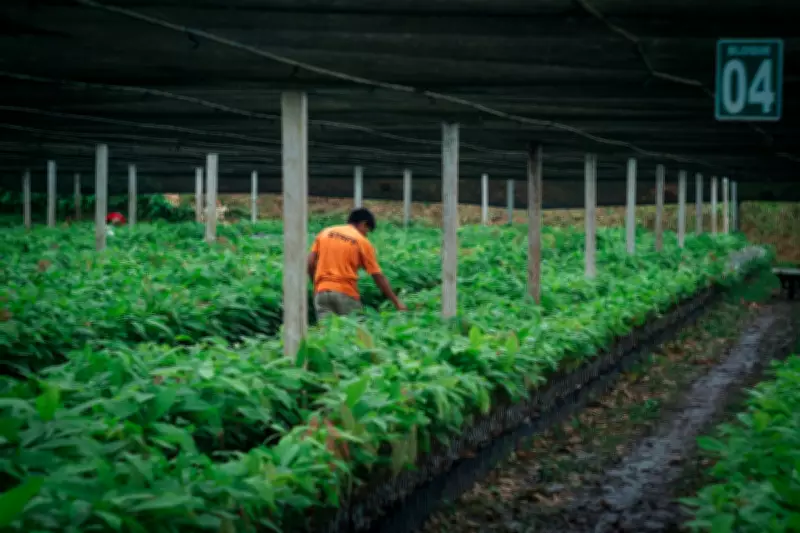
In the lush, biodiverse landscapes of north-west Bolivia, Herminio Mamani tends his cacao farm beneath towering mahogany trees. As a former president of El Ceibo, the nation's largest organic cacao cooperative, Mamani champions an agroforestry model that sustains over 1,300 members. This approach not only ensures premium cacao quality for chocolate production but also serves as a bulwark against the encroaching gold mining industry.
"We cacao producers would never kill an animal here," Mamani asserts, with parrots echoing in the background. "The parcels can never be monocultures – all the crops grow together." This philosophy underpins a grassroots movement that has successfully defended agricultural lands through local legislation.
The Gold Rush Threat and Community Response
Approximately twenty miles from Mamani's farm, the Kaka River witnesses relentless activity from dredging boats and excavators. This gold rush has rerouted waterways and invaded forests within some of the planet's most biodiverse national parks. However, Mamani's land remains safeguarded due to local ordinances enacted in 2021, which prohibit mining in Palos Blancos and Alto Beni.

Mamani was instrumental in advocating for the Palos Blancos mining-free declaration, a measure framed as critical for preserving agriculture and food security. Alto Beni, a neighbouring town, adopted a similar ban shortly thereafter. These actions gained urgency as gold prices soared by more than 64% in 2025, reaching record highs above $5,100 per ounce amid geopolitical tensions, prompting other Bolivian cities to view these towns as protective models.
Grassroots Mobilisation and Environmental Concerns
The initiative traces back to 2017 when a mining dredge appeared on the Boopi River, bordering Alto Beni and Palos Blancos. Both municipalities, reliant on organic agriculture, had previously avoided mining but observed its devastating impacts elsewhere. Roberto Gutierrez, a farmer in Alto Beni, recalls, "I've known Mayaya since I was young, and the river used to be deep and full of fish. Now the water levels have dropped, pollution has seeped in, and the fish are disappearing."
Communities responded decisively. Nancy Chambi, a farmer and Alto Beni councillor, recounts, "People gathered in mass protest and issued a warning: 'Leave, or we burn your machinery.'" The miners retreated, but the threat persisted, driven by El Ceibo and other cooperatives' fears that mercury contamination could jeopardise their international certifications.
"Even if small-scale mining were permitted, it's a slippery slope," Mamani warns. "Contamination would be unavoidable, and if we lost our certifications, the price of our cacao would plummet." After four years of sustained pressure, the mining bans were passed in 2021, with a 2024 departmental law further reinforcing their stance against national government preferences.
Economic and Social Impacts
Ulises Ariñez, former environment secretary for Palos Blancos, explains, "We showed people that mining does more harm than good. People have realised that gold is temporary, but agriculture and conservation are for life." The laws have secured farmers' organic status, enabling El Ceibo to export 2,000 tonnes of cacao in 2025, primarily to Europe and the US, offering stability amidst Bolivia's economic crisis.
Jesús Tapia, an El Ceibo producer, notes, "With the country's economy in such bad shape, people here are a bit more at ease." For Chambi and Gutierrez, who sell crops like cacao, bananas, and papaya through a smaller cooperative, the laws have been transformative. Gutierrez proudly declares, "If Mayaya has yellow gold, we have purple gold," referring to their cacao pods.
Broader Challenges and Future Prospects
Record gold prices have fuelled illegal mining globally, leading to deforestation, mercury poisoning, and human trafficking. In Bolivia, legal and illegal mining has infiltrated protected areas, exacerbated by lax regulations. Severe flooding in Tipuani and Guanay has even forced considerations of town relocations.

At least ten other municipalities and Indigenous territories are now pursuing similar bans. Pablo Solón, an environmental activist and former Bolivian UN ambassador, states, "This is the beginning of the fight. We have to build a wall to prevent mining from coming down the river." He identifies potential resistance hubs like Rurrenabaque, with its robust tourism sector, and Indigenous territories such as Pilón Lajas.
However, challenges persist. Karen Coata, vice-president of the Organisation of Indigenous Leco Women, reports mercury-related illnesses in Pilcol, where mining supplements incomes. "How else will we make ends meet?" she questions. Franklin Quequesana, a Guanay councillor, advocates for regulated mining rather than outright bans, citing that mining constitutes about 80% of their economy.
Policy Debates and National Context
Ariñez, now a municipal coordinator for Fundación Natura, collaborates with Quequesana to designate Uyapi as mining-free to protect agriculture. This aligns with 2024 efforts in Guanay and Teoponte, which created conservation areas despite mining reliance. "Five years ago, no one would have talked about a protected area here," Ariñez observes.
With gold prices expected to rise further, mining expansion seems inevitable. Quequesana remarks, "Mining could be done responsibly, but that would mean managing waste correctly – I don't think that will happen. The central government keeps authorising projects, and we're the ones affected." Alfredo Zaconeta, a mining researcher at Cedla, argues for national policy, asserting, "Unless the government clearly defines which areas are open to mining, it won't have the impact people hope for."
Solón doubts national reform likelihood due to political conflicts of interest. The Ministry of Mining and Metallurgy declined interviews, though the minister highlighted high gold prices as an export opportunity while emphasising smuggling curbs. In February, Bolivia's new administration considered fast-tracking regularisation for non-compliant mining projects, potentially exempting environmental permits.
Despite these hurdles, local bans offer hope. Solón views them as "one of the few possibilities to protect the Amazon." Recent successes include legal recognition for Peru's Lake Titicaca side and court suspensions of unauthorised mining along Bolivia's Madre de Dios River, alongside four new protected areas. Chambi reflects, "We in Alto Beni are living harmoniously and peacefully. All we ask is that it continues."