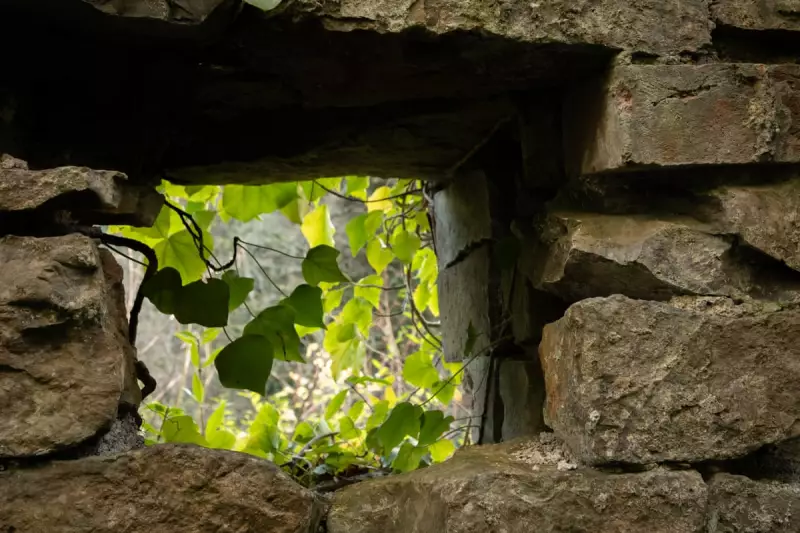
Nearly two decades ago, a runner first descended into a secluded Somerset valley, struck breathless not by exertion but by the scene before them. They encountered a landscape of roofless buildings, furnaces embedded in cliff faces, and a chimney stack that now exhaled only fresh air. This was the site of a once-thriving ironworks near Frome, a place where dereliction had, over time, carved a surprising path back to a raw, natural beauty.
A Landscape Reclaimed by Nature
The visitor peered through what they described as "ivy curtains of windowless windows", gazing upon factory floors that were no longer bustling with industry but were instead populated by forests of slender birch trees. Tumbledown walls were crowned with spreading bushes, creating a scene of "greening by stealth". In those early visits, the early internet yielded little about the valley's past, leaving its history shrouded in mystery and silent stone.
Unearthing the Human Story
This changed just a few weeks prior to the latest visit, when an older form of communication rose to inform passers-by: a giant information panel, packed with a novella's worth of detail. The panel revealed this was the site of ironworks that specialised in making edge tools—spades, shovels, sickles, and hoes that cultivated the land and fed Somerset and beyond.

Overwhelmed by the depth of information, the explorer decided to digest the history in sections. One week, they absorbed the grim reality of the workers' lives. These men had "their noses to the grindstone", sharpening blades in conditions that drastically shortened their lives; few lived to see their 40th birthday. The impact of this revelation was so visceral that the writer momentarily caught a phantom whiff of metal flaking off, a sensory echo perhaps dredged from childhood memory.
Kneeling on the Soft Ground of History
On a more recent foray, the exploration became more tactile. Scrambling over a soft, humic layer, they moved from room to room as if following an estate agent's floorplan of the past. They examined walls built into the cliff face two centuries ago and found a compartment with a low, rectangular fireplace recess, its bricks still blackened by ancient fires.
It was while on their knees, noticing mouse droppings on a flat ledge, that a discovery was made. Beside the droppings lay a dark, pebble-sized object. Picking it up, they found it was a surprisingly heavy, purplish-black bubble of iron—a direct, tangible link to the site's smelting past. After a moment of reflection, considering those who came before and those who may follow, the iron nugget was returned to its ledge, a small but significant weight of history left for the next curious soul to find.