A landmark scientific assessment has confirmed that the Arctic's sea ice cover reached a record-shattering low during the summer of 2024, a direct consequence of unprecedented heat across the polar region. The findings, detailed in the annual Arctic Report Card, paint a stark picture of an environment transforming at a pace that is alarming researchers and has profound implications for global weather and sea levels.
Unprecedented Heat and Vanishing Ice
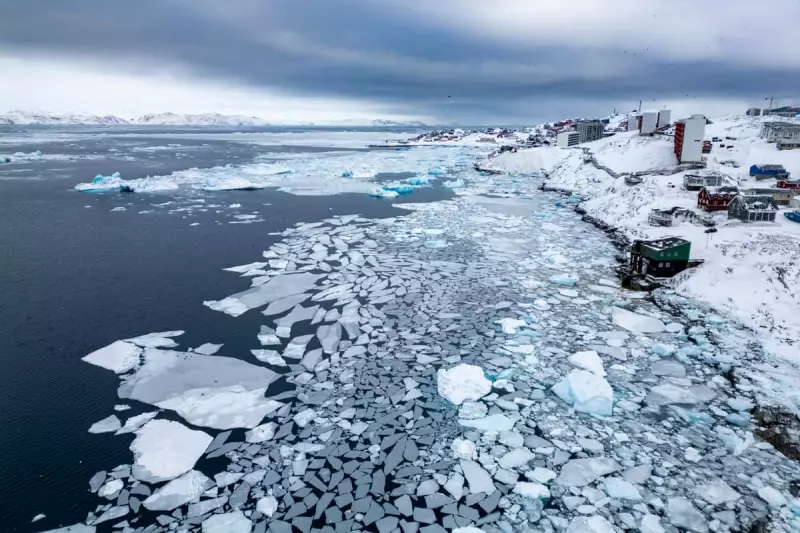
The report, compiled by the US National Oceanic and Atmospheric Administration (Noaa) with contributions from over 80 international scientists, identifies 2024 as the warmest year on record for the Arctic. This intense heat triggered a catastrophic melt season. The minimum summer sea ice extent, measured in September, was the lowest ever observed since satellite monitoring began in 1979.
Data from the European Union's Copernicus Climate Change Service corroborates the scale of the crisis. Their analysis shows that from October 2023 to September 2024, the Arctic warmed at a rate more than double the global average, a phenomenon known as polar amplification. This led to extended periods of open water in regions typically locked in ice.
"The Arctic is experiencing climate change faster than almost anywhere else on Earth," stated one lead scientist involved in the report. The dramatic reduction is not just about area covered; the ice that remains is younger and thinner, making it more vulnerable to melting in subsequent seasons and creating a dangerous feedback loop.
Global Ripple Effects from a Melting Pole
The consequences of this rapid ice loss extend far beyond the Arctic Circle. Scientists warn that the changing temperature gradient between the pole and the equator can destabilise the jet stream, the river of air that guides weather systems. This disruption is linked to more persistent and extreme weather events in mid-latitudes, including prolonged heatwaves, severe cold snaps, and altered storm tracks across Europe and North America.
Furthermore, the melting of land-based ice sheets in Greenland, which is accelerating, contributes directly to global sea level rise, threatening coastal communities worldwide. The report also highlights severe ecological impacts, including disruptions to the livelihoods of Indigenous communities and stress on wildlife like polar bears and seals that depend on the ice for hunting and breeding.
A Dire Warning and a Call for Action
The 2024 Arctic Report Card serves as one of the clearest indictments of the ongoing climate emergency. It underscores that the changes long predicted by climate models are not future scenarios but present-day realities. The record-low sea ice is a visible, measurable signal of a planet in distress.
While the report focuses on observations rather than policy, its message is unambiguous. The trends documented require an urgent, global response to reduce greenhouse gas emissions. Each incremental rise in temperature locks in further ice loss and its associated global impacts. The data from the top of the world is a powerful reminder that the stability of our climate system is fundamentally linked to the health of its most fragile regions.