Climate Change Outpaces Evolution, Driving Scientists to DNA Solutions
Evolution unfolds over millennia, but climate change is advancing at a breakneck pace, creating a critical mismatch that threatens the planet's most vital ecosystems. From California's majestic redwoods to coastal seagrass meadows, these systems store vast amounts of carbon and support intricate webs of life, yet they are being pushed to their limits by marine heat waves, record wildfires, and coastal development. Driven by emissions from fossil fuels like oil and gas, this rapid change has led to an estimated 1 million species facing extinction within decades, largely due to human activities such as habitat destruction, pollution, and overuse of natural resources, according to a 2019 United Nations-affiliated report.
Conservation Genomics: A New Frontier in Restoration
To bridge this gap, scientists are turning to an emerging discipline called conservation genomics. This involves sequencing an organism's complete genetic blueprint to pinpoint individuals with traits that can survive drought, disease, and other climate extremes. The information is then used to guide restoration efforts, offering a proactive approach to safeguarding biodiversity in a rapidly changing world.
Coral Reefs: Pioneering Genomic Applications
Coral reefs are among the first ecosystems where genomic tools are being deployed. Repeated marine heat waves have caused mass bleaching, devastating reefs globally. By sequencing corals and their symbiotic algae, researchers have identified colonies that naturally withstand higher temperatures. They are now testing whether selectively breeding and growing these more resilient corals can support reef recovery, providing a glimmer of hope for these fragile marine habitats.

Seagrass Struggles in Southern California
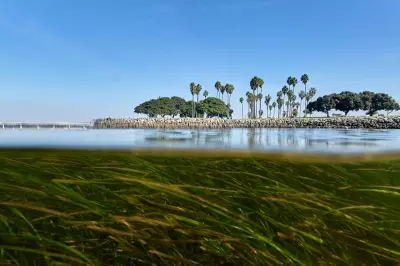
In Southern California, traditional restoration methods for eelgrass, a type of seagrass, are faltering as conditions worsen. Eelgrass provides habitat for fish, crabs, and plankton, feeds migratory birds, and locks away carbon and methane in coastal sediments. However, warming waters, more frequent and severe king tides, and runoff from development are clouding the water and reducing light, causing replanting efforts to fail about half the time.
Todd Michael, a research professor at the Salk Institute for Biological Studies, explains, "Conservation genomics is becoming particularly important because right now, the climate is changing—a plant that was growing great in San Diego Bay might now find it too hot." In Mission Bay, Michael and his colleagues discovered a naturally occurring hybrid eelgrass that outperformed its parent species. By sequencing its genome, they identified genes linked to the plant's circadian clock that remain active longer under low light, potentially aiding photosynthesis in murky water. While promising, this work remains experimental and has not yet been scaled up in the field, with ongoing collaborations with the Scripps Institute of Oceanography to explore practical applications.
Redwoods: Genetic Insights for Ancient Giants
Redwoods, among the tallest and oldest trees on Earth, store more carbon per acre than any other forest, according to a 2020 study. Although they evolved with frequent low-intensity fires, today's hotter and more destructive wildfires, combined with drought, are taking a growing toll. Logging has exacerbated the issue, reducing genetic diversity by cutting about 95% of old-growth redwoods.
Scientists have sequenced the massive redwood genome, nearly nine times larger than the human genome, but the goal is not merely to restore the past. David Neale, a forest geneticist at the University of California, Davis, notes, "Where one organism was adapted to a certain location at one moment in time, it may no longer be. It might require different genetic variation to adapt to the new environment." Early analyses link genes to traits like drought tolerance, but more rigorous work is needed, hindered by limited funding.

Limitations and Broader Implications
Conservation genomics alone cannot solve climate change. Karen Holl, a distinguished professor at the University of California, Santa Cruz, emphasizes, "It can be helpful, but it's not a solution unto itself. What should be prioritized is reducing greenhouse gas emissions." Genomic tools may aid long-lived species like redwoods that cannot adapt quickly, but ecosystems rely on complex relationships among plants, animals, microbes, and fungi. Engineering resilience in one species does not guarantee the survival of others that depend on it.
Holl adds, "Can you genetically engineer a few species that would be more tolerant? Absolutely. But that's not an ecosystem. We're not going to engineer our way out of climate change." This underscores the need for a multifaceted approach, combining genomic innovations with broader environmental policies to address the root causes of climate change and protect our planet's biodiversity for future generations.