In a groundbreaking conservation effort, robotic birds are taking flight across America's national parks, designed to help rescue fragile ecosystems from collapse. Scientists and park managers are deploying advanced decoys that closely imitate real bird species, particularly in regions where populations have plummeted or been displaced from their natural ranges.
Grand Teton's Robotic Grouse Initiative
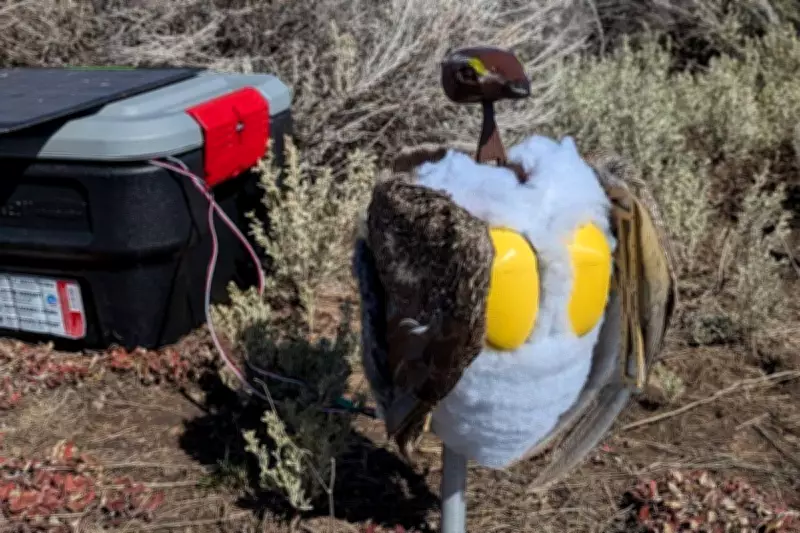
One of the most sophisticated projects is currently active at Grand Teton National Park in Wyoming. The primary objective is to entice wildlife to congregate in safer, rehabilitated habitats. These robotic sage grouse are engineered with remarkable realism, incorporating feathers supplied by the Wyoming Game and Fish Department. Some components are more improvised, crafted from materials like a white blanket sourced from TJ Maxx and foam extracted from a HelloFresh meal kit.
Gary Duquette, a robotics mentor who assisted local high school students in constructing these machines, characterised them as "kind of a Frankenbird." The decoys are programmed with movements that replicate the bird's elaborate courtship rituals, executing dance-like patterns synchronised with recorded mating calls. Duquette elaborated, noting the machines "kind of do a turn, turn, turn, then do their wing, wing, wing."

Simulating Active Breeding Grounds
Park officials hope these devices will simulate a vibrant breeding ground and "jumpstart that activity" so authentic sage grouse commence displaying and nesting in the rejuvenated area, as explained by park spokesperson Emily Davis to SFGate. Since chicks are reared near lek sites, effective attraction could progressively reconstruct local populations.
Sage grouse numbers have diminished by approximately 80% across the Western United States since 1965. At a specific Jackson Hole breeding location, male sage grouse counts have drastically fallen from 73 in 1950 to merely three last year.
Addressing Habitat Loss and Human Impact
The species' deterioration has been partially propelled by habitat degradation and human interference. Historically productive sagebrush flats in the park's southern sector were impaired by decades of cattle grazing, which diminished food sources and protective cover. Although grazing has been terminated and restoration endeavours have been ongoing for years, obstacles persist.
The adjacent Jackson Hole Airport, the sole airport situated within a national park, has also introduced hazards. Between 1990 and 2013, 32 birds perished in aircraft-related incidents, according to Davis. To alleviate these dangers, park authorities and airport personnel have collaborated to restore about 100 acres of former pasture south of the runways, replanting indigenous vegetation and preserving open breeding grounds.
"One of the challenges with restoration is that even when you create great habitat, wildlife doesn't always show up right away," Davis remarked.
Monitoring and Future Applications
During this year's breeding season, extending through mid-May, researchers are utilising trail cameras to monitor whether genuine sage grouse react to the robotic exhibitions and return to the restored lek sites. If triumphant, officials indicate that analogous robotic systems might eventually be employed in other national parks confronting wildlife management dilemmas.
This innovative approach merges robotics with ecological science, offering a potential blueprint for conserving endangered species and rehabilitating ecosystems across the United States. The integration of local high school robotics teams, such as the RoboBroncs from Jackson Hole High School, further underscores community involvement in these critical conservation initiatives.