In a race against the relentless pace of global warming, scientists have established a unique frozen sanctuary in the heart of Antarctica. Its mission: to preserve irreplaceable ice core samples from the world's vanishing mountain glaciers for future generations.
A Frozen Library for a Disappearing Climate Record
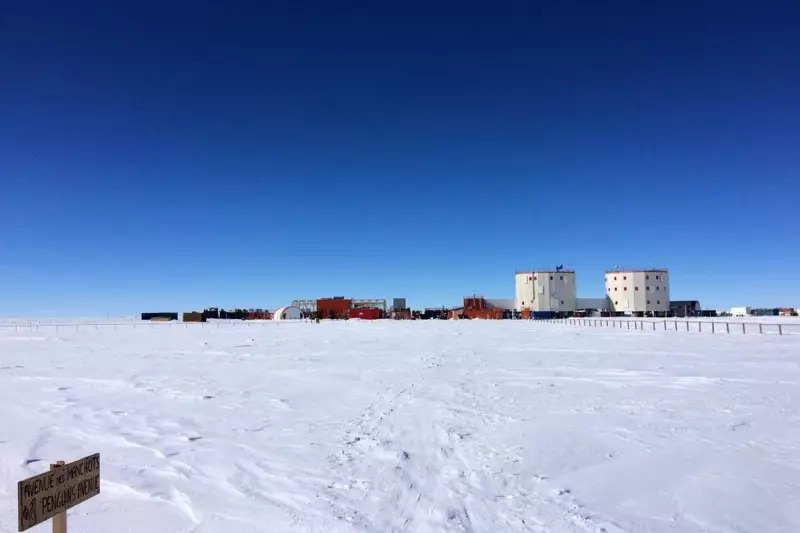
On Wednesday 14 January 2026, the Ice Memory Foundation officially inaugurated the planet's first global repository dedicated to mountain ice cores. The vault is located at the Concordia research station on the Antarctic Plateau, where a constant natural temperature of around -52°C (-61°F) provides the perfect deep-freeze conditions.
This initiative is a direct response to the alarming and unprecedented melt of glaciers worldwide. An ice core acts as a frozen time capsule, locking within its layers a detailed history of the Earth's past atmosphere—including traces of gases, aerosols, pollutants, and dust.

"These ice cores are not relics … they are reference points," emphasised Celeste Saulo, Secretary-General of the U.N. World Meteorological Organisation. "They allow scientists now and in the future to understand what changed, how fast and why."
The First Deliveries and a Perilous Journey
The sanctuary's first precious holdings are 1.7 tonnes of Alpine ice, drilled from the Mont Blanc glacier in France and the Grand Combin glacier in Switzerland. Their journey to safety was an epic one. Transported by icebreaker from Trieste, Italy, the samples endured a 50-day refrigerated voyage before arriving at their final resting place in a snow cave at Concordia.
Professor Carlo Barbante, vice chair of the Ice Memory Foundation and a professor at Ca’ Foscari University in Venice, explained the project's critical long-term value. "By safeguarding physical samples... the Ice Memory Foundation ensures that future generations of researchers will be able to study past climate conditions using technologies that may not yet exist," he stated.
A Decade-Long Mission to Save Our Frozen Past
The Ice Memory project was launched back in 2015 by a consortium of leading European research institutes from France, Italy, and Switzerland. The founding bodies include:
- France's National Centre for Scientific Research (CNRS)
- The French National Research Institute for Sustainable Development (IRD)
- The University of Grenoble-Alpes
- Italy's National Council of Research (CNR)
- Ca’ Foscari University of Venice
- Switzerland's Paul Scherrer Institute
The urgency of their work is underscored by stark data. Since the year 2000, the foundation reports that glaciers have lost between 2% and 39% of their ice regionally, and approximately 5% globally.
Scientists have already identified and drilled cores at 10 critical glacier sites worldwide, with plans to transport them to the Antarctic vault in the coming years. The overarching goal for the next decade is to establish an international convention, ensuring these priceless climate archives are protected and made available for study far into the future.
As temperatures continue to rise, this Antarctic ice library stands as a vital investment in scientific heritage, preserving the Earth's frozen memory before it melts away forever.