Farmers and residents in Kenya's Rift Valley have been forced to flee their homes after a dramatic and sustained rise in lake levels submerged entire settlements, hotels, and agricultural land. Scientists link the phenomenon to increased rainfall patterns driven by climate change, with tens of thousands of people displaced across the region.
A Farm and Home Lost to the Lake
When Dickson Ngome leased his 1.5-acre farm near Lake Naivasha in 2008, it sat a safe 2 kilometres from the shoreline. The lake was receding at the time, sparking fears it might vanish. However, the trend reversed in 2011, and the water has been creeping closer ever since.
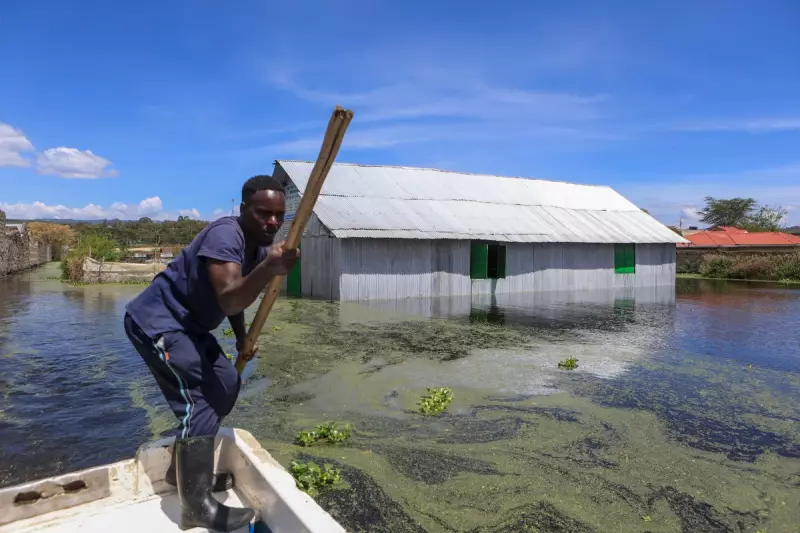
After months of relentless rain beginning in September 2025, disaster struck in late October. Ngome and his wife, Rose Wafula, along with their four children, awoke one morning to find their home and livelihood under about a foot of water. "The water came from nowhere," Wafula told The Associated Press. The family is now among roughly 5,000 people displaced by Lake Naivasha's rise this year, camping in an abandoned school.
A Regional Crisis with Global Causes
The flooding is not confined to Lake Naivasha. Lakes Baringo, Nakuru, and Turkana, all within the Rift Valley, have seen water levels climb steadily for 15 years. Simon Onywere, a professor of environmental planning at Kenyatta University in Nairobi, states the lakes have risen "almost beyond the highest level they have ever reached."
A 2024 study in the Journal of Hydrology found lake areas in East Africa expanded by a staggering 71,822 square kilometres between 2011 and 2023. The human cost is immense: a 2021 study for the Kenyan government and UN found over 75,000 households displaced across the Rift Valley by that point. In Lake Baringo, waters rose nearly 14 metres, permanently submerging buildings like the Block Hotels.
Economic and Environmental Fallout
The rising waters are battering Kenya's vital horticulture sector. Lake Naivasha has engulfed three-quarters of some flower farms, Onywere said. This is a significant blow as horticulture generated over $1 billion in 2024 and supplies 40% of the EU's roses.
Kenyan meteorologist Richard Muita, who co-authored a key 2021 study, links the rising levels directly to rainfall and temperature changes. Sedimentation from farming is also a major contributing factor. "When the rains are plentiful, it aligns with the increase in the levels of the Rift Valley lake waters," Muita explained.
The crisis is compounded by historical planning failures. The community of Kihoto, where the Ngome family lived, is on riparian land officially owned by the government and not for lease. Silas Wanjala of the Lake Naivasha Riparian Association called the settlement a "mess established by the government" decades ago when temporary leases were improperly granted.
Local authorities like Nakuru County's disaster chief Joyce Ncece are managing the immediate emergency, providing relocation trucks and rental assistance. However, scientists urge long-term solutions, including better predictive infrastructure and nature-based approaches like conservation agriculture to reduce sedimentation.
For Dickson Ngome, Rose Wafula, and their children, the future remains bleak. As Lake Naivasha continues its relentless rise, they have no idea if their farm will ever emerge from the water again.