British summers could stretch to an astonishing eight months by the end of this century if current climate trends continue, according to alarming new research from UK universities.
The Science Behind Longer Summers
Researchers from Royal Holloway University and Bangor University have uncovered that Europe's summer season may extend from the current 200 days to 242 days by 2100. Their findings, published in Nature Communications, reveal this isn't the first time our planet has experienced such extended warm periods.
The study examined ancient sediments from European lake beds, which act as climate time capsules spanning the last 10,000 years. Analysis showed that 6,000 years ago, summers in Europe lasted nearly 200 days due to natural climate variations.
Dr Laura Boyall from Bangor University, co-author of the study, explained: "Our findings show this isn't just a modern phenomenon. It's a recurring feature of Earth's climate system. But what's different now is the speed, cause and intensity of change."
What's Driving This Change?
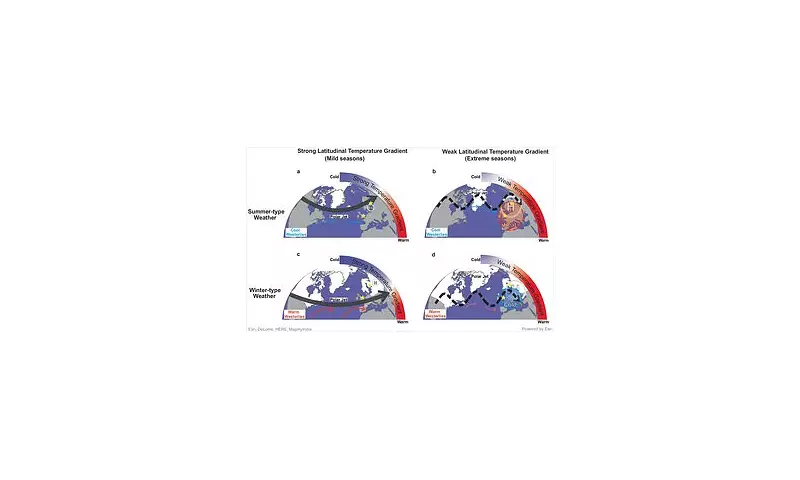
The key mechanism behind these lengthening summers is the weakening 'latitudinal temperature gradient' - the temperature difference between the Arctic and equator. This gradient powers the jet streams that normally bring cooler Atlantic air into Europe.
The Arctic is currently warming four times faster than the rest of the world, rapidly reducing this critical temperature difference. Dr Boyall detailed the consequences: "This decrease in gradient slows the jet stream that normally brings over the cooler Atlantic air into Europe. Because the jet stream slows, it also becomes more wavy, which allows warmer air to stay over Europe and causes longer and more persistent summer weather."
The research team calculated that for every one degree Celsius the temperature gradient decreases, Europe gains six extra summer days. Based on current warming trends, this could add 42 extra summer days by 2100 unless significant reductions in greenhouse gas emissions occur.
Serious Consequences for Britain
An eight-month summer would bring substantial challenges to the UK. Dr Boyall warned: "An extension to eight months of summer would cause major disruptions, particularly for agriculture, as a much longer growing season leaves less time for soils to recover and increases pressures from heat and water stress."
The study also highlights increased risks of heatwaves and droughts, creating significant public health challenges for British communities. These concerns come as 2025 is now almost certain to become the third hottest year on record, with temperatures averaging 1.42°C above pre-industrial levels.
Lead researcher Dr Celia Martin-Puertas from Royal Holloway University emphasised: "The findings underscore how deeply connected Europe's weather is to global climate dynamics and how understanding the past can help us navigate the challenges of a rapidly changing planet."
Unlike the natural climate variations of thousands of years ago, today's changes are driven by human activity. While ice sheet retreat naturally weakened the temperature gradient in the past, current changes result from human-caused emissions that have pushed CO2 concentrations to their highest levels in 14 million years.