Venice's Battle Against the Sea: No Plan Can Save the City As We Know It
Venice's Battle: No Plan Can Save the City As We Know It

Venice's Existential Crisis: No Strategy Can Preserve the Historic City

For over 1,500 years, Venice has maintained a remarkable coexistence with the surrounding sea, standing as perhaps the most successful aquatic city in human history. Yet this delicate balance is now under unprecedented threat from the dual pressures of rising sea levels and the city's gradual subsidence beneath its own weight. A recent academic analysis has delivered a sobering conclusion: none of the proposed adaptation strategies can preserve Venice as we know it today.

The Rising Tide of Challenges

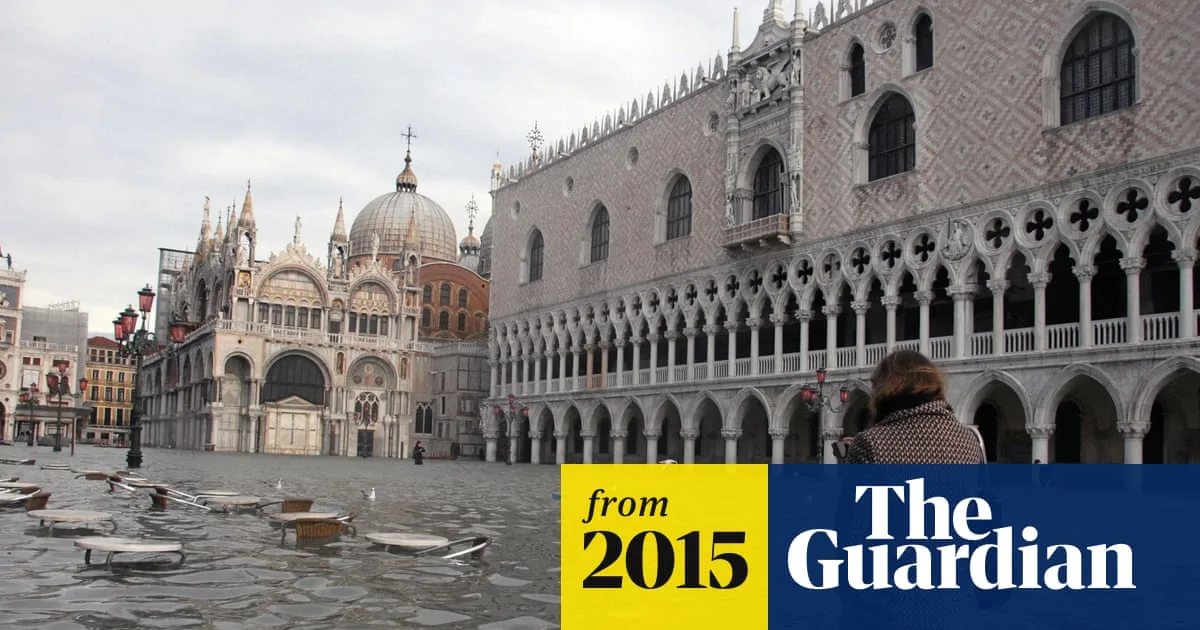
Over the past century, Venice has experienced increasingly frequent and severe flooding events. The city's current primary defence system, known as the Mose barriers, represents a €6 billion (£5.2 billion) investment in massive steel gates that can be raised to seal off the Venetian Lagoon from the Mediterranean Sea. While these barriers have made flood risks manageable in the short term, their usage frequency reveals a troubling trend.

Between 2020 and 2025, the Mose system was activated 108 times during high water events. More alarmingly, during just the first two months of 2026, the barriers were raised on 30 separate occasions. As sea levels continue their relentless climb, experts project that these closures would need to become increasingly frequent, potentially lasting for weeks at a time each year.

Wide Pickt banner — collaborative shopping lists app for Telegram, phone mockup with grocery list

The Limitations of Current Defences

Frequent barrier closures create multiple cascading problems that threaten Venice's fundamental character. Extended closures would severely disrupt shipping and tourism – the lifeblood of the local economy – while simultaneously altering the lagoon's delicate ecology. Maintaining water levels would require massive pumping systems, and sewage treatment would need complete overhaul. What was designed as an occasional protection measure risks becoming a semi-permanent barrier, fundamentally changing the relationship between Venice and its aquatic environment.

With supplementary measures like injecting seawater into underground rocks to raise the city and partially reverse subsidence, the Mose barriers might remain effective through approximately one metre of sea-level rise. However, even under relatively conservative climate projections, seas are expected to continue rising for centuries, eventually overwhelming the current system's capabilities.

Radical Alternatives and Their Consequences

When current defences become inadequate, Venice faces increasingly drastic alternatives. Building ring dykes around the city could physically separate Venice from the lagoon, potentially becoming necessary by the century's end. This approach carries an estimated price tag ranging from €500 million to €4.5 billion.

A more extreme solution involves enclosing the entire lagoon within a massive "super levee" supported by continuous pumping systems. While this could theoretically protect Venice from up to 10 metres of sea-level rise, it comes with an initial cost exceeding €30 billion and would fundamentally transform the living lagoon ecosystem.

The most radical option – relocating significant portions of the city and its population inland – may become necessary beyond approximately 5 metres of sea-level rise, projected to occur after 2300. This unprecedented undertaking could cost up to €100 billion.

The Impossible Calculus of Preservation

Beyond the staggering financial considerations lies an even more challenging question: how does one quantify the cultural value of Venice? The analysis confirms that no adaptation strategy can sustain the Venice of today in the long term. Adaptation can manage change only up to a certain threshold – beyond that point, preservation gives way to transformation.

"Our analysis shows there is no optimal adaptation strategy," the researchers conclude. Every approach involves difficult trade-offs between resident safety and wellbeing, economic viability, ecological preservation, heritage conservation, and cultural traditions. Many of these measures require decades for full implementation, making early planning absolutely essential.

Pickt after-article banner — collaborative shopping lists app with family illustration

A Warning for Coastal Communities Worldwide

While Venice faces unique challenges due to its extraordinary history and geography, its predicament serves as a critical warning for vulnerable coastal areas globally. Many such regions continue to attract development and population growth even as rising seas gradually eliminate viable long-term options.

Venice's forward-thinking approach to long-term planning stands in contrast to most coastal areas that remain unprepared for the century-scale challenges of sea-level rise. The city's struggle highlights the urgent need for all low-lying coastal communities to recognize the profound dangers posed by climate change and begin serious adaptation planning immediately.

The difficult choices facing Venice represent not just a local crisis but a global precedent, demonstrating how even the most sophisticated engineering solutions cannot indefinitely preserve our relationship with changing coastlines.