A comprehensive joint investigation has uncovered that Liberia's largest gold mining operation has been responsible for repeated, dangerous chemical spills over recent years. The findings reveal systemic failures in environmental protection and corporate accountability that have devastated local communities.
Village Life Destroyed by Pollution
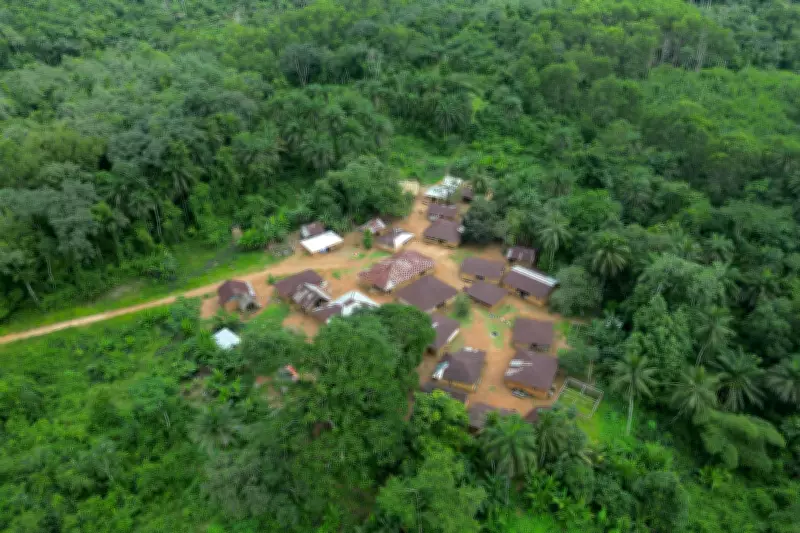
For generations, families in Jikandor village relied on the river flowing through Liberia's dense rainforest for fishing and drinking water. Today, that same water source has become toxic, forcing residents to abandon their ancestral homes. "If we don't move, we will die," stated village chief Mustapha Pabai, capturing the desperation of communities living downstream from the Bea Mountain Mining Corporation's operations.
When dead fish began floating to the surface, villagers knew to alert authorities, but for years they received little meaningful response. The contamination has fundamentally altered their way of life, turning a vital resource into a health hazard.

Documented Chemical Leaks and Regulatory Failures
Over several years, cyanide, arsenic and copper repeatedly leaked from Bea Mountain's substandard facilities at levels exceeding Liberia's legal limits. These findings come from Environmental Protection Agency reports that were temporarily removed from public view but later retrieved, along with interviews with government officials, experts and former company employees.
The documents provide the most complete accounting to date of the spills and reveal concerning patterns of corporate behaviour. The EPA records show Bea Mountain failed to promptly notify regulators after a significant 2022 spill and previously blocked government inspectors from accessing the company's laboratory and viewing water testing results.
Sustained Negligence and Weak Enforcement
Canadian toxicologist Mandy Olsgard, who reviewed the EPA reports obtained during the investigation, described the corporate responsibility failures as "sustained negligence." The reports also expose the Liberian government's inability to hold the company properly accountable, despite holding a 5% stake in the mining operations.
Under Liberian law, the state can suspend or terminate licenses if miners don't fulfill their obligations, but weak enforcement remains common. The World Bank has previously cited limited government capacity as a significant challenge in such regulatory matters.
Global Supply Chain Connections
The gold extracted by Bea Mountain is sold to Swiss refiner MKS PAMP, which supplies some of the world's largest technology companies including Nvidia and Apple. While the investigation couldn't confirm which companies ultimately used the contaminated gold, it highlights how local environmental damage connects to global supply chains.
MKS PAMP stated it commissioned an independent assessment of Bea Mountain's New Liberty mine in early 2025, finding no basis to cut ties but identifying health and safety areas needing improvement. The company declined to share the assessment's findings, citing confidentiality, but said it would end the relationship if Bea Mountain doesn't demonstrate progress.
Years of Unheeded Warnings
The problems at Bea Mountain's operations were predicted years before production began. Multiple consultancy reports between 2012 and 2015 warned about contamination risks from the tailings dam, specifically highlighting cyanide and arsenic as key concerns that could breach drinking water standards.
Despite these warnings, production proceeded, with the International Finance Corporation, a World Bank arm, investing $19.2 million for an equity stake in Bea Mountain's parent company to develop the New Liberty mine. The U.S. representative on the IFC board abstained from the decision, warning in a 2014 letter that the project lacked basic safeguards and raising concerns about the tailings dam design and environmental assessment gaps.
Pattern of Spills and Downplaying
The first documented spill occurred in March 2016, during the first month of full production, when cyanide and arsenic leaked from the New Liberty mine. Dead fish floated downstream, and residents reported skin rashes, yet the company publicly downplayed the incident, claiming "there has been no adverse impact on any human settlement."

This was the first of four EPA-confirmed cases where Bea Mountain exceeded government pollution limits. Subsequent incidents included a 2020 discovery of the company operating an unapproved wastewater system with high levels of copper and iron contamination, and a significant 2022 spill that killed fish along Marvoe Creek.
Community Health Impacts and Uncertainties
Residents of villages downstream from the mine reported falling ill after eating fish from the river following the 2022 spill. One villager, Korto Tokpa, described children collecting dead and dying fish, then becoming violently sick with vomiting and diarrhoea throughout the night.
However, no medical tests were conducted on affected villagers, leaving uncertainty about the direct causes of their illnesses. Environmental scientists and toxicology experts note that without proper testing and transparent data, the true health risks cannot be properly understood, leaving communities to bear both the physical consequences and the uncertainty.
Inadequate Penalties and Recent Developments
While EPA inspectors repeatedly recommended fines after the spills, only one penalty was issued - a $99,999 fine in 2018 that was later reduced to just $25,000. The reasons for this reduction remain unclear.
In response to the investigation, Liberia's recently dismissed mines minister, Wilmot Paye, said he was "appalled by the harm being done to our country" and that the government was reviewing all concession agreements. The EPA stated the documented spills occurred before its current leadership took office in 2024 and claimed it had ordered Bea Mountain to hire an EPA-certified consultant and reinforce the tailings dam.
Following an EPA recommendation, a legally binding agreement was reached in May 2025 for Bea Mountain to relocate and compensate Jikandor village, the community closest to the mine. Meanwhile, the company continues exploring new gold reserves elsewhere in Liberia.