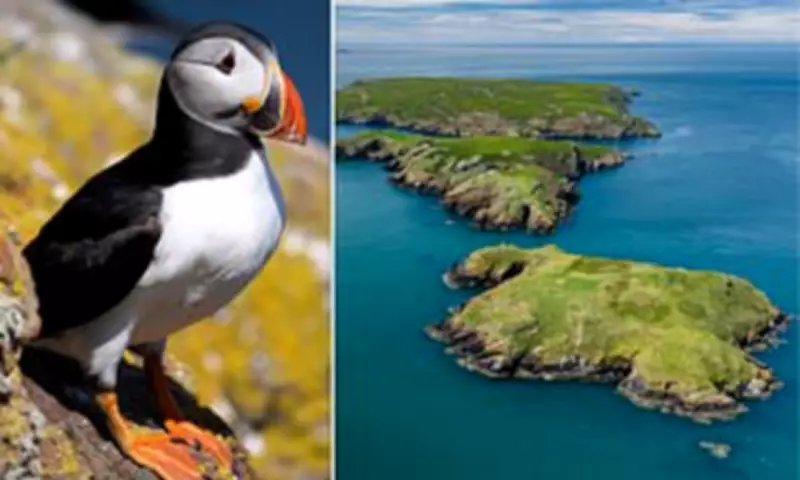
If the prospect of a free escape to a remote Welsh island captures your imagination, an extraordinary opportunity now awaits. The sole requirement? You must assist in counting the island's substantial colony of puffins. Skomer Island, located off the Pembrokeshire coast, is a 1.13 square mile seabird sanctuary that is home to more than 40,000 puffins, ranking it among Britain's most significant puffin colonies.
A Critical Conservation Role
The island, which is managed by the Wildlife Trust of South and West Wales (WTSWW), is actively recruiting volunteers to dedicate several months across the spring, summer, and autumn seasons. Their primary task will be to participate in the meticulous counting of these birds, a fundamental component of the island's ongoing conservation initiatives. Successful candidates will receive free accommodation, travel expenses covering journeys to and from the island, and a bursary ranging from £200 to £400. It is important to note, however, that the position itself is unpaid.
The Challenge of Counting
Rob Knott, the island's visitor officer, emphasised the importance of the work, describing the at-risk puffins as 'absolutely iconic birds.' He candidly admitted that counting them is 'quite the job.' The detailed process involves dividing the island into specific sections. Volunteers then visit each site approximately two hours before sunset, a period when a greater number of puffins are present on land.

Elaborating on the methodology, Mr Knott explained: 'We get our clickers out and we count all the ones on the land, then the sea and the ones in the air as well.' This comprehensive approach ensures an accurate population assessment.
A Species Under Threat
Puffins are currently classified as vulnerable to extinction on the global International Union for Conservation of Nature's Red List. Mr Knott expressed that this status is 'wrong for so many reasons,' and affirmed that his team is 'doing what we can to try and improve those numbers.' Interestingly, while global puffin populations have been experiencing rapid decline, Skomer Island reported a record number of puffins last year, tallying 43,626 individuals.
The WTSWW attributes this local population growth to the absence of ground predators like foxes and rats on the island, coupled with 'the abundance of food in the wider area, meaning there is plenty of fish for chicks.'
Volunteer Positions Available
The WTSWW conducts an annual seabird count on the island to monitor how many birds return each spring to breed. This year, the organisation is offering three long-term volunteer positions, in addition to a specific seabird monitoring volunteer role. Volunteers will typically work for around three months at a time, with placements running from the end of March through to the end of September. The seabird monitoring officer will be stationed on the island from 23rd May to 23rd June.
Diverse Seasonal Duties
Volunteer responsibilities will vary depending on the time of year. In the spring, the focus shifts to breeding seabirds, which involves the puffin counts and assisting with boat-based counts of other seabird species. During the summer, attention turns to monitoring chick productivity. Come autumn, the work centres on grey seal monitoring, alongside observations of other species including Skomer voles, reptiles, cetaceans, and moths.
Beyond the core conservation tasks, volunteers will also contribute to the day-to-day operations of the island and help welcome the approximately 25,000 visitors it receives annually. This unique role offers a deep immersion into the ecology and management of one of the UK's most important wildlife habitats.