Chocolate Circuit Boards: A Sweet Breakthrough in Sustainable Electronics
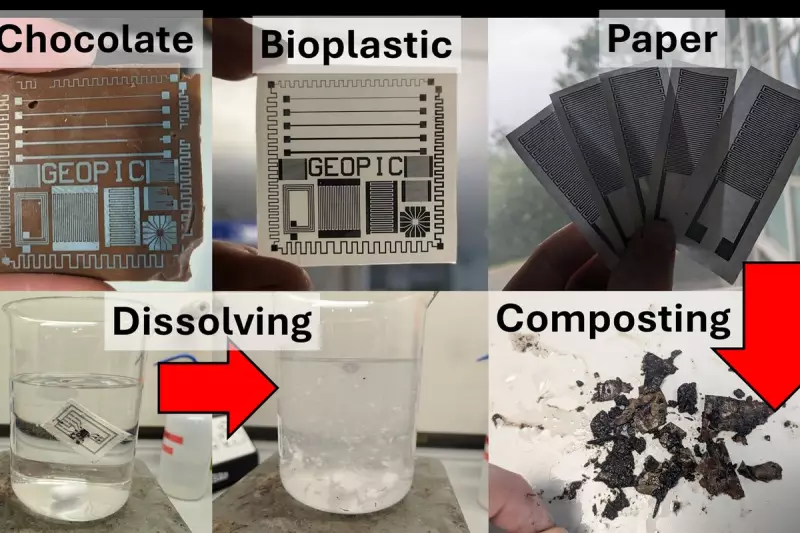
In a remarkable development that could transform how we approach electronic waste, engineers at the University of Glasgow have created an innovative solution using an unexpected material: chocolate. The research team has successfully developed fully biodegradable circuit boards that can be printed onto edible surfaces, including chocolate, as well as paper and bioplastics, offering a potential revolution in sustainable electronics manufacturing.
The Zinc-Based Innovation
The breakthrough centres on replacing traditional copper circuits with zinc-based alternatives that can be printed directly onto biodegradable substrates. This fundamental shift in materials science represents a significant departure from conventional electronics manufacturing, which typically relies on non-biodegradable materials that contribute to the growing global e-waste problem.
Professor of Electronics at the University of Glasgow explained: "Our approach fundamentally rethinks how we construct electronic devices. By utilising zinc instead of copper and printing circuits onto materials that naturally break down, we're creating electronics that align with circular economy principles."

Compostable Electronics Solution
The most striking aspect of this innovation is its end-of-life solution. Unlike conventional circuit boards that can persist in landfills for centuries, these biodegradable versions can be safely disposed of through ordinary soil composting. When discarded, the materials break down naturally without leaving harmful residues, creating what researchers describe as 'circular electronics' that complete their lifecycle without environmental damage.
The technology has demonstrated practical viability in laboratory testing, with the biodegradable circuit boards performing comparably to their traditional counterparts. Engineers have successfully integrated them into various functional devices, including:
- LED counters and display systems
- Temperature and environmental sensors
- Basic computing components
- Internet of Things (IoT) device prototypes
Addressing the Global E-Waste Crisis
This development arrives at a critical moment in the global electronics industry. According to recent environmental data, approximately 62 million tonnes of electronic waste were discarded worldwide in 2024 alone, creating significant environmental challenges and resource depletion issues. The Glasgow team's innovation directly addresses this growing crisis by offering manufacturers an alternative pathway for electronics production.
The potential applications span multiple sectors, from consumer electronics where temporary or disposable devices could utilise biodegradable components, to agricultural monitoring systems where sensors could safely degrade in field environments. The food-compatible nature of chocolate-based circuits opens particularly interesting possibilities for edible electronics and medical applications.
Future Implications and Development
While the technology remains in development stages, early results suggest significant potential for commercial application. Researchers are now working to scale the manufacturing process and improve the durability of biodegradable circuits for more demanding applications. The team is also exploring partnerships with electronics manufacturers interested in sustainable production methods.
This Glasgow-based innovation represents more than just a technical achievement; it signals a fundamental shift in how we conceptualise electronics manufacturing and disposal. As environmental concerns continue to drive technological innovation, such biodegradable solutions may become increasingly important in creating sustainable electronics ecosystems that minimise waste while maintaining functionality.
The research continues to develop, with the team investigating additional biodegradable materials and refining the printing processes to create more complex circuit designs. As electronic waste continues to grow globally, such innovations offer hope for more sustainable technological futures where electronics can be both functional and environmentally responsible.