

DOJ Argues Journalist Lacks First Amendment Protections in ICE Arrest
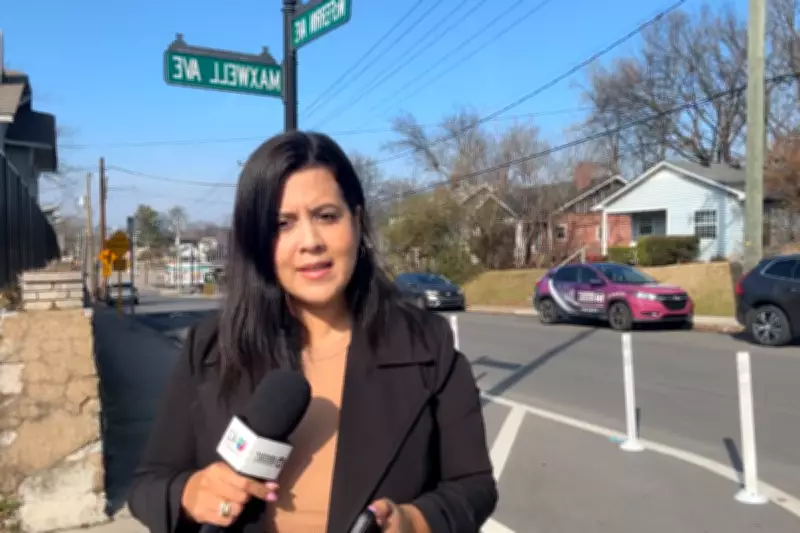
The arrest of a Nashville journalist by Immigration and Customs Enforcement (ICE) officers has ignited a fierce legal and constitutional debate over the First Amendment rights of undocumented immigrants. Estefany Rodriguez Florez, a reporter for Nashville Noticias, was detained on March 4, 2026, in a gym parking lot while inside a vehicle marked with her network's logo. Her attorneys assert that the arrest constitutes unconstitutional retaliation for her critical reporting on the impacts of Donald Trump's mass deportation policies.
Legal Battle Over Constitutional Rights
In response, lawyers from the U.S. Attorney's Office in Tennessee have contended that Rodriguez Florez does not possess First Amendment protections. They argue that the Supreme Court has never explicitly ruled that undocumented immigrants or illegal aliens are covered by the First Amendment. Government attorneys stated in court filings that her legal team "incorrectly represent" her as having clear constitutional rights, adding that "neither history nor precedent indicates that the First Amendment definitively applies to illegal aliens."
Rodriguez Florez, originally from Colombia, entered the United States legally on a tourist visa in 2021 and is married to a U.S. citizen, with whom she has a seven-year-old daughter. She applied for asylum after fleeing threats as a journalist in Colombia and has also sought a green card for lawful permanent status. With a work permit, she reported on what her attorneys describe as the Trump administration's "immigration nightmare," focusing on ICE activities in Tennessee.

Details of the Arrest and Detention
The arrest followed a series of events that began in January 2026, when Rodriguez Florez received an unexpected notice to appear at an ICE office. She believed this was an attempt to fast-track her asylum claim through immigration court rather than through U.S. Citizenship and Immigration Services interviews. After a snowstorm closed the office on her first visit, she was rescheduled to March 17, but was arrested on March 4 before that appointment.
She was held in a county jail in Alabama, where ICE planned to transfer her to a detention center in Louisiana. However, she was returned to the local jail due to an officer's unfounded suspicion of lice. According to her attorneys, she endured five days in isolation and was forced to strip naked in a shower while an officer poured a chemical liquid on her head, which burned her eyes. A woman assisting her reportedly cried at the abuse.
Release and Ongoing Detention
On Monday, March 16, 2026, an immigration court judge granted her release on a $10,000 bond, an unusually high amount, but she remains detained as ICE considers an appeal. Her attorneys argue that the First Amendment should protect her, given her lawful entry, community ties through marriage and residence, and role as a journalist informing the public.
Advocacy and Public Response
The Committee to Protect Journalists has called for her immediate release, with Katherine Jacobsen, the group's U.S., Canada and Caribbean Program Coordinator, stating that "the Department of Homeland Security and its affiliates are increasingly being used to police First Amendment rights, including freedom of the press. Rodriguez's arrest is the latest example in a troubling pattern." Her husband, Alejandro Medina, expressed heartbreak, hoping for her return and criticizing the "broken immigration system" that he says harms thousands of families.
The Independent has requested comment from Homeland Security, but no response has been provided at this time. This case highlights broader concerns about immigration enforcement and free speech rights in the United States.






