In a quiet corner of Dún Laoghaire harbour, a pioneering ecological experiment is unfolding. Suspended in 300 black baskets, 18,000 European flat oysters are being tasked with an extraordinary mission: to bring back to life the rich oyster reefs of Dublin Bay, absent for over two centuries.
The Oyster Graveyard's Second Chance
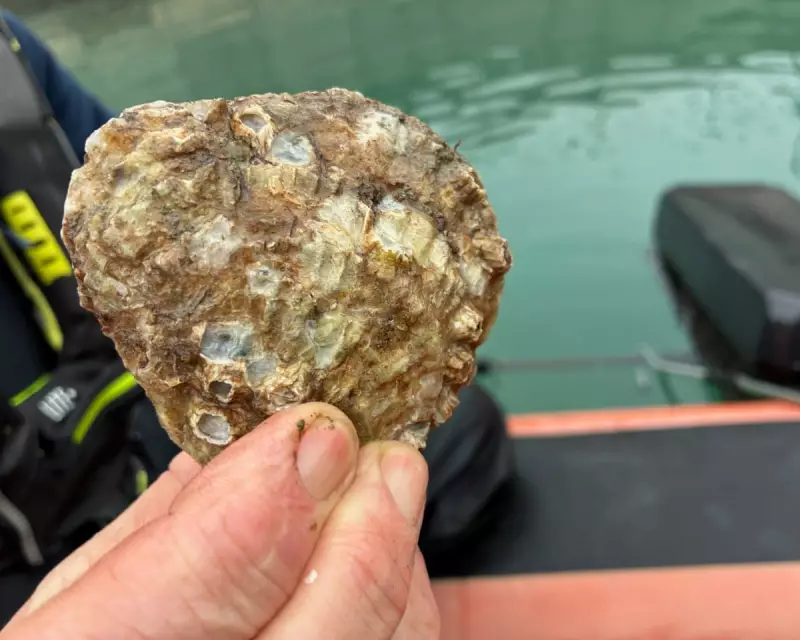
David Lawlor, co-founder of the nonprofit Green Ocean Foundation, recently inspected the long line of baskets from a dinghy. Peering inside, he found all 60 oysters in the first basket healthy, their shells tightly closed. "They look great," he beamed, a sentiment echoed as he checked the entire stock. These oysters, however, are not destined for the dinner plate. Their purpose is to reproduce and, ultimately, restore a lost ecosystem.
This project bets that the European flat oyster (Ostrea edulis), a species that thrived in Irish waters for millennia, can do so again. Similar restoration efforts are underway across Europe, where sprawling reefs were obliterated by industrial-scale overfishing, dredging, and pollution in the 1800s.

Why Oysters Are 'Climate Heroes'
The ecological value of these reefs is immense. They create complex habitats for nearly 200 species of fish and crustaceans, stabilise shorelines, and play a crucial role in nutrient cycling. Perhaps most impressively, they are natural water purifiers.
"These oysters are amazing climate heroes," explained Lawlor. "Each oyster filters at a rate of 190 litres of seawater a day." By consuming plankton and nitrates, they clear algae, allowing sunlight to reach the seabed. This encourages the growth of seagrass—a significant carbon sink—which in turn enhances coastal biodiversity and marine habitats.
From Pilot to Broodstock: The Restoration Strategy
Inspired by initiatives like New York's Billion Oyster Project, Lawlor's team began with pilot schemes, moving oysters from Tralee Bay in County Kerry to several sites around Dublin Bay. The oysters flourished particularly well in the sheltered waters of Dún Laoghaire, making it the ideal location for the project's next phase.
Last November, volunteers placed the 300 baskets containing the 18,000 adult oysters. Scientists from Dublin City University’s Water Institute have established baseline water quality indicators and will monitor the oysters' impact using sensors and biological assessments. The hope is that this population will become broodstock, spawning baby oysters this summer that will settle on the harbour bed and begin forming a new reef.
Maintenance is hands-on. Every few weeks, volunteers like Andrew Collins and Aoibheann Boyle flip the baskets by hand. This simple act lets Arctic terns and gulls peck away fouling organisms, ensuring water flows freely through the baskets to nourish the oysters.
While this Dublin initiative is modest in scale compared to some European projects—like the Luna Oyster Project aiming to restore 4 million oysters to the North Sea—its proponents believe in starting small. "The temptation is to think massive but you need to take one step at a time," Lawlor noted, emphasising the importance of collaboration with government, councils, and harbour authorities.
If successful, the silent work of these 18,000 oysters could signal the return of a lost marine wilderness to Dublin's shores, proving that even a graveyard can rise from the dead.