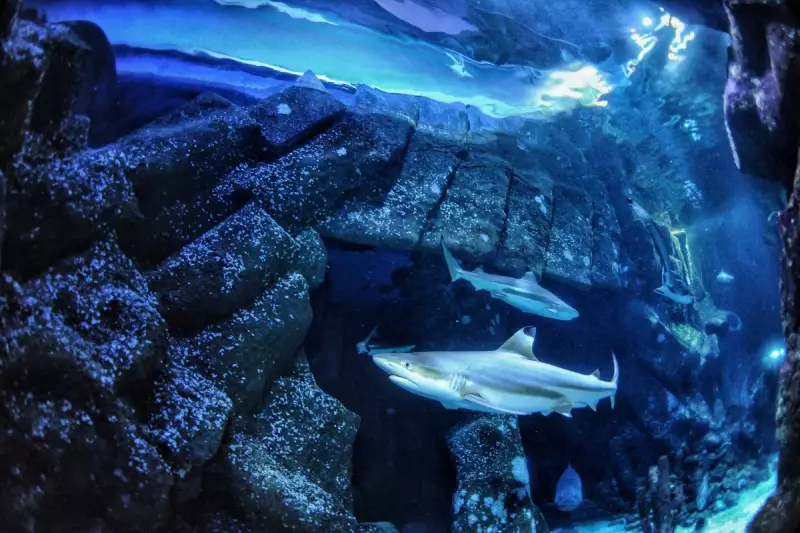
Sharks, the ocean's apex predators renowned for their formidable, ever-regenerating teeth, face a new and insidious threat from humanity's carbon emissions. A groundbreaking study from Germany has revealed that the ongoing acidification of our seas could structurally weaken sharks' primary weapons, potentially undermining their evolutionary success.
The Corrosive Effect of a Changing Sea
The research, led by marine biologist Maximilian Baum from Heinrich Heine University Düsseldorf and published in the journal Frontiers in Marine Science, provides stark evidence of the direct impact of changing ocean chemistry. The team collected over 600 discarded teeth from blacktip reef sharks, a species common to the Pacific and Indian Oceans, and exposed them to water with two different acidity levels: that of today and the projected acidity for the year 2300.
The results were alarming. Teeth bathed in the more acidic water, simulating future conditions, showed significant damage including cracks, holes, root corrosion, and overall structural degradation. "We found there is a corrosion effect on sharks' teeth," stated Baum. He warned that their entire ecological dominance could be in jeopardy, adding a novel hazard to the existing cocktail of overfishing, pollution, and climate change.

A Gradual Threat to an Ancient Survivor
Ocean acidification occurs as seawater absorbs excess carbon dioxide from the atmosphere, a direct consequence of burning fossil fuels. The National Oceanic and Atmospheric Administration (NOAA) notes this process is expected to make oceans nearly ten times more acidic by the end of this century. While Baum is quick to clarify that "the ocean will not become populated with toothless sharks overnight," the cumulative, gradual effect poses a serious long-term risk.
Shark teeth are highly specialised tools for slicing flesh, not resisting chemical corrosion. With some sharks cycling through thousands of teeth in a lifetime, their integrity is paramount for regulating prey populations. The study's findings come at a precarious time, as the International Union for Conservation of Nature reports that more than a third of shark species are threatened with extinction.
Broader Implications for Marine Life
Experts not involved in the study, like Gavin Naylor of the Florida Program for Shark Research, caution that while acidification is a genuine concern, overfishing remains the most immediate threat to sharks. However, the problem extends far beyond sharks alone. NOAA highlights that acidification is particularly harmful to shellfish, hindering shell formation, and could also weaken fish scales.
Nick Whitney, a senior scientist at the New England Aquarium's Anderson Cabot Center, offered a note of resilience, pointing out that sharks have survived for 400 million years. He also noted that because teeth develop inside protective tissue, sharks may have some temporary shielding from chemical changes.
Ultimately, the research underscores that ocean acidification is a multifaceted crisis. As Baum concluded, "The evolutionary success of sharks is dependent on their perfectly developed teeth." This new vulnerability adds another layer of urgency to global efforts to curb carbon emissions and protect our increasingly fragile marine ecosystems.