Suffolk Hamlet Becomes England's First International Dark Sky Community
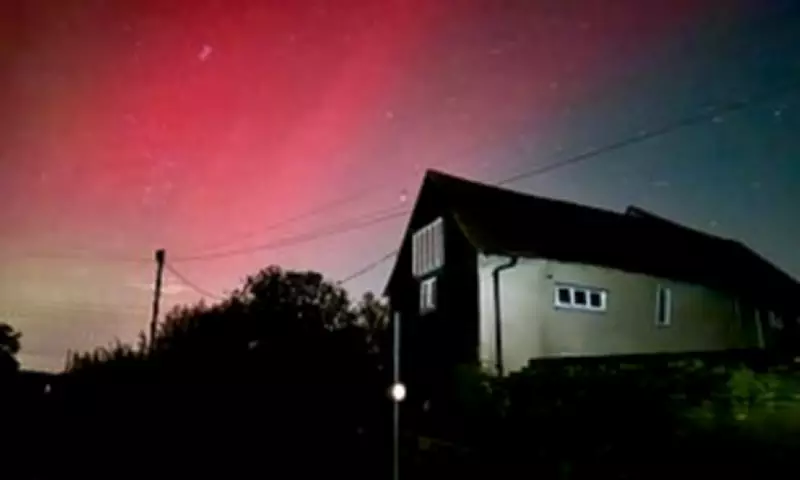
The tiny Suffolk hamlet of Thorington Street has achieved a remarkable distinction, becoming the first location in England to be officially designated as an International Dark Sky Community. This prestigious recognition celebrates the area's exceptional dedication to preserving the natural night sky and combating light pollution.
A Nine-Year Grassroots Campaign
This achievement follows an extraordinary nine-year campaign spearheaded by just nine determined residents who worked tirelessly to protect their celestial views. Their efforts focused on implementing measures to reduce artificial lighting, raising public awareness about light pollution, and organizing community stargazing events.
Mike Barrett of the Dedham Vale National Landscape Dark Skies Campaign expressed his satisfaction, stating: 'This award is the pinnacle of our campaign and gives us the credibility and authority to continue our efforts in reducing light pollution in the conservation areas.'

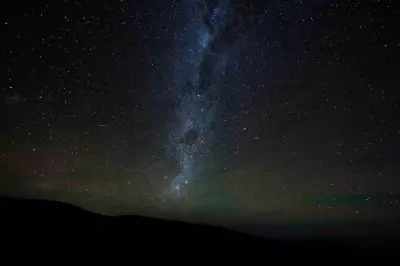
'The looks of wonder on the faces of people who live in light-polluted areas when they look up and see the Milky Way with the thousands of visible stars give me immense satisfaction,' Barrett added.
Stringent Certification Requirements
Despite Thorington Street's rural location within the protected Dedham Vale countryside—a 35-square-mile area in southeast Suffolk with minimal existing light pollution—securing official Dark Sky Community status proved extremely challenging.
'There are very strict criteria that must be complied with to gain certification,' explained Mr. Barrett. 'The campaign spent over two years engaging with the Thorington Street residents, surveying the night-time lighting, presenting talks and outreach events.'
After nearly a decade of meticulous work mapping light pollution levels and advocating for lighting restrictions, the hamlet's efforts were finally recognized internationally.
Joining Exclusive UK Dark Sky Communities
Thorington Street now joins just six other communities across the United Kingdom that hold this prestigious designation:
- Presteign and Norton, Powys, Wales
- Gower National Landscape, Gower, Wales
- Coll, Inner Hebrides, Scotland
- North Ronaldsay Dark Sky Island, Orkney, Scotland
- Moffat, Dumfries and Galloway, Scotland
Environmental Significance and Future Plans
Dan Oakley, Policy and Destination Manager of DarkSky International, praised the achievement: 'The level of commitment to achieve dark sky status from such a small community was amazing. Their influence on the wider national landscape in adopting a lighting management plan was a key component of their success and will undoubtedly inspire other places to follow their example.'
The recognition brings significant environmental benefits beyond stargazing. Research increasingly shows that dark skies support healthy ecosystems, affecting everything from bird behavior to plant lifecycles. Recent studies even suggest light pollution contributes to global warming by altering plant respiration patterns.
Looking forward, campaigners must demonstrate ongoing commitment and meet specific annual criteria to maintain their Dark Sky Community status. The project has received a substantial boost from the National Trust, which has offered the use of a large Tudor barn, garden, and adjacent field as a Dark Sky Discovery Centre.
This centre is planned as a hub for 'astro-tourism,' attracting visitors from light-polluted urban areas for stargazing experiences and astronomy education. 'From my point of view, the best thing is to show people who live in cities the jewels in the night skies,' said Mr. Barrett.
The campaigner expressed hope that authorities and developers would become more aware of light pollution's environmental impacts, potentially allowing more people worldwide to experience the wonders of natural night skies.

Understanding Light Pollution
Light pollution—also known as photopollution—refers to excessive, obtrusive, and wasteful artificial light that brightens the night environment. With over nine million streetlamps and 27 million commercial and residential buildings in the UK alone, the quantity of light cast into the sky is substantial.
While some light escapes into space, much is scattered by atmospheric molecules, creating 'skyglow' that obscures stars. This phenomenon has eliminated visible stars for much of the world's population, requiring most people to travel far from urban areas to experience the Milky Way as previous generations knew it.
The consequences extend beyond astronomical observation, with growing evidence linking artificial nighttime lighting to negative impacts on human health, wildlife behavior, and environmental quality. What began as a concern for astronomers has evolved into a broader recognition of light pollution's economic and ecological costs.