Scientists Issue Dire Warning: Earth Could Enter Irreversible 'Hothouse' State
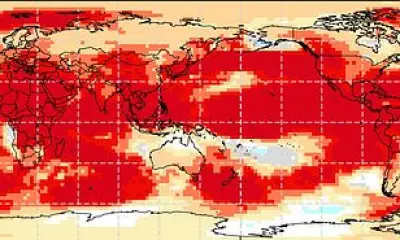
Climate scientists have issued a stark new warning that our planet could be approaching a dangerous "hothouse" state that would prove extremely difficult, if not impossible, to reverse. This alarming assessment comes as global temperatures have now exceeded 1.5°C above pre-industrial levels for twelve consecutive months, suggesting we may already be at or near the critical long-term threshold established by the Paris Agreement.
Cascading Climate Tipping Points Pose Unprecedented Threat
A comprehensive new analysis published in the journal One Earth reveals that several key components of Earth's climate system are closer to destabilization than previously understood. These critical "tipping points" include the Greenland and Antarctic ice sheets, the Amazon rainforest, major ocean currents, boreal forests, permafrost regions, and mountain glaciers.
"After a million years of oscillating between ice ages separated by warmer periods, the Earth's climate stabilised more than 11,000 years ago, enabling agriculture and complex societies," explained lead researcher William Ripple. "We're now moving away from that stability and could be entering a period of unprecedented climate change."

The Dangerous Chain Reaction of Climate Feedback Loops
The study highlights how destabilization in one climate system can trigger dangerous feedback loops that intensify warming elsewhere. For instance, melting polar ice reduces the planet's ability to reflect sunlight back into space, causing additional warming. Similarly, thawing permafrost and dying forests release vast quantities of stored greenhouse gases, which trap more heat in the atmosphere.
"Interactions between these systems could create a chain reaction, locking the planet into a self-reinforcing 'hothouse' trajectory," the researchers warned. This would result in sustained extreme warming and rising sea levels that would continue even if human emissions were significantly reduced in the future.
Critical Climate Systems Showing Signs of Stress
The Atlantic Meridional Overturning Circulation (AMOC), a crucial system of ocean currents that helps regulate global climate patterns, is already showing measurable signs of weakening. Researchers warn this could disrupt rainfall patterns worldwide and increase the risk of Amazon rainforest collapse.
"The AMOC is already showing signs of weakening, and this could increase the risk of Amazon dieback," Ripple cautioned. "Carbon released by an Amazon dieback would further amplify global warming and interact with other feedback loops. We need to act quickly on our rapidly dwindling opportunities to prevent dangerous and unmanageable climate outcomes."
Unprecedented Atmospheric Conditions
The research team notes that atmospheric carbon dioxide concentrations now exceed 420 parts per million—approximately 50 percent higher than pre-Industrial Revolution levels and likely the highest concentration in at least two million years. Meanwhile, global temperatures are probably as warm as, or warmer than, any point in the last 125,000 years.
"Temperature limit exceedance is usually evaluated using 20-year averages, but climate model simulations suggest the recent 12-month breach indicates the long-term average temperature increase is at or near 1.5 degrees," explained study co-author Christopher Wolf. "Climate change is advancing faster than many scientists predicted."
The Urgent Need for Precautionary Action
Scientists first outlined the prospect of a "Hothouse Earth" scenario in 2018, warning that cascading tipping points could lock the planet into sustained warming well above 4°C for thousands of years. The new assessment suggests several Earth systems may be closer to these dangerous thresholds than previously estimated.
"Uncertain tipping thresholds underscore the importance of precaution—crossing even some of those thresholds could commit the planet to a hothouse trajectory with long-lasting and possibly irreversible consequences," Wolf emphasized. "While averting the hothouse trajectory won't be easy, it's much more achievable than trying to backtrack once we're on it."

The warning comes as the European Union's Copernicus Climate Change Service reported that 2025 would complete the first three-year period in which average global temperatures exceeded the 1.5°C threshold. This sustained breach suggests the long-term warming limit established by international agreements may already be at or near that critical level.