

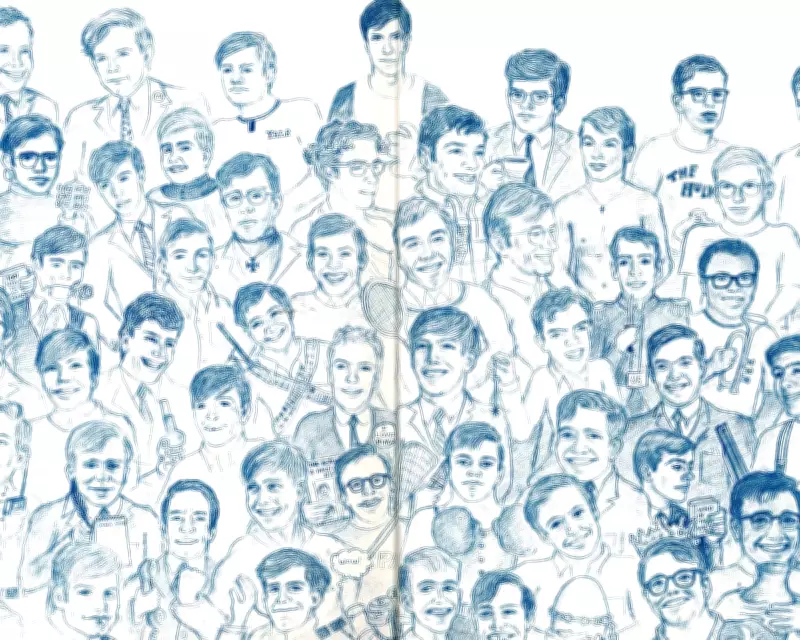
A new biography reveals how Garry Trudeau's Doonesbury comic strip has chronicled American life for over five decades, capturing the nation's highs and lows through evolving characters and sharp satire. Unlike other long-running cartoons where characters remain ageless, Trudeau's creations age, change, and even die, creating a narrative depth that author Joshua Kendall compares to Charles Dickens.
The Man Behind the Strip
Kendall's book, Trudeau & Doonesbury: The Cartoonist Who Turned the News into Art, is the first major biography of the Pulitzer Prize-winning cartoonist. Published on Tuesday, it draws on original interviews and thousands of archival documents from Yale's Beinecke Library. Despite Trudeau's reclusive nature—earning him the nickname "the JD Salinger of cartoonists"—Kendall secured rare interviews after building trust with the cartoonist's inner circle.
Personal Origins and Evolution
Trudeau's childhood was marked by privilege and trauma. Growing up in Saranac Lake, New York, his family founded a prominent tuberculosis sanatorium. But when he was 10, his mother left the family, a rare and shameful event in the 1950s. Sent to a competitive all-male prep school, Trudeau found solace in art, encouraged by a teacher who helped him channel his depression into creative expression.

At Yale University in the late 1960s, Trudeau confronted the institution's entrenched sexism. His early comic strips reflected his own archaic views, but a relationship with a feminist woman gave him a crash course in gender equality. This awakening led to the creation of Joanie Caucus, a middle-aged woman who leaves her husband for law school, making Trudeau a mainstream advocate for feminism.
Journalistic Approach
Kendall argues that Trudeau should be seen as a groundbreaking journalist, not just a satirist. He became a member of the White House press corps, covered President Gerald Ford's trip to China, and reported on Watergate with such thoroughness that CBS News anchor Dan Rather was stunned. Trudeau also covered the Patty Hearst trial and the recording of "We Are the World."
His work pioneered satirical news, paving the way for shows like The Daily Show and The Colbert Report. Trudeau's ability to blend fact and fiction, such as having cartoon characters chat with Henry Kissinger, was ahead of its time.
Political Landscape and Trump
Trudeau's early career saw a less polarized political environment. He mercilessly lampooned the Nixon administration during Watergate, yet Nixon operatives respected the game. Today, Trudeau focuses about a third of his output on Donald Trump, whom he has tracked since 1987. Kendall notes that Trump's colorful persona is fun for a cartoonist, but the underlying concern is the threat to satire itself.
Despite dark times, Trudeau remains hopeful. "You've got to have hope, I live with hope," he told Kendall. The biographer concludes that Trudeau sees every era as time-limited and believes the nation will push through.






