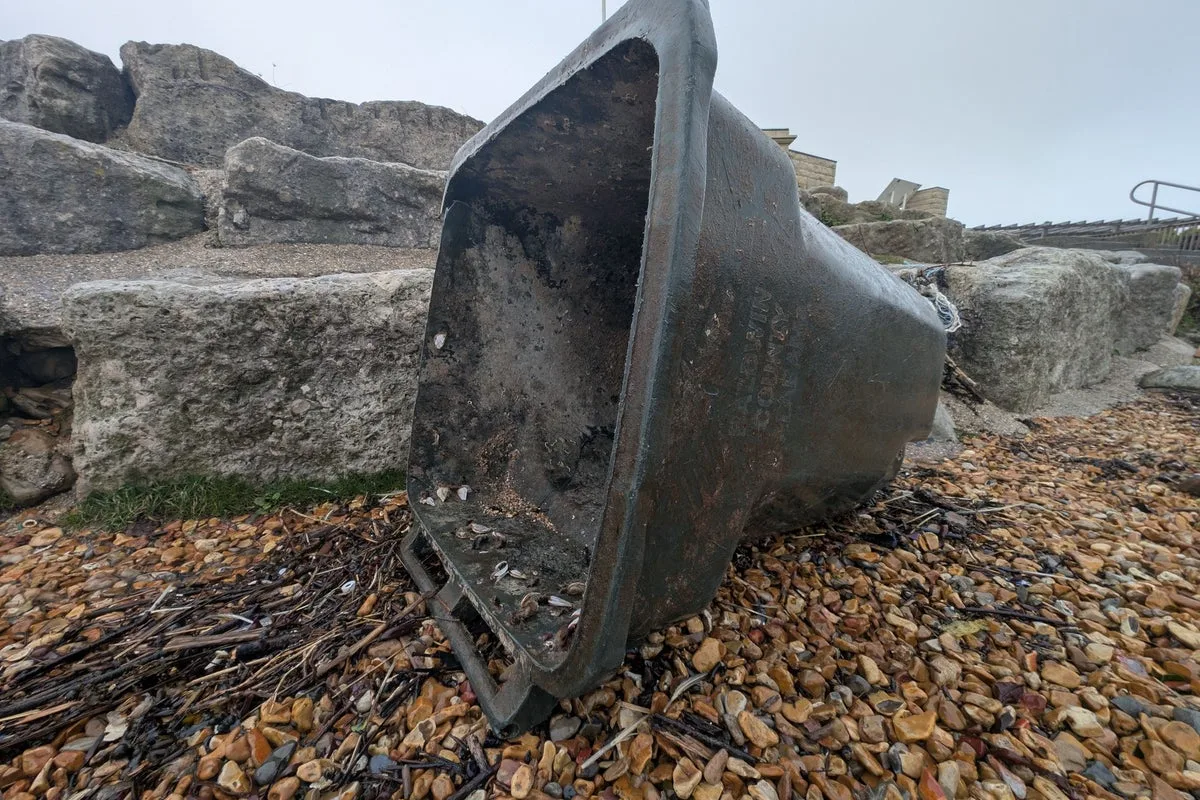
Alabama Wheelie Bin Washes Up on Dorset Beach After 5,000-Mile Atlantic Voyage
US Wheelie Bin Found on UK Beach After 5,000-Mile Journey

A remarkable piece of marine debris has completed an extraordinary transatlantic journey, with a wheelie bin believed to have travelled over 5,000 miles from the United States before washing ashore on England's south coast. The black plastic container, discovered by beachcomber Ryan Stalker at Bowleaze Cove in Dorset, bears clear markings identifying its origin as Baldwin County, Alabama.

From Hurricane to UK Shoreline

The bin's incredible voyage appears to have begun during Hurricane Sally in September 2020, when powerful storm surges likely swept it from the coastal town of Fort Morgan into the Gulf of Mexico. From there, ocean currents carried the plastic container eastward across the Atlantic Ocean, with the journey taking more than five years before winter storms finally deposited it on British shores.

Barnacles Tell a Tropical Tale

Ryan Stalker, a 46-year-old resident of Weymouth, made the unusual discovery after Storm Ingrid, recognising immediately that the bin was larger than standard UK models. "I saw it had some barnacles attached to it so I knew it must have been in the water for some time," he explained. The presence of goose barnacles provided crucial evidence about the container's journey, as these marine crustaceans typically inhabit warm tropical waters like the Caribbean and cannot survive in colder UK seas.

"It had definitely been in the Caribbean because that is where you get goose barnacles," Stalker noted, indicating the bin had passed through subtropical regions during its lengthy oceanic transit.

Social Media Solves the Mystery

Curious about the bin's origins, Stalker turned to social media, where his post quickly attracted attention from Alabama residents. Using the unique identification code visible on the container, they confirmed it was one of three wheelie bins lost from Fort Morgan during Hurricane Sally. The local refuse department in Alabama even contacted Stalker to apologise for the beach litter, though he assured them it was unnecessary as the loss was accidental.

"They got in touch with me apologising for it washing up on our beach, which I thought was nice of them to do but not necessary, it's an accident," Stalker said. The department requested he share the bin's code for official identification purposes, which confirmed its provenance beyond doubt.

An Unusual Souvenir

Currently residing in Stalker's back garden while he decides its fate, the wheelie bin represents more than just unusual beach litter. Its journey highlights the powerful forces of ocean currents and storm systems, demonstrating how debris can travel vast distances across international waters. The five-year transit period also illustrates the durability of plastic waste in marine environments and the global nature of pollution issues.

For Stalker, the discovery represents a fascinating example of beachcombing success. "After Storm Ingrid I thought there would be a good chance of finding some flotsam at Bowleaze Cove," he remarked, little expecting to uncover evidence of a hurricane that struck thousands of miles away years earlier. The wheelie bin's incredible journey from Alabama hurricane to Dorset beach serves as a tangible connection between distant coastal communities and the shared marine environment that links them.