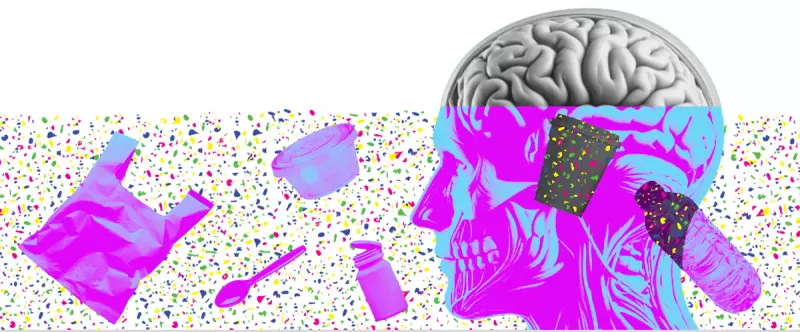
For years, alarming headlines have warned that our bodies are riddled with microplastics. Studies reported their presence in human cells, brains, placentas, and even testicles, painting a picture of pervasive internal pollution. However, a significant reassessment is now underway, with leading researchers casting doubt on many of these high-profile findings, suggesting they may be false positives.
The 'Gold Rush' in Microplastics Research
The field of microplastics research has exploded in recent years, driven by growing public and scientific concern. As these tiny plastic particles, often defined as smaller than 5mm, were found from mountain peaks to ocean trenches, fears about their health impacts surged. This led to what some scientists have likened to a 'gold rush', with many new researchers entering an exciting and highly relevant new area of study.
Prestigious journals published what appeared to be groundbreaking discoveries of microplastics deep within human tissues. Yet, almost from the start, a steady drip of criticism emerged from analytical chemists and other experts who were unconvinced by the methodologies used. What began as isolated scepticism has grown into a consistent pattern of challenge, prompting a major re-evaluation of the evidence.

Why Measuring Microplastics Is So Problematic
The core issue lies in the immense technical difficulty of accurately detecting and measuring microplastics inside the human body. These particles are minuscule, and nanoplastics are thousands of times smaller again, pushing analytical techniques to their limits.
Unlike established fields such as water pollutant analysis, microplastics research is a young discipline without long-tested, standardised practices. Scientists are having to develop protocols as they go. One technique that has come under particular scrutiny is pyrolysis gas chromatography mass spectrometry. This method vaporises a sample and analyses the resulting molecules.
The critical problem is that this process can mistake natural biological substances for plastic. For instance, the molecular fragments produced by certain plastics are identical to those produced by body fat. This raises the possibility that a study reporting rising levels of polyethylene in the brain could, in fact, be detecting signals from fatty tissue, with obesity levels offering an alternative explanation for the results.
Recent analyses have challenged numerous studies. One review highlighted 18 papers where human tissue signals may have been confused with those of common plastics.
An Iterative Scientific Process
When confronted with these criticisms, many of the original researchers have been open about the need for collaboration and improved methods. The scientific process is, by its nature, iterative—a continuous cycle of discovery, challenge, and refinement. Researchers are now working intensely to hone their analytical tools, and rapid improvements are expected.
This necessary scrutiny does not mean the problem of microplastics is illusory. Experts universally agree that microplastics are ubiquitous in the environment, we are consuming them, and they are almost certainly present in our bodies. The contested point is the extreme concentrations reported in some specific studies.
Notably, the scientists challenging these studies still take personal precautions. Many avoid reheating food in plastic containers, and some regularly dust their homes to reduce indoor microplastic shedding from fabrics and carpets.
The Unchanged Case Against Plastic Pollution
While the precise internal human burden is being recalibrated, the broader environmental and health case against plastic pollution remains robust. The plastics industry is rooted in fossil fuels, production generates significant emissions, and many plastics contain chemicals known to be harmful to human health.
Furthermore, the episode has highlighted the rise of unverified and potentially exploitative 'solutions', such as clinics offering unproven blood-cleansing treatments for microplastics at exorbitant costs. Scientists stress there is no evidence to justify such approaches.

Global efforts to establish a strong UN treaty on plastic pollution have faced stiff opposition from plastics and petrochemical lobbies. The reassessment of human microplastics studies underscores the importance of rigorous, unimpeachable science in informing this critical policy debate and public understanding. The message is not to be complacent, but to be precise.