Air Fryer Cleanliness Essential for Maintaining Indoor Air Quality Benefits
New research from the University of Birmingham suggests that reaching for your air fryer could be a healthier choice for your indoor environment, but only if you keep it properly maintained. The study reveals that cooking even high-fat foods in air fryers generates significantly fewer air-pollution particles compared to traditional frying methods.
Comparing Cooking Methods Across Popular Foods
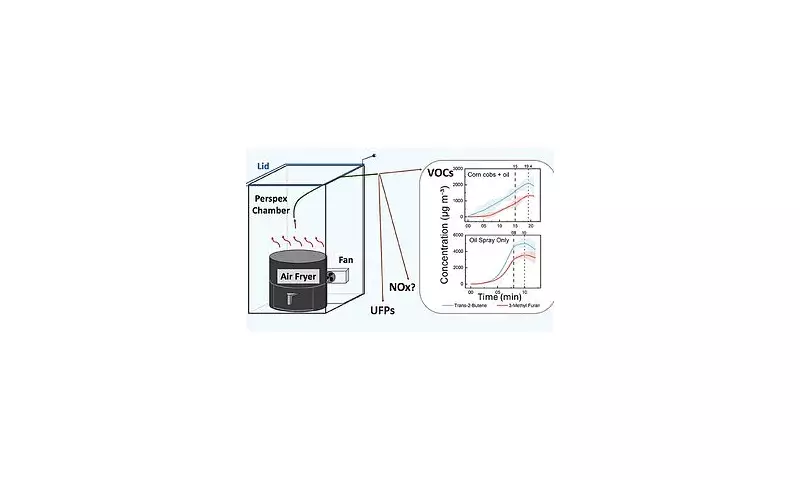
The research team conducted detailed analysis of particles released during the preparation of twelve common food items, including frozen potato smiley faces, onion rings, various sausages, and bacon products. Their findings demonstrate that air-frying produces substantially lower levels of both particulate matter (PM) and volatile organic chemicals (VOCs) than either shallow or deep-fat frying techniques.
Professor Christian Pfrang, the study's lead author, emphasised an important qualification: "Our study shows that repeated use of air fryers without being able to clean the more inaccessible cooking surfaces can negate some of the benefits for indoor air quality."

The Critical Role of Regular Cleaning
The research uncovered that cleanliness dramatically impacts emission levels. Tests conducted with an air fryer used more than seventy times revealed concerning results: twenty-three percent more VOCs and more than double the particulate matter particles compared to measurements from an empty tray.
"While the effects are not producing emissions that families should be concerned about," Professor Pfrang noted, "this finding does make a case for air fryer design that allows for a deep clean to keep emissions low in the long term."
Examining Different Food Types
The study builds upon previous research that examined cooking lean chicken breast. This expanded investigation specifically addressed higher-fat content foods to provide more comprehensive understanding. Ruijie Tang, first author of the study, explained: "The results confirmed that while foods with high fat content do produce more emissions in the air fryer, they produce only a fraction of what we see in cooking methods such as shallow or deep-fat frying."
Among the tested foods, onion rings, smoked bacon, and unsmoked bacon generated the highest emission levels. However, cooking these same items in a deep fat fryer produced between ten and one hundred times higher concentrations of volatile organic chemicals.
Understanding the Cooking Mechanism
Air fryers operate by circulating hot air with minimal or no added oil, resulting in foods with significantly reduced fat content compared to traditional frying methods. Until this research, however, the specific impact of this cooking technique on indoor air pollution remained largely unexplored territory.
Practical Recommendations for Home Cooks
Based on their findings, the researchers strongly recommend regular cleaning of air fryers to maintain their air quality benefits. They concluded in their study, published in the American Chemical Society's journal ES&T Air: "With regular maintenance and appropriate ventilation, the reduction in cooking emissions afforded by air frying can make it a viable and more environmentally friendly option compared with traditional frying methods, particularly in domestic settings where indoor air quality is of increasing concern."
The research team highlighted growing recognition of home air quality as a significant health factor, stating: "Air quality in the home and other indoor environments is being increasingly recognised as an important factor, and our body of work will provide households with a better understanding of how kitchen activities affect the air we breathe in our homes."