Groundbreaking Study Reveals Microplastic Emissions Far Lower Than Previous Estimates
In a significant development for environmental science, new research from the University of Vienna suggests that global microplastic emissions might be substantially lower than previously feared. The comprehensive study indicates that atmospheric microplastic concentrations could be up to 10,000 times less than earlier models had predicted.
Methodological Breakthrough in Microplastic Research
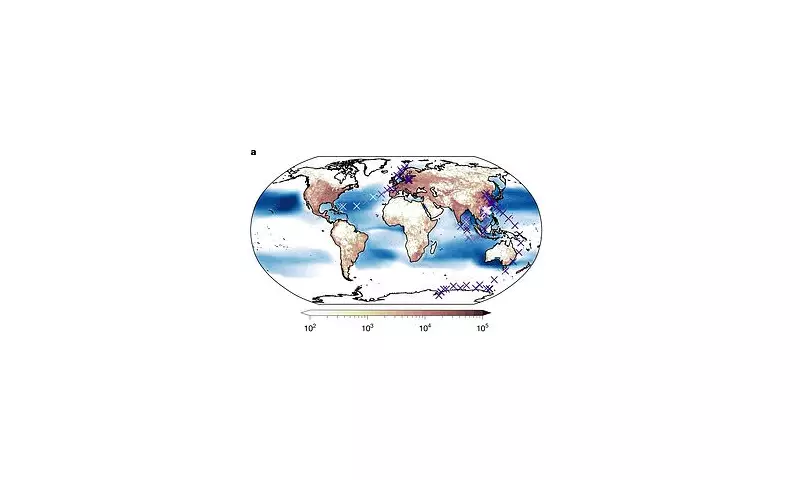
Previous estimates of microplastic pollution have typically relied on limited data sets or extrapolations from specific regions. This new research represents a major methodological advancement, combining 2,782 individual measurements from 283 distinct locations worldwide, collected between 2014 and 2024. By comparing these extensive real-world measurements with existing atmospheric models, researchers have developed what they believe to be a more accurate global estimate.
Lead researcher Dr Ionna Evangelou explained to the Daily Mail: "Previous studies used atmospheric measurements from a small region over the Western USA to estimate atmospheric microplastic emissions globally. In this study, we utilised available knowledge on microplastic abundance based on reported measurements globally."

Surprising Findings About Emission Sources
The research reveals unexpected patterns in how microplastics enter our atmosphere. Contrary to previous assumptions that oceans were the primary source, the study found that land-based sources contribute approximately twenty times more microplastic particles to the air. These terrestrial emissions come primarily from vehicle tyre and brake pad wear, along with the breakdown of larger plastic items in soil and urban environments.
From marine environments, microplastics mainly enter the atmosphere through sea spray, where breaking waves launch microplastic-rich bubbles into the air. Despite these emissions pathways, the overall concentrations measured were remarkably low: an average of 0.08 particles per cubic metre over land and just 0.003 particles per cubic metre over oceans.
Significant Regional Variations Complicate Assessment
The study highlights substantial geographical differences in microplastic concentrations that make global estimation particularly challenging. Along China's southeast coast, for instance, measurements ranged from a mere 0.004 particles per cubic metre to 190 particles per cubic metre. Similarly, deposition rates vary dramatically, with UK urban locations recording up to 3,100 particles per square metre daily compared to just 50 particles in Chinese suburban areas.
These extreme variations between locations, sometimes differing by several orders of magnitude, have historically made accurate global estimation extremely difficult. The new research attempts to address this problem through its unprecedented scale of data collection and analysis.
Revised Emission Figures Still Represent Significant Pollution
Despite the substantially lower estimates, the revised figures still represent considerable environmental contamination. Researchers now predict total yearly microplastic emissions of approximately six hundred and ten quadrillion particles from land sources and twenty-six quadrillion from oceans. While these numbers are between 100 and 10,000 times lower than previous estimates, they still indicate substantial plastic pollution circulating in our atmosphere.
Co-author Dr Andreas Stohl cautioned: "We do not really know what level of microplastic is actually safe for human health or the environment. Also, we expect emissions to increase in the future."
Ongoing Health Concerns and Research Limitations
Scientists emphasise that these revised estimates should not lead to complacency about microplastic pollution. The research, published in the prestigious journal Nature, acknowledges significant limitations in current understanding. Many measurements lack crucial information about particle size distribution, chemical composition, and associated pollutants, all of which influence potential health impacts.

Dr Evangelou noted: "Lower emissions mean lower airborne concentrations, but numbers alone don't tell the whole story. Health impacts also depend on particle size, shape, additives or attached pollutants, and exposure duration."
Current evidence suggests microplastic exposure can lead to various health issues including respiratory problems, cardiovascular concerns, and potential impacts on reproductive systems. Previous research indicates individuals might inhale between 26 and 130 microplastic particles daily, with particular risks for vulnerable populations including children and those with pre-existing conditions.
The Persistent Challenge of Plastic Pollution
Microplastics have now been detected in virtually every environment on Earth, from the highest mountain peaks to the deepest ocean trenches, including the Mariana Trench. This widespread distribution, combined with increasing plastic production and consumption, means that despite the revised emission estimates, microplastic pollution remains a significant environmental and public health challenge.
The research team acknowledges that even their improved estimates contain substantial margins of error, potentially up to one order of magnitude, with even greater uncertainties at local levels. This highlights the need for continued research, improved monitoring methodologies, and comprehensive understanding of how microplastics move through and impact our environment and health systems.