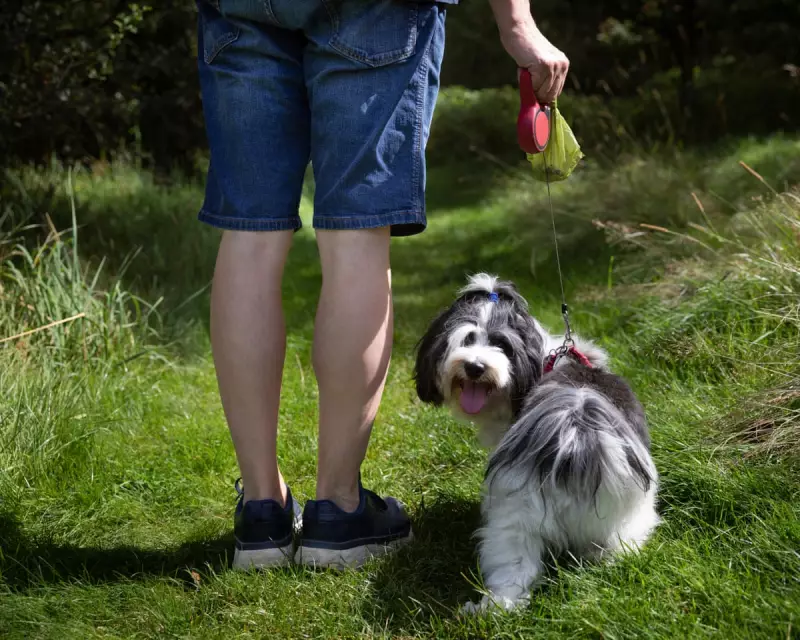
It is a scene familiar to every modern dog walker: the pause, the bag, and the act of stooping to collect. Yet this ritual of responsible pet ownership is a surprisingly recent societal norm. A cultural revolution has taken place on our pavements and parks, transforming what was once ignored into an offence that sparks public outrage.
A Frozen Man's Disgust and a Bygone Era
The premise of Mike Bubbins' BBC series Mammoth offers a stark reminder of how much has changed. The show's protagonist, a PE teacher named Tony frozen in an avalanche in 1979 and thawed today, reacts with horror to a woman picking up after her German Shepherd. His disgust mirrors a genuine historical attitude. For decades, dogs defecated with impunity across British streets, their owners rarely in attendance to witness the act, let alone clean it.
As older dog owners recall, pets were often left to roam freely. "It was less a case of owners not picking up the poo; it was more that the owners often weren't with their pets anyway," notes one lifelong dog owner. The diet of the time, rich in bonemeal, produced conspicuously white waste, a particular hazard in snowy conditions. This was simply accepted as an unavoidable part of urban and suburban life, a nuisance that soiled shoes but did not, it seems, enrage the public.

The Tipping Point: New York's Pioneering Law
The catalyst for global change is widely attributed to a single piece of legislation on the other side of the Atlantic. In 1978, the then mayor of New York, Ed Koch, successfully pushed through the landmark "Pooper-Scooper Law." Facing down opposition, including concerns about potential dog abandonment, Koch made it illegal not to clean up after your pet.
His reasoning was famously grounded in experience: "If you've ever stepped in dog doo, you know how important it is to enforce the canine waste law," he stated. The law, detailed in the book New York's Poop Scoop Law: Dogs, the Dirt, and Due Process, marked a decisive turn. It reframed the act of cleaning up not as disgusting, but as a civic duty. Failure to comply became the new social transgression.
The New Social Contract for Dog Owners
This legislative shift in New York gradually influenced attitudes and, eventually, laws in the UK and elsewhere. The cultural needle swung completely. Today, the disgust is directed not at the person with the bag, but at the person who walks away. The very option of cleaning up created the expectation, and subsequently, the obligation.
This represents a profound change in the social contract of pet ownership. The halcyon days of unsupervised canine wanderings are largely over, replaced by a model of constant supervision and immediate responsibility. The modern compact requires owners to provide not just food and shelter, but also immediate waste management, ensuring public spaces remain clean for everyone.
The journey from pervasive dog mess to the ubiquitous poo bag is a story of changing social norms, sparked by political will. It stands as a clear example of how legislation can successfully reshape public behaviour and redefine what a community considers acceptable, creating a cleaner environment for all.