Channel 7's Spotlight Program Under Fire for Unbalanced Renewable Energy Report
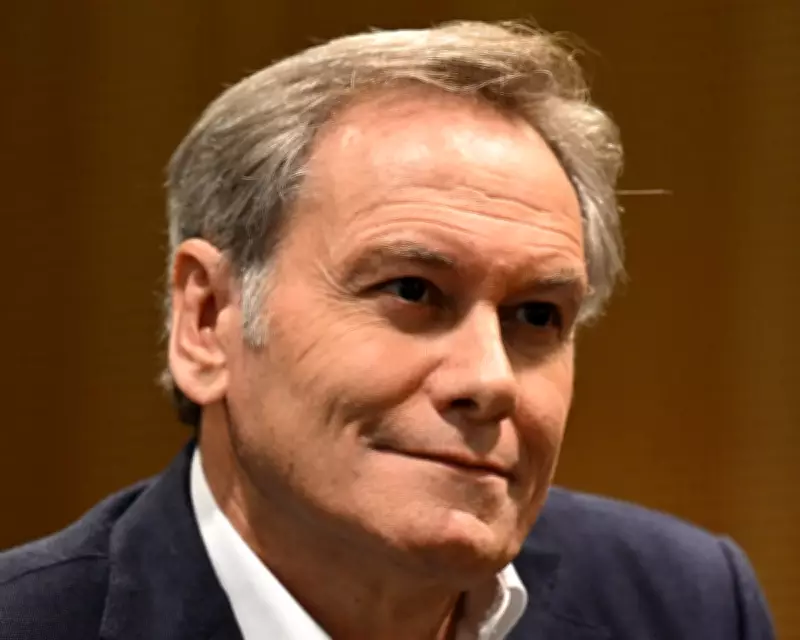
Channel Seven's flagship investigative program, Spotlight, has come under intense scrutiny following its recent prime-time broadcast targeting Australia's renewable energy industry. The segment, presented by reporter Liam Bartlett, alleged that the sector relies on cobalt mined under horrific conditions in Africa, but critics argue it failed to uphold basic journalistic standards of balance and accuracy.
Dramatic Footage Masks Key Omissions
The program opened with gripping scenes from artisanal mines in the Democratic Republic of Congo, showing workers in dire circumstances extracting cobalt. Bartlett claimed this mineral is essential for all batteries powering Australia's green transition, from electric vehicles to grid-scale storage. However, the report neglected to mention that approximately 90% of Congo's cobalt production comes from industrialised mining, not the hand-dug pits highlighted, according to the US Geological Survey.
Furthermore, battery technology expert Professor Neeraj Sharma from the University of New South Wales pointed out that Bartlett's assertion that cobalt is in every battery is false. Many manufacturers are shifting to cobalt-free alternatives like lithium iron phosphate (LFP) due to ethical and cost concerns, with about half of electric vehicle batteries and 90% of home and grid-scale batteries now using such technology. This crucial context was absent from the broadcast.

Questionable Claims and Lack of Right of Reply
In one segment, Bartlett stood before the Hornsdale big battery in South Australia, stating that Amnesty International had linked it to "blood cobalt" from Congo. When contacted, Amnesty International's campaigner in Australia, Nikita White, clarified that the organisation has not made any specific connection to that battery and does not generally use the term "blood cobalt." A Channel Seven spokesperson defended the claim by citing a 2017 report on Tesla's supply chain, but the program did not include this nuance.
The Clean Energy Council, representing Australia's renewables industry, was not approached for comment, and aside from a brief exchange with Energy Minister Chris Bowen, no counterbalancing perspectives were featured in the 50-minute show. Bartlett later wrote an article comparing Bowen and his colleagues to "mad mullahs," further highlighting the program's partisan tone.
Misleading Portrayal of Mining in Tasmania
Another part of the report focused on the Tarkine rainforest in Tasmania, where Bartlett claimed a Chinese-owned mine was operating "smack bang in the middle" of the wilderness to support renewable energy. He omitted that the mine has been active since 1936 and was purchased by Chinese interests in 2009. Additionally, the company, MMG, had recently proposed an alternative site for a waste dam outside the Tarkine, a fact acknowledged in a statement to the program but not aired.
A Channel Seven spokesperson stated that the interview with environmentalist Bob Brown occurred after this announcement, but the application for the original site remained, though this was not explained to viewers.
Ethical Concerns and Industry Response
Renewables governance expert Professor Susan Park from the University of Sydney noted that artisanal mining in Congo stems from extreme poverty and predates Chinese involvement, challenging Bartlett's framing of China as solely responsible. The program also featured critics like Steven Nowakowski, who labelled windfarm clearings as "criminal behaviour," without offering rebuttals from the clean energy sector.
When questioned about the lack of balance, a Seven spokesperson emphasised repeated attempts to engage Minister Bowen, but this did not address the broader failure to include industry voices or updated information on battery technology and mining practices.
This report has sparked debate over media ethics and the portrayal of renewable energy in Australia, with many calling for more rigorous and fair journalism in covering complex environmental and economic issues.