Wind and Solar Surpass Fossil Fuels in EU Power Generation for First Time
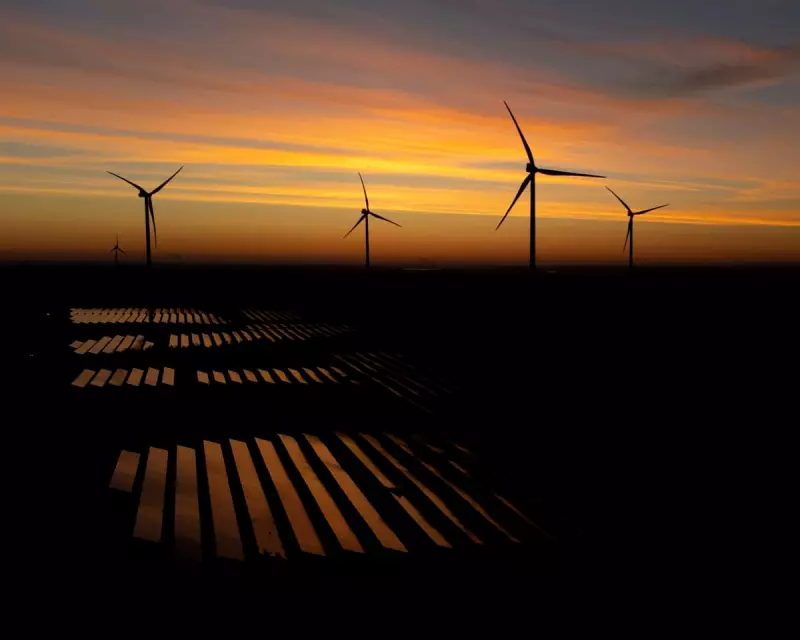
A significant milestone has been reached in Europe's energy landscape, as wind and solar power have overtaken fossil fuels for electricity generation across the European Union. According to a comprehensive annual review, this shift occurred in 2025, representing what researchers describe as a "major tipping point" for clean energy amidst a backdrop of increasingly unstable geopolitics.
A Historic Shift in Energy Production
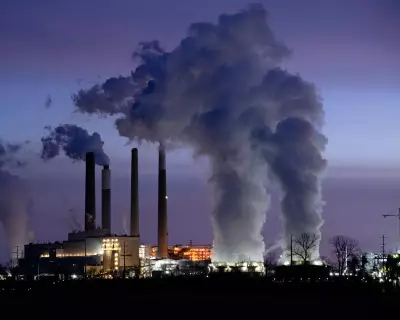
The data reveals that turbines harnessing the wind and photovoltaic panels capturing sunlight generated a combined 30% of the EU's electricity in 2025. In contrast, power plants reliant on burning coal, oil, and gas produced slightly less, accounting for 29% of the total power output. This narrow but historic margin signals a profound transformation in how Europe powers its homes, industries, and economies.
Beatrice Petrovich, an analyst at the Ember thinktank and the lead author of the report, emphasised the strategic importance of this development. "The importance of this goes beyond the power sector," she stated. "The danger of relying on fossil fuels looms large in destabilised geopolitics." Her comments reflect growing concerns within the EU about energy security and reliance on external suppliers.

Solar Leads the Charge as Wind Holds Steady
The report highlights that the trend was primarily driven by an extraordinary boom in solar energy, which generated a record 13% of EU power. Remarkably, in five countries—including the Netherlands, a nation not traditionally associated with abundant sunshine—solar provided more than 20% of electricity. This demonstrates the rapid scalability and adaptability of solar technology across diverse climates.
Wind power, while generating slightly less than the previous year, remained the second-largest source of electricity in the EU, responsible for 17% of total generation. Despite minor fluctuations, wind energy continues to be a cornerstone of the continent's renewable energy portfolio.
Fossil Fuels in Decline Amidst Geopolitical Tensions
Coal-burning fell to a new historic low, accounting for less than 10% of EU power, with the majority concentrated in Germany and Poland. The role of fossil gas increased by 8%, largely due to a weather-related drop in hydropower output, but it remained significantly below its peak levels from 2019.
These energy shifts occur against a complex geopolitical backdrop. Europe faces growing tensions with the United States, its chief supplier of liquefied natural gas, partly over former President Donald Trump's historical interest in Greenland. At a recent summit in Davos, US Commerce Secretary Howard Lutnick criticised Europe's adoption of solar and wind, warning that a lack of domestic battery factories risked making the continent "subservient" to China. "If you are going to be dependent on someone, it had better be your best allies," he argued, promoting an "America first" approach.
The Challenge of Infrastructure and Storage
Petras Katinas, an analyst at the Centre for Research on Energy and Clean Air, noted that solar and wind are "becoming the backbone" of Europe's power system. "Solar alone grew by more than 20% in a single year, proving that clean power can scale faster than any conventional technology," he said. "The challenge now is not generation, but how quickly Europe can deploy grids, batteries, and flexibility."
Climate scientists and energy modellers agree that most electricity for a carbon-free economy will come from these renewable sources. However, European nations have been slow to modernise electricity grids to handle the variable and distributed nature of solar and wind energy.

There are, however, promising early signs. The report indicates that evening peaks in electricity demand—traditionally met by burning expensive gas—are starting to be addressed by battery storage. Italy, which hosts one-fifth of the EU's operating battery capacity and has numerous planned projects, may follow a trajectory similar to California. In California, batteries routinely cover 20% of evening demand peaks and are increasingly displacing gas-fired generation.
Petrovich suggested this advancement could help smooth price spikes for consumers. "If I were a policymaker or investor, I would seriously start questioning if plans for new gas plants are inflated—and act to avoid a burden for taxpayers and risk of stranded assets," she advised.
This landmark report underscores a decisive moment in the EU's energy transition, highlighting both the remarkable progress of renewables and the critical infrastructure challenges that lie ahead.