England's Self-Imposed Drought Crisis: When the Taps Run Dry
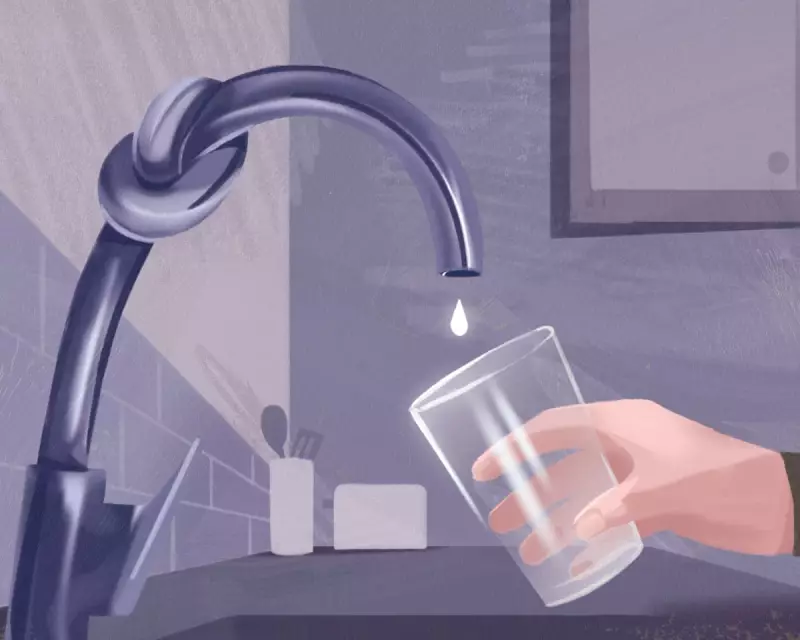
Imagine waking up to a world where basic amenities vanish. You go to the loo, but the flush doesn't work. You try the shower, yet nothing comes out. You turn the tap for a glass of water, but not a single drop emerges. Your day stumbles forward, stripped of its essentials: no washing hands, no cleaning up the baby, neither tea nor coffee, no easy way to do the dishes or laundry. Dirt accumulates; tempers fray.
This isn't a dystopian fiction but a reality for many in England, a country famously associated with rain yet now grappling with self-imposed drought. The water company texts apologies, promising restoration, but as days pass without supply, the assurances become mere background noise. Each morning brings the same chest-tightening question: what will happen today? Buckets and bottles fail to stop the feeling of grubbiness, or the taint noticed on family, friends, and neighbours. Social norms break down rapidly.
The Tunbridge Wells Experience: A Warning Sign
Last week, Tunbridge Wells endured days without running water for the second time this winter, part of a decade-long pattern of outages that South East Water euphemistically calls "resilience issues." Residents' experiences, shared via WhatsApp groups, reveal a community in distress. Schools and GP surgeries shut, children's birthday parties cancel, and anxiety thrums through digital threads. Bottling stations open in car parks, roads gridlock with queues, and supermarkets are stripped bare of water. An elderly relative leaves a heavy pack of bottles on his doorstep, only to find it stolen by morning. The high street turns ghostly as hardly anyone ventures out.

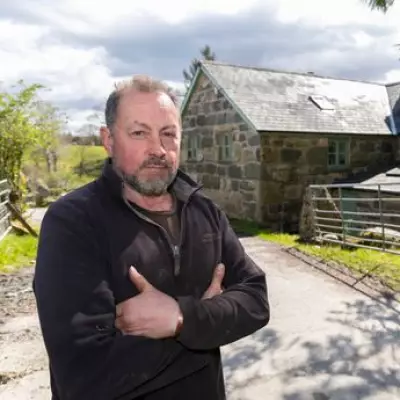
This is one of the richest towns in one of the wealthiest societies in human history, demonstrating that lavish private affluence cannot compensate for critical public scarcity. Yet, much coverage treats such droughts as local bad luck, a tendency in Britain to frame human-made disasters—from unemployment to knife crime—as peripheral issues. As Mike Martin, MP for Tunbridge Wells, warns, "South East Water may be the worst of all the water companies, but Thames Water comes second—and it serves millions of people. Water shortages will be coming to other parts of England very soon."
A National Crisis in the Making
The warnings are not hypothetical. In 2018, the "beast from the east" cut off 200,000 households. In 2023, parts of Surrey suffered outages, and in 2024, thousands in Brixham, Devon, had to boil water due to parasites from cracked pipes. The underlying theme is a chronic lack of investment, with disastrous consequences. Jon Cunliffe, chair of the Independent Water Commission, highlighted last summer that London's main water treatment works is "on its last legs." A single major fault at the 60-year-old Thames Water plant could leave millions without running water, forcing mass evacuations and army standby.
While the privatised water industry's environmental damage is well-known—ecologists advise against stepping in any English river—less covered is the prospect of parts of the country running dry. Government officials and ministers acknowledge this looming threat, especially for London and eastern England. Climate breakdown and housing sprawl add pressure, but over 30 years of prioritising excessive returns has left the system badly exposed.
The Political Vacuum and Failed Solutions
Here lies a massive hole in British politics. The right's privatisation of water, promised by Margaret Thatcher to bring investment and small shareholders, has instead entrusted vital public goods to hedge funds and private-equity sharks abroad. They siphon off returns while investing minimally, leaving an industry drowning in debt and reliant on extortionate loans. The children of Thatcher now blame planning systems that protect wildlife over infrastructure, a narrative that has swayed government ministers. Their recent white paper on water offered little more than a rebranding of regulators.

The left advocates for returning water to public ownership, a move with strong arguments and overwhelming voter support. However, this raises the question of funding billions for investment. A new book, Murky Water: Challenging an Unsustainable System, by academics and researchers, argues that zombie companies focused on financial engineering won't provide the needed funds. Instead, investment must come from water bills, as with Thames Water's super sewer charges. The authors call for progressive billing that reflects ability to pay, moving away from a system akin to the poll tax that burdens the poor.
Neither Keir Starmer, Kemi Badenoch, nor Nigel Farage are likely to adopt these suggestions, reflecting decades of ducked big political questions. As the UK dreams of AI superpower status and media obsesses over celebrities, it lurches into a future where a rain-famous nation imposes drought upon itself. Murky Water challenges a Westminster that hears voter complaints about dysfunction but demands patience while ensuring nothing changes. The taps running dry is not just a local issue—it's a national wake-up call.